

As Vietnam gradually finalizes its legal framework for digital assets and the crypto asset market, a notable development has drawn the attention of the financial, banking, and technology sectors: Techcombank and its securities arm, Techcom Securities (TCBS), have officially submitted an application for a license to operate a digital asset exchange as soon as regulators began accepting applications in early 2026. This is seen as a strategic move by a traditional financial institution to pioneer a breakthrough model, laying the foundation for the future of Vietnam’s financial industry.
Legal Context: From a Grey Area to a Turning Point Framework
Before 2026, Vietnam’s digital asset market largely operated in a legal grey area. There was no clear legal framework for exchanges to operate domestically, and while crypto trading platforms were widely used, they were not licensed in Vietnam. As a result, users typically relied on international platforms.
However, the introduction of the Law on Digital Technology Industry, effective January 1, 2026, along with Government Resolution No. 05/2025/NQ-CP on piloting the crypto asset market from 2025 to 2030, marked a major turning point for the sector. Under this framework, Vietnam established a pilot licensing mechanism for domestic digital asset exchanges, aiming to create a transparent and secure environment that attracts financial institutions while protecting retail investors.
From January 20, 2026, the Ministry of Finance officially began accepting applications for licenses to provide crypto asset market services. This process is considered an important step toward bringing digital asset trading out of its previously ambiguous status.
New Legal Requirements That Reshape the Playing Field
Vietnam’s licensing framework for digital asset exchanges is built on relatively strict standards. Organizations seeking licenses must meet several key requirements:
- They must be legally established Vietnamese enterprises under the Law on Enterprises.
- Minimum charter capital must reach VND 10 trillion (approximately USD 380 million), a substantial threshold compared to the financial capacity of many firms.
- The shareholder structure must ensure that at least 65 percent of charter capital is contributed by organizations, with over 35 percent held by at least two financial institutions such as banks, securities firms, fund management companies, or insurers.
- The company must have experienced personnel in both finance and technology, appropriate technological systems, and infrastructure that meets safety, operational, and legal compliance standards.
These requirements are seen as a natural filter, ensuring that only organizations with real financial strength, clear strategies, and robust risk management systems can participate in the pilot phase. Only a limited number of qualified entities are expected to be selected during the initial five year pilot period.
Techcombank and TCBS: A Strategic Step Toward a New Market
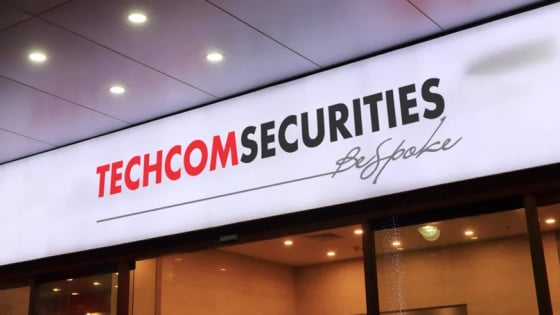
Amid the gradual standardization of the digital asset market, Techcombank has emerged as one of the earliest Vietnamese financial institutions to proactively embrace the trend. As soon as the Ministry of Finance opened the licensing process, Techcombank and Techcom Securities (TCBS) submitted their application to operate a digital asset exchange.
TCBS, a key member of Techcombank’s financial ecosystem, has prepared its technology infrastructure, internal procedures, and necessary personnel to meet licensing requirements. According to Mr. Nguyen Xuan Minh, Chairman of TCBS, the company has completed its technical systems and operational processes, and expects to potentially receive a license within about three months, meaning sometime in the second quarter of 2026 if everything proceeds smoothly.
Beyond crypto exchange operations, Techcombank and TCBS are also preparing to launch related digital asset products, including their own branded physical gold products and potential “digital gold” solutions when the legal framework allows. This indicates that Techcombank’s strategy is not limited to crypto trading alone but extends to a broader range of digitalized assets, forming a diversified digital asset ecosystem in the near future.
The Meaning of Early Participation: Competitive Advantages and Manageable Risks
Techcombank and TCBS entering the field at the very start of the licensing process demonstrates strong strategic foresight. Early participants may gain two major advantages.
First, obtaining a license early positions them as pioneers among domestically operated digital asset exchanges, allowing them to attract customers onto a legally recognized platform within Vietnam’s regulatory framework.
Second, building technical systems, risk management structures, cybersecurity capabilities, and compliance procedures from the outset helps establish trust with customers, partners, investors, and regulators, thereby strengthening their position in the broader digital financial market.
However, the digital asset market presents not only opportunities but also significant risks. Crypto assets are highly volatile, with prices capable of sharp swings driven by global market developments. This requires exchange operators to maintain strict risk management systems and flexible strategies to respond to market shocks. Additionally, Vietnamese regulations impose rigorous requirements on security, anti money laundering, and compliance, forcing organizations to continuously invest in technology and specialized human resources.
A Broader Perspective: Vietnam in the Global Digital Asset Trend
Globally, many countries are seeking to integrate into the digital asset ecosystem by building clear and attractive legal frameworks. Emerging markets with young populations and high internet penetration, such as Vietnam, are becoming key targets for crypto and blockchain investors.
Domestically, most users still trade on international exchanges due to the lack of officially licensed local platforms. However, with the new licensing mechanism in place, the market landscape is expected to change significantly in the coming years.
Establishing and operating a digital asset exchange is not only a technological challenge but also a matter of building strong governance systems, strict legal compliance, and effective investor protection. This requires close coordination between regulators and participating financial institutions so that both sides clearly understand their responsibilities and share a commitment to creating a transparent and sustainable environment.
A Turning Point for Vietnam’s Digital Asset Market
Techcombank and TCBS submitting their application for a digital asset exchange license as soon as the Ministry of Finance activated the new mechanism marks an important strategic milestone. It reflects the broader shift of traditional financial institutions toward the rapidly growing digital asset market. This is a bold move, backed by technical preparation, governance capacity, and product strategy, aimed at seizing opportunities under Vietnam’s newly opened regulatory framework.
For Vietnam’s market, the early emergence of officially licensed digital asset exchanges operated by domestic enterprises will help complete the digital financial ecosystem, reduce legal risks for users, create a fair competitive environment, and open up opportunities for international cooperation. If institutions like Techcombank and TCBS succeed in the licensing process, it could serve as a powerful foundation for a new era of digital finance in Vietnam.
