

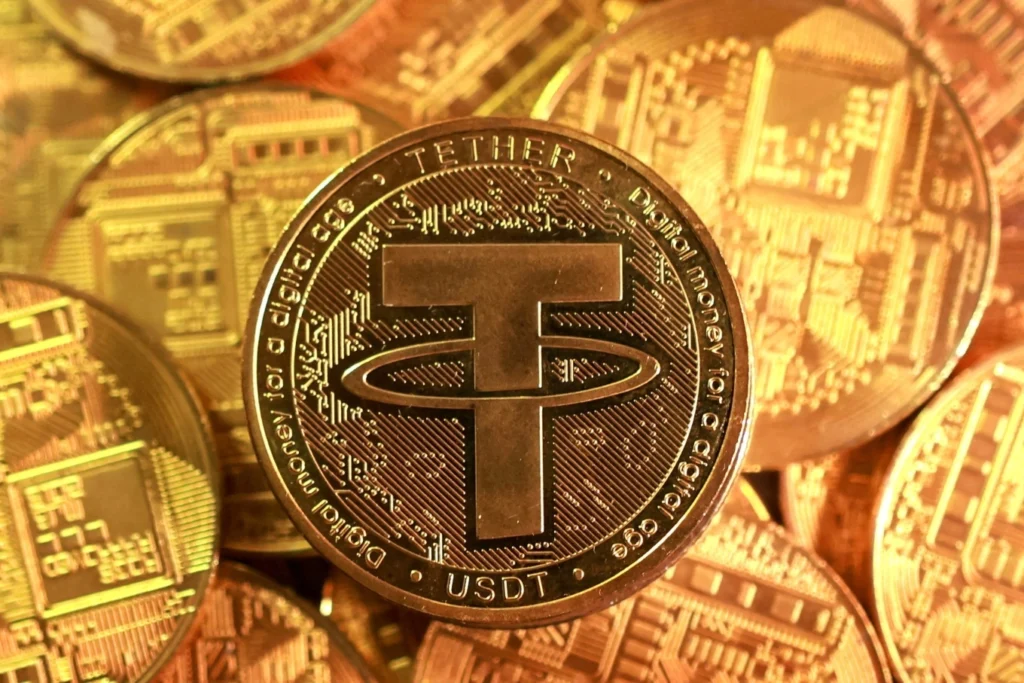
In recent days, Tether, the company behind the world’s largest stablecoin USDT, has continued purchasing large amounts of physical gold, sparking intense debate across the global financial community as well as among cryptocurrency investors. The operation of a stablecoin pegged to the US dollar like USDT is no longer tied solely to US Treasury bonds or cash reserves, but is now also linked to precious metals considered real assets. A major question arises as to whether shifting capital from cryptocurrencies into real assets like gold represents a positive trend, especially in a market where digital assets frequently experience strong volatility and high risk. Is this a reasonable step toward strengthening the sustainability of stablecoins and related assets, or is it ultimately just a strategy allowing certain organizations to control real assets while end users continue holding virtual ones?
The Situation of Tether and Its Gold Purchases
According to multiple reputable financial sources, Tether has steadily accumulated gold over time, with its latest announcement indicating that the company purchased approximately 27 tons of gold in the fourth quarter of 2025, nearly matching the amount acquired in the previous quarter. This brings Tether’s total gold holdings to around 130 to 140 tons of physical gold, worth billions of dollars, making it one of the largest private holders of gold in the world outside central banks and ETFs.
Reports also confirm that Tether is buying gold at a pace of roughly one to two tons per week, with plans to continue expanding these reserves for at least the coming months. This move comes as global gold prices surge past historic milestones and are widely viewed by investors as a safe haven asset amid growing instability in the global financial system.
Tether’s gold purchases are not solely for reserve diversification but are also linked to Tether Gold (XAU₮), a blockchain token backed by physical gold. Each unit of XAU₮ represents ownership of one ounce of real gold stored in high security vaults in Switzerland, and the token can be traded like other digital assets.
The Meaning Behind the Shift from Virtual to Real Assets
Tether’s increasing gold accumulation highlights an important argument: stablecoins and digital assets may become more closely connected to real assets, providing investors with a stronger sense of security and stability. In traditional finance, gold has always been considered a safe haven asset, particularly during periods of high inflation, geopolitical risk, or distrust in fiat currencies. Therefore, a crypto organization seeking real assets for its reserves can be seen as a strategy to strengthen trust in its issued products and reduce risks associated with volatility in decentralized financial markets.
This development also reflects a broader reality: global investors are increasingly focused on safe assets, especially after years of extreme volatility, sharp downturns, and liquidity risks in the crypto market. In this environment, physical gold is not just a traditional investment choice but also a long term store of value. Tether incorporating gold into its reserves can be viewed as a reconnection between digital asset markets and traditional asset markets.
Impacts on the Cryptocurrency Market and on USDT Itself
For the cryptocurrency market, gold accumulation may bring mixed effects. On the positive side, it increases trust in stablecoins like USDT, especially since stablecoins have previously faced scrutiny regarding reserve transparency. Stablecoins are designed to be pegged to fiat currencies to reduce price volatility, and the presence of real assets in reserves helps reinforce confidence that token value can be maintained even during periods of strong market turbulence. This may attract larger investors, financial institutions, and more risk conscious users.
However, the downside is that allocating too much of a stablecoin’s reserves into precious metals could reduce liquidity. Gold requires time and cost to convert into cash compared to financial assets such as US Treasury bonds. In a crisis scenario where investors rush to redeem funds, converting gold into cash quickly may be more difficult, potentially affecting the ability to meet withdrawal demand. This raises concerns about the suitability of holding reserve assets in lower liquidity forms like precious metals.
Another factor raising questions within the community is the concentration of power in the hands of a few large organizations, such as Tether. While end users hold digital tokens, the real assets backing their value may be centrally controlled by a small number of companies. This creates a paradox: virtual assets appear decentralized but are supported by real assets held by a small group. Without absolute transparency and clear independent auditing mechanisms, such concentration of control could create systemic risks if reserve management lacks transparency or encounters issues.
Is This a Positive Trend for Coins Like Sabecoin
From a broader perspective, Tether’s gold strategy also prompts reflection on the future of stablecoins and other cryptocurrencies such as sabecoin. If stablecoin issuers truly aim to build a safe and sustainable ecosystem, they must balance real asset reserves with liquidity and transparency. A positive trend is the search for new forms of value backing, not relying entirely on fiat money or traditional financial assets but expanding into tangible assets like gold.
However, if this trend merely allows a few large organizations to accumulate real assets under the cover of blockchain technology while users continue holding digital tokens under the mistaken belief that they directly own real value, then the outcome is not entirely positive. Failing to clearly distinguish between token ownership and rights to the underlying reserve assets could lead to misunderstanding and greater risk during market stress.
Sabecoin or any other cryptocurrency seeking long term sustainability must carefully consider value backing mechanisms, reserve transparency, and the level of centralized control. Truly decentralized cryptocurrencies need systems that are transparent, auditable, and do not place excessive power over real assets in the hands of a few entities represented by tokens.
Buying more gold and increasing their holdings of real assets in reserves
The fact that USDT and Tether are buying more gold and increasing their holdings of real assets in reserves reflects a complex trend in modern finance, where the boundary between cryptocurrencies and traditional assets is becoming increasingly blurred. This move may strengthen trust in stablecoins, especially amid global economic instability that pushes investors toward safe haven assets. However, linking virtual assets to real assets does not automatically make digital assets sustainable without transparency and proper governance mechanisms.
For markets like sabecoin and other cryptocurrencies, there are lessons to be learned from this model, but it should not be copied mechanically. The key is to create a reasonable balance between the interests of end users and the management of real assets, while ensuring ownership rights and redemption mechanisms are transparent, accessible, and fair. Only then can the transition between virtual and real assets become a truly positive, sustainable, and meaningful trend for the long term development of the global decentralized financial market.
