


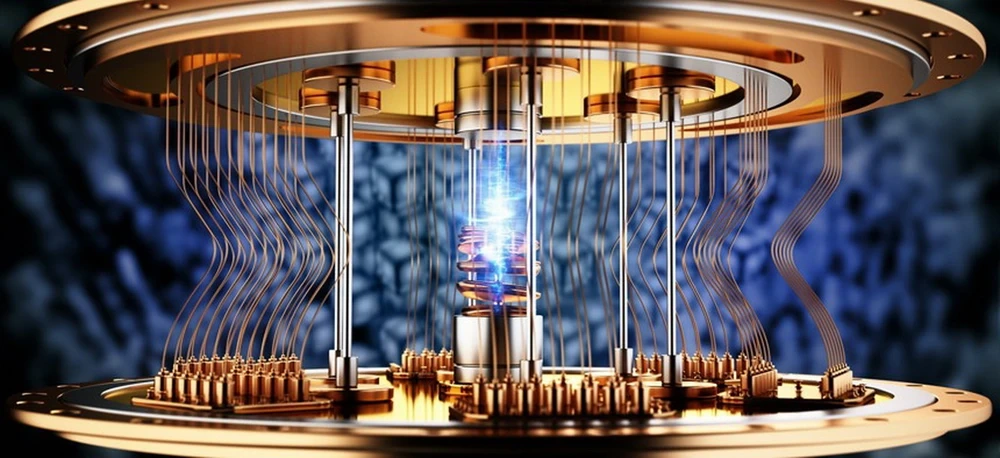
In recent decades, quantum technology has emerged as one of the most influential scientific and technological fields shaping the future of society. Once confined to abstract theories in physics textbooks, quantum technology has now become a central focus of investment for many nations and leading global corporations. These advancements not only promise unprecedented processing power but also lay the foundation for transformative applications in information transmission, data security, space exploration, and industrial innovation.
The rapid progress in quantum technology raises important questions about its real world potential. Can quantum technology truly deliver the fundamental changes that experts around the world predict? Let us explore the development journey, major milestones, and recent breakthroughs in this groundbreaking field.
1. The Origins of Quantum Technology
Quantum technology originates from quantum mechanics, a branch of physics that emerged in the early twentieth century. Scientists such as Max Planck, Albert Einstein, Niels Bohr, and Erwin Schrödinger laid the foundations of quantum theory while studying light and atomic structure. These early discoveries fundamentally challenged classical understandings of matter and energy.
The term quantum refers to the idea that energy exists in discrete units. In the quantum world, microscopic particles such as electrons and photons can exist in multiple states simultaneously, a phenomenon known as quantum superposition. Furthermore, two quantum particles can become linked in such a way that their states remain connected regardless of the distance between them. This phenomenon is known as quantum entanglement.
At first, these concepts seemed purely theoretical and detached from everyday life. However, as scientists began exploring ways to harness these unusual properties for information processing, quantum technology gradually emerged as an independent and rapidly growing field.
2. Quantum Computing: Turning Promise into Reality
Among all quantum technologies, quantum computing is considered the most potentially transformative. Unlike classical computers that use bits with values of 0 or 1, quantum computers use qubits, the quantum unit of information. Thanks to superposition, a qubit can represent both 0 and 1 at the same time.
This creates enormous potential for parallel processing compared to traditional computers, especially in complex problems such as optimization, molecular simulation, encryption, and decryption.
Advancements in Quantum Computing
The field of quantum computing has witnessed several major stages of progress.
Early Experimental Systems
In the beginning, scientists were able to create individual qubits under extremely controlled laboratory conditions. These qubits were highly sensitive to environmental interference and could easily lose their quantum state. As a result, early quantum computers faced significant limitations in stability and reliability.
Scaling Up Qubits
In the early twenty first century, research teams at leading centers such as IBM, Google, IonQ, and Rigetti focused on increasing the number of qubits in their systems. Experimental machines reached dozens and later hundreds of qubits, paving the way for solving more complex problems.
Crossing the Quantum Advantage Threshold
One of the most notable milestones occurred when Google announced that it had achieved what it called “quantum advantage.” This refers to a moment when a quantum computer performed a specific calculation faster than any classical supercomputer could within a reasonable time. Although the task had limited direct practical application, it demonstrated the genuine computational power of quantum systems.
Improving Stability
A major challenge in quantum computing is maintaining quantum states long enough to perform meaningful calculations before qubits lose coherence. New technologies such as quantum error correction and fault tolerant architectures have been developed to address this issue. Research teams have significantly improved qubit lifetimes and processing reliability.
3. Quantum Communication: Security for a New Era
Beyond computing, quantum communication is another prominent area with highly practical applications, especially in data security. In the digital age, cybersecurity has become a top priority for banks, governments, and organizations handling sensitive information.
One of the most important technologies in this area is quantum key distribution. This technique uses the quantum properties of photons to generate encryption keys in such a way that any attempt at eavesdropping immediately alters the system and can be detected. As a result, unauthorized interception of data can be identified instantly.
Early Applications
Several countries have already deployed experimental quantum communication networks. These systems link transmission points over long distances with extremely high levels of security. China, for example, has implemented a national scale quantum network connecting major cities through a highly secure quantum communication infrastructure.
Today, a number of pilot services combine traditional telecommunications with quantum technology, opening the door to broader real world applications.
4. Quantum Sensors and Precision Measurement
In addition to computing and communication, quantum technology is enabling a new generation of quantum sensors and measurement devices with exceptional sensitivity and precision. These sensors rely on subtle quantum effects to detect extremely small changes in magnetic fields, time, pressure, and other physical parameters.
The applications of quantum sensors are wide ranging. In medicine, they can support more accurate diagnostics. In navigation, quantum sensors may enable positioning systems that do not rely on GPS. In geology and environmental science, these devices can detect faint signals that were previously impossible to measure.
5. Major Milestones in Quantum Technology
Quantum technology is not the result of a single breakthrough but rather a long process of research and experimentation. Here are some key milestones.
Late twentieth century and early development of quantum theory
The fundamental principles of quantum mechanics were established and experimentally confirmed. Scientists developed the theoretical foundation necessary for modern quantum systems.
The 1990s
The idea of quantum computing began to take shape. Physicists such as Peter Shor and Lov Grover introduced quantum algorithms that demonstrated how quantum computers could outperform classical ones in certain tasks.
Early twenty first century
Laboratories succeeded in building experimental qubits and testing the basic principles of quantum information processing.
Mid 2010s
Major technology companies such as Google and IBM announced quantum systems with dozens of qubits. Google’s claim of achieving quantum advantage marked a significant step in demonstrating the feasibility of large scale quantum computation.
Late 2010s to early 2020s
Governments around the world increased investment in quantum research. National strategies for quantum development were announced, and domestic quantum communication networks began operating in pilot phases.
6. Recent Breakthroughs
In the past few years, quantum technology has experienced a series of impressive advances.
Improved qubit quantity and quality
Modern quantum systems have reached hundreds of qubits with greater stability than before. Researchers are now focused on building scalable architectures capable of reaching thousands of qubits.
More practical quantum error correction
Error caused by decoherence remains one of the biggest challenges. With improved error correction codes and better qubit connectivity, quantum computer performance has shown clear progress.
Industry involvement and quantum cloud services
Quantum technology is gradually moving out of the laboratory. Several providers now offer quantum cloud services that allow researchers and businesses to access quantum processors remotely for experimentation and simulation.
International research collaboration
Universities and research institutions around the world are increasingly working together, sharing knowledge, resources, and technological advances. These collaborations are accelerating progress in the field.
7. Ongoing Challenges
Despite its enormous potential, quantum technology still faces significant obstacles.
Stability and error rates
Qubits remain extremely sensitive to their environment. Maintaining quantum states long enough for complex computations is still a major challenge.
High costs and technical complexity
Building and operating quantum computers requires ultra cold environments, sophisticated shielding systems, and deep technical expertise. These factors present major barriers to widespread commercialization.
Shortage of specialists
Quantum technology requires expertise in quantum physics, materials science, and computer science. The number of highly trained professionals in this interdisciplinary field remains limited.
8. The Future of Quantum Technology
Despite these challenges, the outlook for quantum technology is extremely promising.
Optimization and complex simulations
Quantum computers may solve problems that classical machines struggle with for years. For example, simulating complex chemical reactions could lead to breakthroughs in drug discovery, advanced materials, and more efficient batteries.
Advances in artificial intelligence
Combining quantum computing with artificial intelligence may create new machine learning systems capable of faster pattern recognition and more efficient big data processing.
New security and encryption methods
While quantum computers could break some traditional encryption systems, they will also enable new forms of ultra secure communication.
Quantum networks and sensing
Global quantum networks and advanced quantum sensors could dramatically improve navigation accuracy, measurement precision, and environmental monitoring.
9. Quantum technology is no longer confined
Quantum technology is no longer confined to theoretical discussions or university lectures. It is steadily becoming a reality, with remarkable progress in computation, communication, and sensing. In the near future, quantum technology may become a foundational pillar driving innovation across fields such as healthcare, transportation, energy, artificial intelligence, and materials science.
Although significant challenges remain, continuous advancements show that the quantum revolution is not a distant dream but an ongoing journey unfolding before our eyes. Understanding and following these developments will help nations, businesses, and individuals better prepare for a truly transformative technological era.
