


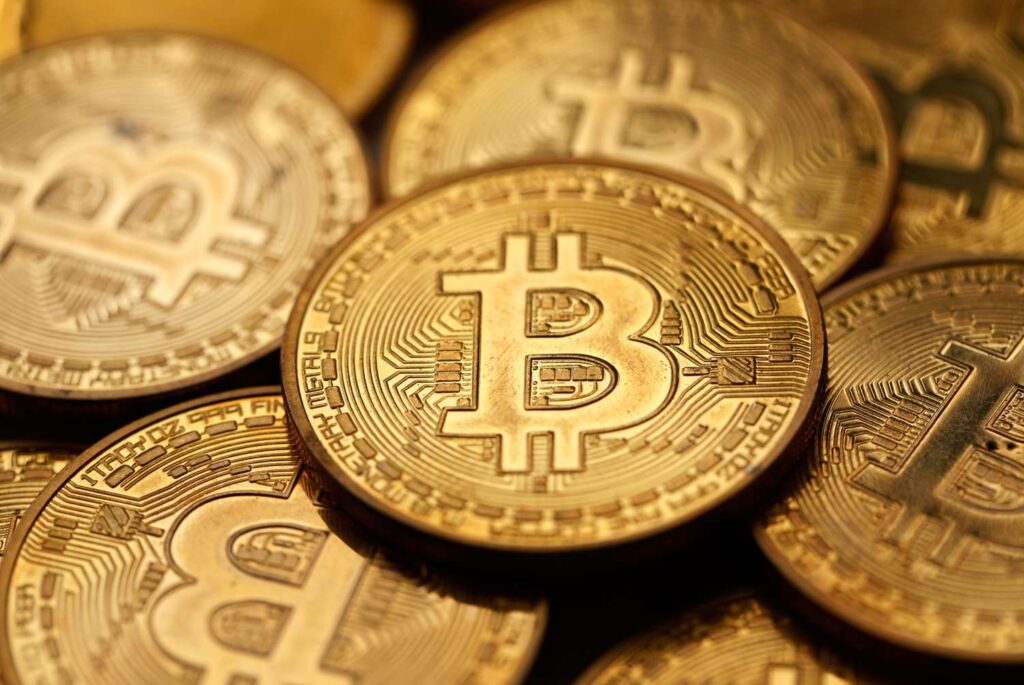
After weeks of volatility driven by geopolitical tensions and pressure across global financial markets, the cryptocurrency market has entered a strong recovery phase. Bitcoin, the world’s largest digital asset, has climbed back above the $70,000 mark and even briefly surpassed $73,000, reaching its highest level in nearly a month. This breakout quickly triggered a broader rally across the cryptocurrency market, lifting altcoins such as Ethereum, Solana, and a wide range of tokens within the DeFi and Layer-1 ecosystems.
Recent developments suggest that the crypto market may be entering a new psychological phase. Following a sharp correction from its previous peak above $120,000 late last year, Bitcoin has recovered roughly 20 percent from its February low near $60,000. The return of the market leader to key technical levels has reignited investor interest and drawn fresh capital into the digital asset space.
A combination of supportive regulatory signals, renewed institutional investment, and favorable technical indicators has created conditions that are helping the crypto market regain momentum.
Bitcoin Reclaims the Psychological Level of $70,000
The $70,000 level has long been viewed as a critical psychological threshold for Bitcoin. When the asset successfully breaks above this level, investor sentiment often shifts from caution to optimism, generating momentum that spreads throughout the broader market.
According to data from multiple exchanges and analytical platforms such as TradingView, Bitcoin gained more than seven percent in a single trading session, reaching levels close to $73,000. Notably, this rally has been accompanied by a significant increase in trading volume, suggesting that new capital is entering the market rather than the rise being driven solely by short-term speculation.
Market analysts note that the significance of the $70,000 mark extends beyond price psychology. After weeks of consolidation between roughly $60,000 and $68,000, breaking above this resistance level indicates that buyers are regaining control of market dynamics. In technical analysis, such a breakout often signals the beginning of a new upward cycle.
Reports from derivatives markets also suggest that the rally has triggered widespread liquidations of short positions. When traders betting against Bitcoin were forced to close positions as prices rose, it created a short squeeze that pushed prices even higher.
This dynamic illustrates how structural mechanisms within crypto derivatives markets can amplify price movements once key thresholds are crossed.
Institutional Capital Returns to the Market
One of the most important drivers behind Bitcoin’s recovery is the renewed inflow of institutional capital. Over the past several years, the participation of large investment funds, banks, and asset managers has become a defining feature of the cryptocurrency market.
Spot Bitcoin exchange traded funds listed in the United States have recently recorded renewed inflows. Market data indicates that these funds have attracted billions of dollars in fresh capital, strengthening the narrative that Bitcoin is increasingly recognized as a legitimate financial asset.
The return of institutional investment does not only influence Bitcoin itself but also has ripple effects across the entire crypto ecosystem. When Bitcoin rises and stabilizes at higher levels, investors frequently rotate profits into altcoins in search of higher returns.
This pattern of capital rotation has historically driven the emergence of so called altcoin seasons during previous crypto market cycles.
Positive Regulatory Signals Boost Market Confidence
Another factor contributing to the recent rally is growing optimism surrounding cryptocurrency regulation.
Recent supportive statements from policymakers in the United States have helped improve market sentiment. The US president has expressed support for a key legislative proposal aimed at clarifying how digital assets should be classified and regulated. Such regulatory clarity could significantly reduce uncertainty surrounding the crypto industry.
For years, ambiguous regulation has been one of the largest barriers preventing deeper institutional participation in the cryptocurrency sector. Investors and financial institutions have often hesitated to allocate large amounts of capital due to concerns over potential regulatory risks.
A more transparent regulatory framework could open the door for broader participation by traditional financial institutions and accelerate the maturation of the crypto market.
Global Financial Conditions Support the Rally
The rebound in Bitcoin has also occurred in the context of improving sentiment across global financial markets.
After a period dominated by concerns over geopolitical tensions in the Middle East, investor sentiment has stabilized somewhat as signs of de escalation emerged. As a result, capital has gradually flowed back into risk assets such as technology stocks and cryptocurrencies.
The crypto market is highly sensitive to macroeconomic conditions. During periods of rising geopolitical risk or tightening monetary policy, investors tend to reduce exposure to volatile assets. Conversely, when global financial conditions stabilize, speculative and long term capital often returns.
The recent shift in global risk appetite has therefore played an important role in supporting Bitcoin’s latest rally.
Altcoins Follow Bitcoin’s Lead
Bitcoin’s recovery has triggered a chain reaction throughout the broader cryptocurrency market.
Soon after Bitcoin crossed the $70,000 threshold, major altcoins began to climb as well. Ethereum, the second largest cryptocurrency by market capitalization, has held above the $2,000 level, while other large blockchain projects have posted notable gains.
Some market analysts believe the current phase could lead to stronger short term growth in altcoins compared with Bitcoin itself. When Bitcoin trades near historical highs, investors often seek greater returns by shifting funds into smaller market capitalization tokens.
On chain data suggests that the so called altcoin season index has begun to rise again, indicating increasing capital rotation from Bitcoin into alternative crypto assets.
Historically, these periods mark some of the most dynamic phases of the crypto market, when emerging tokens and decentralized finance projects attract heightened investor attention.
Technical Factors Reinforce the Uptrend
Beyond macroeconomic and policy developments, technical market factors have also supported Bitcoin’s recovery.
After falling close to $60,000 in February, Bitcoin established a stable accumulation zone. The subsequent break above important resistance levels near $68,000 and $70,000 suggests that the earlier downward trend has been invalidated.
Trading data shows that buying pressure increased significantly as Bitcoin approached the $70,000 region, confirming that genuine demand was returning to the market.
Some analysts believe that if Bitcoin can maintain stability above $72,000, it could open the path toward higher targets such as $78,000 or even $80,000 in the medium term.
Nevertheless, experts continue to emphasize the importance of caution. The cryptocurrency market remains highly volatile, and sharp corrections can occur even during strong bullish phases.
Outlook for the Cryptocurrency Market
Bitcoin’s return above the $70,000 level demonstrates the resilience of the cryptocurrency market despite repeated corrections and external shocks.
In the short term, the direction of Bitcoin will likely depend on several key factors, including ETF capital flows, regulatory developments in major economies, and broader global economic conditions. If these factors remain supportive, the digital asset market could enter another phase of sustained growth.
However, the history of cryptocurrency markets suggests that periods of rapid expansion are often accompanied by intense volatility. Sudden price corrections remain possible if investor sentiment shifts or speculative capital exits the market.
Even so, Bitcoin’s ability to recover quickly from geopolitical and economic disruptions highlights the increasingly important role of digital assets within the global financial system.
In that context, the latest surge in Bitcoin and altcoins reflects more than a temporary market rally. It illustrates the continuing integration of cryptocurrencies into the broader structure of global finance and the evolving relationship between digital assets and traditional markets.
