


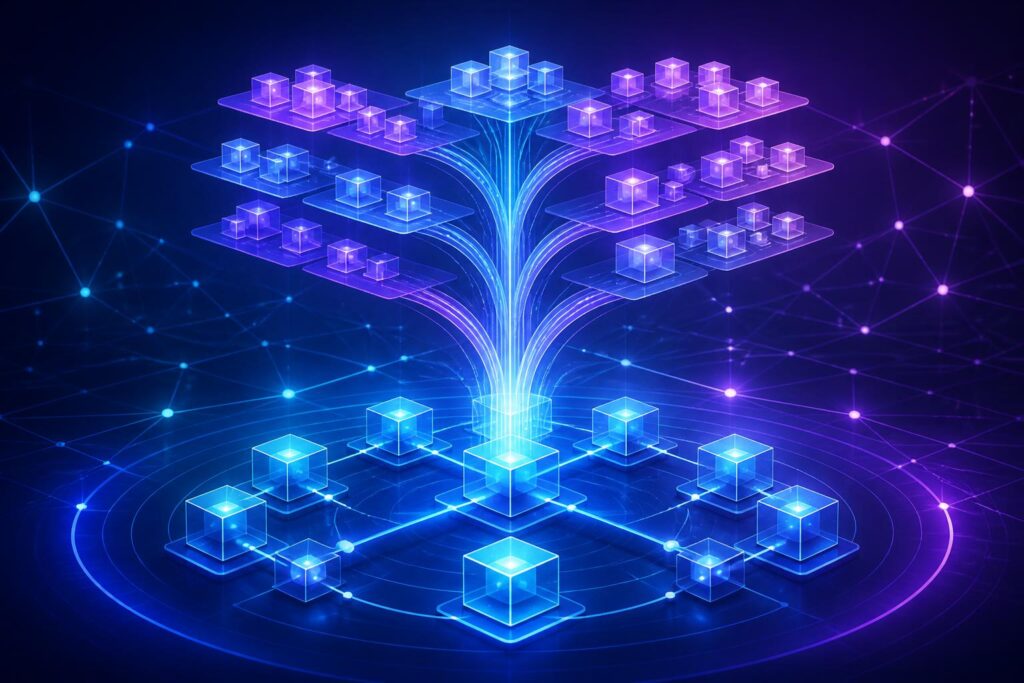
When a blockchain becomes popular, a rapid increase in the number of transactions often brings two noticeable problems: longer processing times and higher usage costs. Every network has a limit on the amount of data that can be included in a block, while decentralized applications increasingly require more operations. Layer 2, commonly called the second layer, was created to address part of this problem without necessarily replacing the underlying blockchain.
Instead of requiring every transaction to be processed directly on the main network, Layer 2 performs most of the work on a supplementary system. This system then sends the necessary data or proofs to the underlying blockchain in order to take advantage of the main network’s security and finality. This approach can reduce the cost of each transaction, increase throughput, and enable blockchain applications to serve more users.
How Does Layer 2 Work?
The underlying blockchain, also known as Layer 1, serves as the base layer. This is where the network’s important state is stored, data is validated, and consensus rules are executed. Layer 2 sits above the base layer, processing transactions through its own mechanism while maintaining a technical connection with Layer 1.
In a Layer 2 system, users typically send assets from the main network into a corresponding contract or deposit mechanism. Once the assets are recorded, they can conduct transactions in the Layer 2 environment at a lower cost or higher speed. These transactions are bundled, ordered, and processed in groups. The related data is then published on Layer 1, or a cryptographic proof is sent back so that the main network can verify it.
The important point is that Layer 2 is not simply an independent blockchain with low fees. A network is generally considered Layer 2 when it has a mechanism linking it to Layer 1, with the base network able to help protect data, resolve disputes, or allow users to recover their assets according to programmed rules. The degree of dependence and the way this connection is designed vary from project to project.
Rollups and Two Common Approaches
Rollups are a group of Layer 2 solutions that receive significant attention because they can bundle many transactions into a single package before sending information to the main network. The two prominent approaches are optimistic rollups and zero-knowledge rollups, commonly abbreviated as ZK-rollups.
Optimistic Rollups
Optimistic rollups process transactions under the initial assumption that the submitted data is valid. Rather than requiring the main network to immediately recheck every calculation, the system allows a period during which other parties can detect and challenge an incorrect state. If a dispute arises, a fraud-proof mechanism is used to identify the inaccurate portion of the data.
The advantage of this model is that its implementation is relatively compatible with many applications already familiar with smart contract environments. However, withdrawing assets directly to Layer 1 may require a waiting period to complete the challenge phase. Users often turn to external liquidity services for faster withdrawals, but this can involve additional fees and counterparty risk.
ZK-Rollups
ZK-rollups use zero-knowledge proofs or similar types of cryptographic proofs to demonstrate that a group of transactions has been processed correctly according to the rules. Layer 1 does not necessarily need to recheck all the calculations; it only needs to verify the submitted proof.
In theory, this model can enable faster state confirmation and reduce the need for waiting periods when withdrawing assets. However, the system requires complex cryptography, prover software can consume significant resources, and compatibility with existing applications depends on the design of each network. The name ZK-rollup should not be treated as an absolute guarantee of safety; contract quality, upgrade mechanisms, and governance arrangements still need to be considered separately.
Why Can Layer 2 Reduce Costs?
On Layer 1, each transaction typically competes for space in blocks. When demand is high, users may have to pay higher fees to receive priority. Layer 2 reduces this pressure by processing many transactions off the main network and distributing the cost of a single data submission across the entire group.
However, Layer 2 fees are not always low in every situation. Users still have to pay for executing transactions, deploying contracts, or sending data to Layer 1. If the main network is congested, the cost of posting data may rise and be reflected in Layer 2 fees. In addition, transactions on Layer 2 and transactions on Layer 1 often require different types of fees, which can easily confuse newcomers when they prepare their assets.
The potential savings also depend on the application. A simple transaction may be significantly cheaper, but complex operations involving multiple smart contracts can still be costly. Users should check the estimated fee immediately before confirming a transaction rather than assuming that every activity on Layer 2 is nearly free.
Bridges and the Asset Transfer Process
To use an asset on Layer 2, users generally need to transfer it from the main network to that network. This process is usually carried out through a bridge. In essence, a bridge may lock an asset on one network and issue a representative version on the other, or use another confirmation mechanism to track ownership.
Bridges are among the most sensitive components of the Layer 2 ecosystem. If a bridge contract contains a flaw, an administrative key is exposed, or the verification mechanism is manipulated, the assets deposited into it may be at risk. This risk does not disappear simply because Layer 2 is connected to a major blockchain. Users need to clearly distinguish the official bridge address, the connected network, and the types of supported assets.
A common mistake is sending assets to the correct wallet address but on the wrong network. For example, the same type of token may exist in different versions on Layer 1 and Layer 2. Checking the receiving network, the token contract address, and the application’s deposit and withdrawal instructions is essential before transferring a large amount. A blockchain transaction generally cannot be reversed simply by contacting the wallet provider.
Is Layer 2 a Risk-Free Solution?
Layer 2 improves processing capacity but does not eliminate all blockchain risks. The first risk lies in smart contracts. A flaw in the source code can affect deposits, asset withdrawals, or the way the system updates its state.
The second risk concerns the degree of decentralization. Some networks may depend heavily on a transaction sequencer, upgrade keys, or a small group of operators. Within certain limits, a sequencer can determine the order of transactions, causing delays or rejecting transactions according to the system’s design. Upgrade keys make it possible to fix errors more quickly, but they also create significant power if controlled by too few parties.
The third risk is complexity. Users must understand which network they are on, which version of an asset they hold, whether the application supports Layer 2, and how long a withdrawal transaction will take. This complexity can lead to operational errors even when the protocol itself is functioning properly.
In addition, each Layer 2 may use different data models, fee mechanisms, and compatibility standards. An application that works well on one network may not work exactly the same way on another. Copying contract addresses or transaction parameters from unofficial sources could cause assets to be sent incorrectly.
How to Evaluate a Layer 2 Network Before Using It
Users do not need to become cryptography experts to carry out some basic checks. First, determine whether the network has an official information page, technical documentation, and clear deposit and withdrawal instructions. This information should explain how transactions are submitted to Layer 1, how disputes are handled, and under what conditions users can withdraw their assets.
Next, examine the governance mechanism and upgrade permissions. Can a contract be upgraded by a single key, or does it require approval from multiple parties? Is there a delay before significant changes take effect? These questions do not automatically determine whether a network is safe or dangerous, but they help users understand who can change the system and under what circumstances.
It is also worth checking which applications support the network, what types of assets are accepted, the actual fee levels, and how transactions that become stuck are handled. When trying a new network, starting with a small amount and making a test transaction is generally safer than transferring all assets at once. Users should note which network they are connected to and carefully check the wallet’s notifications before signing.
The Role of Layer 2 in the Future of Blockchain
Layer 2 reflects an important direction in blockchain development: separating transaction processing from the underlying security and consensus layer. Rather than requiring a single network to do everything, the ecosystem can consist of multiple specialized layers, each optimized for a group of needs such as payments, asset trading, gaming, or business applications.
However, increasing the number of networks also creates fragmentation. Liquidity, users, and applications may be divided among multiple environments. Connection tools and interoperability standards will become increasingly important, but they also introduce additional points that need protection. The success of Layer 2 therefore depends not only on speed or fees but also on its ability to provide a simple, transparent, and secure user experience.
For everyday users, Layer 2 should be viewed as an infrastructure option rather than a promise of profit. Lower fees can make it easier to experiment with applications, but they do not replace the need to check addresses, networks, access permissions, and the risks of each protocol. Understanding how assets move from Layer 1 to Layer 2, how transactions are confirmed, and how funds are withdrawn back is the foundation for using this technology responsibly.
Layer 2 can make blockchain more flexible by moving most activity off the main network while maintaining a connection with the base layer. However, its practical benefits always involve trade-offs in complexity, decentralization, and bridge risk. When evaluating a network, users should consider its entire operating mechanism rather than relying only on claims about speed or cost. That is the cautious approach needed in an ecosystem that continues to change.
