


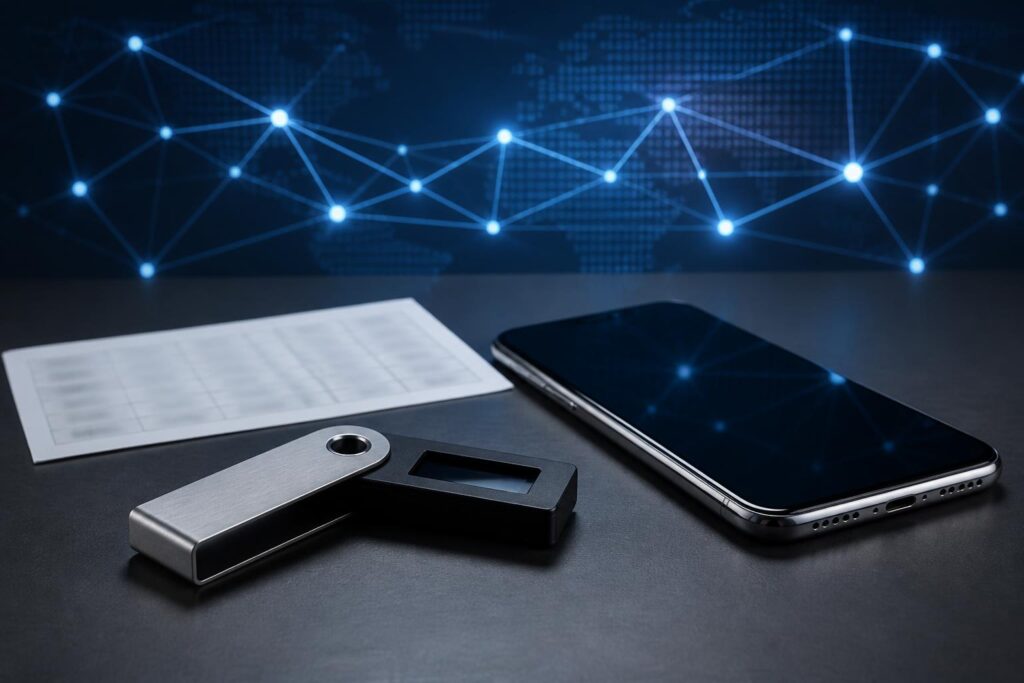
Many people begin using cryptocurrency by registering an account on an exchange, purchasing digital assets, and then seeing a balance displayed on the screen. This experience can easily create the impression that the money is held in an electronic wallet similar to a bank account. In reality, things are more complex. On a blockchain, assets are recorded by the network, while a wallet provides the tools users need to prove control and create signatures for transactions. Therefore, choosing, setting up, and protecting a wallet is not merely a technical step but also the foundation of asset security.
The concept that causes the most confusion is the “crypto wallet.” A wallet does not actually contain coins inside it like a physical wallet. It manages cryptographic information, the most important part of which is the private key. The private key makes it possible to create a signature confirming that the sender has the authority to carry out a transaction from a blockchain address. If the private key is exposed, someone else may be able to control the associated assets. If the private key is lost and there is no recovery method, recovering the assets is usually impossible.
What does a crypto wallet actually manage?
Each wallet is generally associated with one or more public addresses. A public address can be shared to receive assets, much like providing an account number to someone sending money. In contrast, the private key must be kept secret. Users should not send their private keys through messages, email, online forms, or any other channel that others could access.
Many modern wallets use a recovery phrase, usually a sequence of words generated when the wallet is set up. This phrase serves as the source from which the related keys and addresses are generated. Therefore, a recovery phrase is not an ordinary password, nor is it an authentication code that can be reissued. Anyone who obtains the phrase can restore the wallet on another device, while the original user may not realize it immediately.
A recovery phrase must be distinguished from a PIN or the password used to open an application. A PIN can help lock a specific device, while a password can protect a wallet file in certain software. The recovery phrase is the information capable of recreating control of the wallet in another environment. Therefore, deleting an application, changing phones, or forgetting an unlock code does not always mean that assets are lost, but losing the recovery phrase can create a far more serious risk.
How are custodial and self-custodial wallets different?
Under a custodial model, an exchange or third-party service manages the private keys on behalf of the customer. Users log in with an account, password, and layers of authentication provided by the platform. This model is convenient for beginners, especially when they need to trade frequently or use an exchange’s features. However, technical control over the assets depends on how the platform operates, its withdrawal policies, security procedures, and ability to maintain its services.
Under a self-custodial model, users directly hold the private keys or recovery phrase. This approach allows them to control the wallet without giving confidential information to an intermediary, but it also transfers most of the responsibility to the user. No support department can simply reset a lost recovery phrase. A transaction that has been signed and broadcast to the network also generally cannot be canceled merely because the user changes their mind or realizes that they sent it to the wrong address.
No model is absolutely suitable for everyone. Beginners may need time to understand self-custody, while experienced users still have to weigh convenience, trading frequency, and asset value. The important thing is not to confuse seeing a balance on an interface with understanding who controls the keys.
Common mistakes in protecting a recovery phrase
The first mistake is taking a photo of the recovery phrase or storing it in a notes app, email, or online storage service. These devices and accounts can become inaccessible, be infected with malware, or be synchronized to another unintended environment. A photo that seems to exist only on a phone may also appear in a backup or be accessed if the account is compromised.
The second mistake is entering the recovery phrase into a website or form of unclear origin. A legitimate service should not ask users to provide a secret phrase to “verify a reward,” “unlock assets,” or “resolve a transaction error.” Messages urging immediate action, warning that an account is about to be closed, or promising exceptional returns should generally be viewed with skepticism.
The third mistake is checking only a few words and skipping the confirmation of the complete phrase when setting up the wallet. Users should carefully verify the order and spelling according to the wallet’s instructions. If one word is recorded incorrectly or the order is reversed, that record may not restore the original wallet. Storage must also take physical risks into account, such as water, fire, loss, or someone else accidentally seeing it.
Another issue is storing the phrase in only one place without a backup plan. Conversely, creating too many copies and keeping them carelessly also increases the risk of exposure. The appropriate approach depends on each person’s circumstances, but the general principle is that copies must be protected from both physical loss and unauthorized access. Users should also consider in advance who will know how to handle the assets in an emergency, rather than waiting for an incident to occur before looking for a solution.
Software wallets, hardware wallets, and layers of protection
Software wallets generally operate on phones or computers and are suitable for transactions that require quick action. This convenience comes with the fact that the device may connect to the internet, have multiple applications installed, and be affected by how the user protects the operating system. Device passwords, software updates, screen locks, and the habit of not installing applications from unknown sources all play a role, although none can eliminate every risk.
A hardware wallet is a specialized device designed to hold keys and perform certain transaction-signing operations in an environment more isolated from a computer or phone. Such a device can reduce certain risks, but it does not make self-custody an activity requiring no knowledge. Users can still be tricked into signing a transaction that is not what they thought it was, download counterfeit software, or expose the recovery phrase during setup. An expensive device cannot make up for a careless verification process.
For assets of significant value, users may explore mechanisms that require multiple keys or multiple parties to confirm a transaction before it is executed. This approach can reduce dependence on a single point of failure, but it also makes the operating process more complex. If the parties lose the necessary information or cannot agree on how to proceed, accessing the assets may also become difficult. Therefore, a security solution must suit the user’s actual ability to manage it, not merely be suitable in theory.
Checks to perform before sending assets
Before each transaction, users should identify the correct network on which the asset is being used, because an asset may appear on multiple networks with different transfer methods. They should check the receiving address at several characters at both the beginning and end, compare it with information from a trusted source, and review the fee and amount before signing. When sending to a new address for the first time, a small test transaction can help identify mistakes, although it does not replace a comprehensive check.
The address displayed on the screen should also be reviewed directly in the wallet application or on the signing device, if available. Malware may try to change an address copied to the clipboard. Users should not rely solely on a contact name or transaction history, because displayed names can be misleading. After sending, they should record the transaction ID and check its status using a tool appropriate for the network, rather than immediately trusting a screenshot provided by someone else.
Turning knowledge into security habits
Wallet security does not come from a single tip but from a consistent chain of habits. Users should separate wallets for experimentation, frequent transactions, and long-term storage as appropriate, avoiding placing all their assets in an environment that frequently interacts with new applications. Each time a wallet is connected to a service, users should carefully read the permissions requested by the transaction and avoid granting unnecessary permissions.
It is also advisable to develop a plan for dealing with a lost phone, damaged device, forgotten password, or suspected exposure of the recovery phrase. If recovery information may have become known to someone else, promptly prioritizing the transfer of assets to a safer new wallet should be considered, after verifying the device and the procedure being used. Users should not seek “money recovery services” through unclear offers, because scammers often target people who have already experienced an incident.
Cryptocurrency gives individuals a greater degree of control over their assets, but that control comes with a requirement for knowledge and discipline. A recovery phrase should be treated as the ultimate key, not as a string of characters that can be copied or sent to others casually. By clearly understanding what the wallet holds, who controls the keys, how transactions should be checked, and what the backup plan is, users can significantly reduce the risks arising from common mistakes. The goal is not to make using blockchain an inconvenient process, but to create enough of a pause that a rushed decision does not become an irreversible loss.
