


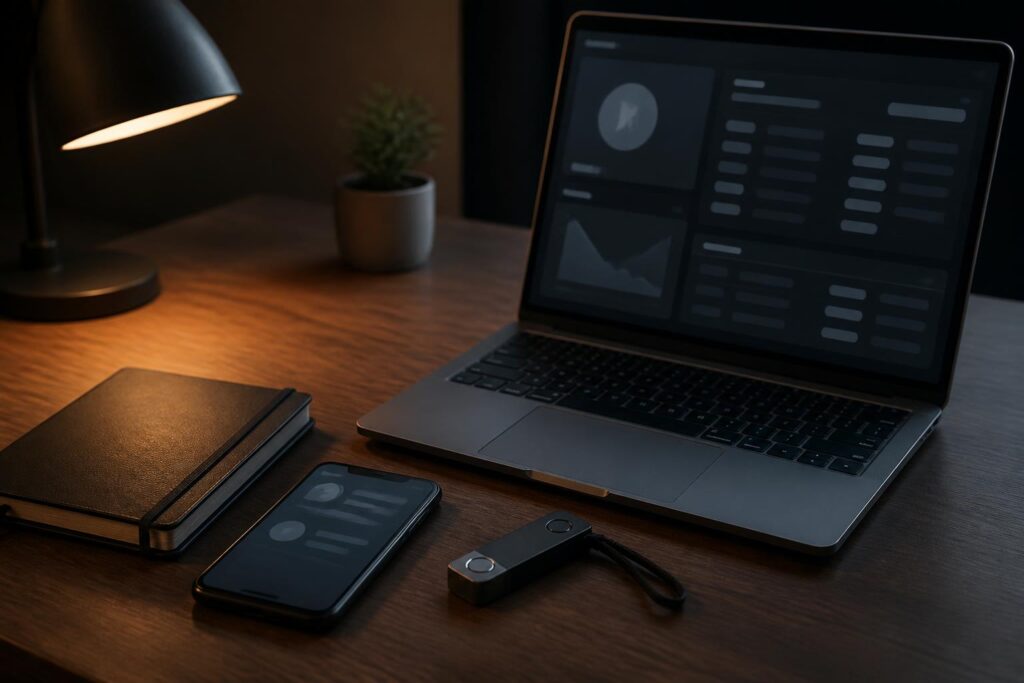
In cryptocurrency, the phrase “not your keys, not your assets” is often used to emphasize the importance of control. However, self-custody of digital assets does not simply mean downloading a wallet app, writing down a few recovery words, and transferring all your funds into it. When there is no longer an intermediary to handle logins, transaction verification, or recovery support, users must also take responsibility for security-related decisions.
This is what makes the self-custody model both appealing and difficult to approach. Users can maintain direct control over their private keys, but a small mistake—such as saving a seed phrase in a screenshot, selecting the wrong network, or mistakenly approving access for an untrusted application—can lead to serious consequences. Therefore, the important issue is not choosing the “best” wallet, but building a process suited to the value of the assets, the user’s level of understanding, and their ability to maintain security over the long term.
What Does a Cryptocurrency Wallet Actually Protect?
Many newcomers imagine a cryptocurrency wallet as a place that stores coins, much like a physical wallet stores cash. This understanding is useful as an illustration, but it is incomplete. Assets are recorded on the blockchain; a wallet primarily manages cryptographic information that allows users to prove control and create signatures for transactions.
A private key is information that can enable the signing of transactions on behalf of an address on a network. A seed phrase, also called a recovery phrase, is commonly used by wallets to create or restore a system of keys. Whoever possesses the seed phrase can restore access to the corresponding addresses on a compatible device or application. For this reason, a seed phrase is not an ordinary password and should not be treated as a backup code that can be sent to a support team.
A public address can be shared to receive assets, while private keys and seed phrases must be kept strictly confidential. Distinguishing between these two categories of information is a foundational step. Making a receiving address public generally does not mean granting someone the ability to transfer funds, but exposing confidential information can result in the loss of control over the assets.
Three Common Custody Models
Cryptocurrency users typically face three choices: custody through an exchange or third-party service, the use of self-managed software wallets, or the use of hardware wallets. No model is suitable for every situation, and each choice shifts responsibility to a different place.
Under a custodial model, the platform holds the keys or controls the signing process on the user’s behalf. The advantage is a more familiar experience, such as logging in with an account and using support and recovery mechanisms according to the platform’s policies. In return, users depend on the provider’s operations, internal rules, account status, and withdrawal procedures. Assets displayed in an account should not be understood to mean that the user directly holds the private keys.
Self-managed software wallets allow users to control their keys on a phone or computer. This model is convenient for frequent transactions, interaction with decentralized applications, and managing moderate amounts of money. Nevertheless, devices can be infected with malware, access can be lost, or users can be exploited through fake applications. Transaction notifications on the screen also do not always fully reflect the meaning of a complex signing request.
Hardware wallets separate key management from devices that are regularly connected to the internet. Users generally have to confirm transactions on the device itself, thereby reducing certain risks from compromised computers or phones. However, a hardware wallet does not automatically make the process completely safe. If a user purchases a device from an untrusted source, discloses the seed phrase, confirms incorrect details, or loses the recovery option, the risks remain.
How Should a Seed Phrase Be Protected?
A seed phrase is the most important component of many self-managed wallets. When creating a wallet, users should write down the phrase in the correct order and carefully check each word. This record should be created in a private environment, without anyone else watching and without access from cameras or unnecessary software.
A seed phrase should not be photographed, stored in email, written in a cloud-synchronized notes application, or sent through a messaging app. These methods can create unintended copies and expand the number of points where the phrase could be exposed. An offline copy kept in a well-controlled location is generally more suitable for recovery. Users should also consider physical risks such as fire, moisture, theft, or someone else accidentally finding it.
Creating too many copies is not necessarily better. Each copy is a new storage point that must be protected. Conversely, having only one record can cause users to lose access if that record is damaged or lost. A reasonable approach is to determine safe storage locations in advance, limit the number of people who know the information, and periodically check that the record remains legible without revealing it to anyone.
No legitimate support employee needs a user to provide the entire seed phrase to “verify a wallet,” “unlock funds,” or “fix a transaction error.” Any such request should be treated as a sign of fraud. Fake websites, fake support accounts, and counterfeit software often exploit fear or greed to persuade users to hand over confidential information themselves.
What Steps Should a Funds Transfer Process Include?
Before sending assets, users should clearly identify which asset is being transferred, which network is being used, who owns the destination address, and whether the receiving platform supports the correct type of asset. The same asset name may appear on multiple networks, but address compatibility and receiving-service support are not always the same.
The address should be copied from a trusted source and then checked at both the beginning and the end. However, checking only a few characters is not sufficient in every situation because malware can interfere with the clipboard. For important amounts, users should verify the entire address through an independent channel or scan it on the receiving device, and then send a small test amount if conditions permit.
Network fees, confirmation times, and the possibility of reversing the transaction should also be considered before clicking confirm. Blockchain transactions generally do not have a simple cancellation mechanism like a bank transfer. Once a transaction has been accepted by the network and the assets have arrived at the wrong address, recovery may not be possible, particularly if the address is not controlled by a party that can provide assistance.
After sending, users should record the transaction ID and check its status on a blockchain explorer appropriate for the correct network. They should not click links sent unexpectedly with promises to “recover” an unconfirmed transaction. A public transaction ID is not a private key, but the information displayed in an explorer must also be read in the proper context, because a transaction may involve multiple internal actions within a smart contract.
Exercise Caution When Connecting a Wallet to Applications
Risks do not arise only when sending money directly. When connecting a wallet to a decentralized application, users may be asked to sign a message, grant permission to use tokens, or execute a transaction that calls a smart contract. These three actions have different meanings and should not be accepted out of habit.
Signing a message does not always transfer assets immediately, but the signature may be used by an application in an authentication process or a subsequent transaction. Granting a contract permission to use tokens may allow the contract to affect the balance within the scope of the permission granted. Therefore, before signing, users need to read the displayed content, check whether the application has the correct official address, and consider the level of permission required.
Users should not connect their wallets to websites promoted through unsolicited messages, comments, or advertisements from unclear sources. A domain name that closely resembles a familiar service may still belong to a fake website. After completing an activity, users should review their connections and granted permissions, and revoke permissions that are no longer needed using an appropriate tool. Revoking permissions does not replace protecting the seed phrase, but it helps reduce certain risks from old approvals.
Design Accounts According to Risk Levels
One common mistake is using the same wallet for every purpose. A wallet holding long-term assets, a wallet used for frequent transactions, and a wallet for experimenting with applications should be separated if this is compatible with the user’s ability to manage them. When one wallet is connected to multiple services, its activity trail and the number of permissions granted may increase, making control more complicated.
A daily transaction wallet should hold only the amount needed for the activities immediately ahead. High-value assets or assets that are not needed frequently can be placed in a stricter security process, such as using a dedicated device, requiring multiple confirmation steps, or storing them offline. Users should also separate experimental accounts from their primary assets, because new applications may contain flaws or request permissions that users do not yet fully understand.
For assets belonging to a group, business, or multiple managers, a mechanism requiring approval from multiple people may be more suitable than assigning all authority to one individual. This model increases operational complexity and requires clear procedures regarding approvers, alternatives, and what to do if a member loses access. Regardless of the model used, it remains important to document the process in clear language and test it periodically under safe conditions.
The Recovery Plan Must Be Tested Before an Incident
Many people think about recovery only after their phone has been lost or an application no longer works. That is when they are most likely to make additional mistakes. A good plan should be prepared in advance and include where the seed phrase is stored, which compatible device or application will be used, who is permitted to access it, and what checks need to be performed.
Recovery testing should be conducted in a controlled environment without exposing the seed phrase. Users can verify that the record can recreate the correct wallet, but they need to understand the process clearly before carrying it out. They should not enter a seed phrase into an arbitrary website or an unfamiliar device simply to “test” it. If the assets are highly valuable, testing should be performed carefully and may begin with a wallet that does not contain important assets.
In addition to the technical plan, situations in which the owner experiences health problems, loses the ability to access the wallet, or dies must be taken into account. Sharing the seed phrase directly with too many people increases risk, but preparing no instructions at all can make the assets inaccessible. Each family or organization must consider for itself the level of privacy, trust, and legal arrangements appropriate to its circumstances.
No Security Solution Can Replace Good Habits
Modern devices, hardware wallets, and security software are only part of the system. The rest lies in the habit of checking, the ability to recognize scams, and discipline when handling transactions. Users should update applications from official sources, protect phones and computers with unique passwords, enable appropriate layers of protection for related accounts, and avoid taking action in public environments or on untrusted devices.
More importantly, users should not allow time pressure to make decisions for them. Offers of high investment returns, urgent warnings, giveaway programs, or requests to connect a wallet immediately all require independent verification. In cryptocurrency, autonomy has meaning only when accompanied by the ability to delay an unclear transaction.
Self-custody of digital assets is therefore not a single action but an ongoing process. Users need to choose an appropriate custody model, separate assets according to purpose, protect the seed phrase, carefully check every transaction, and prepare a recovery plan. When users understand that every choice involves trade-offs, they will be less dependent on simplistic promotional claims and better able to build a more practical and cautious approach to managing cryptocurrency.
