


As electric vehicles, mobile devices, and solar power systems develop, the demand for batteries is no longer focused solely on how much energy can be stored in a small mass. The industry must also find answers to many other questions: Are the raw materials readily accessible? How much do production costs fluctuate? Under what conditions can the system operate reliably? And how will recycling be carried out after the end of its service life? Against this backdrop, sodium-ion batteries are emerging as a notable technological direction.
Sodium-ion batteries are not designed to immediately replace every type of lithium-ion battery. Their value lies in providing an additional option for applications where energy density is not the absolute priority. From stationary electricity storage to certain vehicles and specialized equipment, this technology may suit situations in which size or weight is not the only decisive factor.
How Do Sodium-Ion Batteries Work?
In terms of basic principles, sodium-ion batteries have a structure similar to that of many rechargeable batteries used today. A battery cell consists of a negative electrode, a positive electrode, an electrolyte, and a separator. When the battery is charged, sodium ions move through the electrolyte from one electrode to the other. When the battery supplies energy, this movement reverses and generates an electric current for the device.
The main difference lies in the type of ion used. Instead of relying on lithium ions, this technology uses sodium ions. Sodium is a common element, present in many sources of raw materials, and is not tied to a single supply chain. However, replacing one element with another is not a simple change. The size and chemical properties of sodium ions mean that electrode materials, electrolytes, and manufacturing processes must be designed accordingly.
This is also why sodium-ion batteries cannot be evaluated based on just one criterion, such as cost. A type of battery may have an advantage in terms of raw materials but require more space to store the same amount of electricity. In practice, each application will strike a different balance among cost, durability, weight, charging speed, and power delivery capability.
Advantages Arising from Raw Material Availability and Supply Chain Diversity
One reason sodium-ion batteries are attracting attention is their potential to reduce dependence on certain raw materials with limited supplies or highly volatile prices. This does not mean that every component in a sodium-ion battery is easy to extract or that the technology has become completely independent of critical materials. Nevertheless, expanding the range of battery chemistries could give manufacturers greater flexibility when building supply chains.
For a large-scale manufacturing industry, access to raw materials is no less important than technical performance. If a component becomes scarce, more expensive, or exposed to geopolitical risks, the entire production plan may be affected. A technology that uses more widely available materials could help disperse risk, especially when deployed in systems that require many batteries but do not impose strict minimum size requirements.
Sodium-ion batteries may also be able to take advantage of some of the experience and infrastructure of the lithium-ion battery industry. Many processes, such as cell design, thermal management, quality inspection, module packaging, and system control, still share certain similarities. However, the specific level of compatibility depends on the battery chemistry and the design used by each manufacturer. It should not be assumed that lithium-ion production lines can be fully converted without investment or adjustment.
The Trade-Off in Energy Density
A major challenge for sodium-ion batteries is that their energy density is generally lower than that of advanced lithium-ion battery lines. Put simply, to store the same amount of electricity, a sodium-ion battery pack may require greater size or weight. This is a significant limitation for phones, laptops, or electric vehicles that need to optimize every available space.
In a vehicle, the weight of the battery pack affects operating efficiency, range, and overall design. In handheld devices, users typically expect products that are light and thin while still operating for a long time. These requirements create a substantial barrier for sodium-ion batteries. The technology may be better suited to low-speed vehicles, specialized vehicles, or models in which cost and availability are prioritized alongside driving range.
However, energy density is not the deciding factor in every system. A stationary power storage facility may accept a larger battery pack if the cost is reasonable, maintenance is convenient, and the system responds reliably. Similarly, equipment used in environments where weight is not especially important may take advantage of other benefits of sodium-ion technology.
The Role in Electricity Storage and Renewable Energy
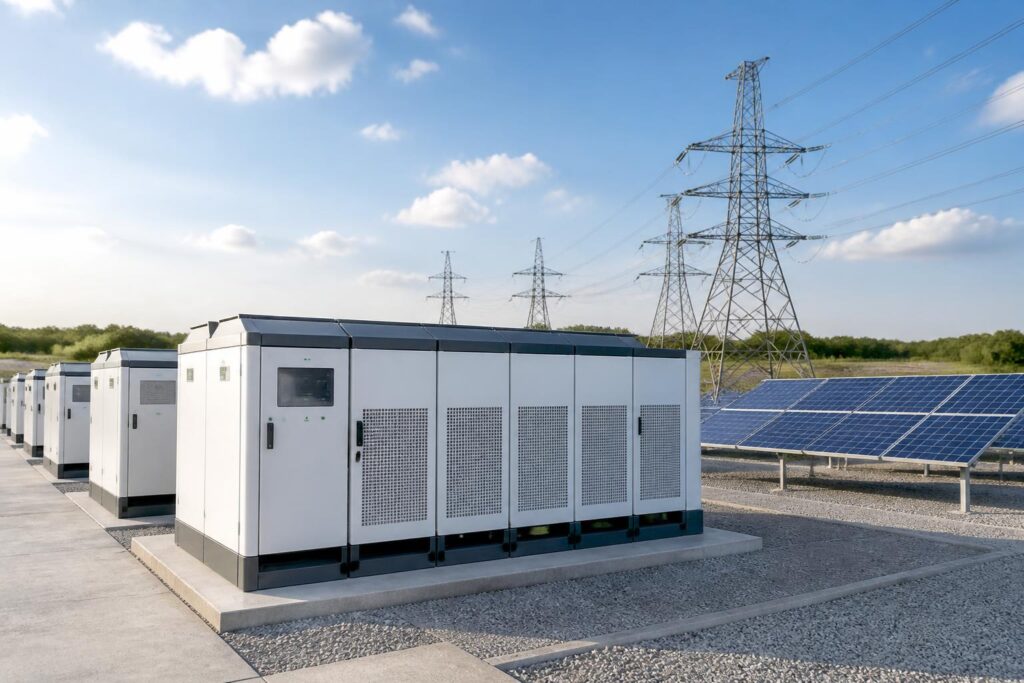
Solar and wind energy depend on natural conditions, while electricity demand changes over time. Storage systems help retain some of the electricity generated when supply is abundant and provide it again when output declines or demand rises. This is an area in which the physical size of batteries can often be planned together with the available site, rather than being tightly constrained as it is in phones or personal vehicles.
Sodium-ion batteries can be viewed as a candidate for stationary storage systems of various scales. These projects must still assess many factors: the number of charge and discharge cycles, the ability to maintain performance, temperature conditions, safety requirements, module replacement plans, and costs over the entire life cycle. A battery pack that is cheaper to purchase but degrades quickly or is expensive to maintain will not necessarily deliver better results.
Using multiple types of batteries can also help energy systems avoid dependence on a single solution. Lithium-ion may be suitable for locations requiring high energy density, while sodium-ion may serve roles in which installation area and weight are not major obstacles. This division could make the design process more flexible instead of forcing one technology to meet every need.
Safety, Durability, and Recyclability Need Comprehensive Evaluation
In discussions about batteries, safety is often reduced to the question of which technology is safer. In reality, the level of safety depends on the cell chemistry, mechanical design, battery management system, manufacturing quality, operating conditions, and how incidents are handled when they occur. Sodium-ion batteries also need to be tested in various situations, such as overcharging, impacts, high temperatures, and control-system failures.
Durability is another variable that needs to be monitored. Batteries are assessed not only by their initial capacity but also by their ability to retain capacity over many cycles, the degree of degradation when not in use, and their performance under different weather conditions. This information is especially important for electricity storage systems, where batteries may have to operate continuously for many years.
Recyclability also needs to be considered from the design stage. As the number of batteries grows, recovering materials and processing batteries at the end of their service life will become an important part of the energy economy. A new technology can create long-term benefits only if the industry can establish appropriate processes for collection, sorting, reuse, and recycling. This requires clear technical standards and coordination among manufacturers, operators, and regulatory authorities.
In Which Direction Will This Technology Develop?
The prospects for sodium-ion batteries depend on more than a single laboratory test result. Manufacturers need to demonstrate the ability to produce them consistently at large scale, control quality between batches, and maintain performance under real-world conditions. Buyers also need transparent data on service life, warranties, performance, and replacement costs.
In the short term, the most practical approach is to view sodium-ion batteries as part of a diverse battery ecosystem. The technology may compete in segments where cost, raw material availability, and stationary storage capacity matter more than compact size. Conversely, high-end devices or vehicles requiring long range may continue to prioritize batteries with higher energy density.
What is notable is that the competition is not taking place only among different types of batteries. Systems can also combine batteries with load management, adjustments to electricity usage times, distributed generation, and other forms of storage. When the entire system is well designed, a type of battery whose specifications are not optimal in every respect can still create value in the position where it is best suited.
Conclusion
Sodium-ion batteries open up a broader way of thinking about the future of energy storage. Rather than seeking a single type of battery capable of meeting every need, the technology industry is moving toward selecting the chemistry that best fits each application. Sodium-ion batteries have potential advantages in terms of raw material availability and supply chain diversity, but these come with trade-offs in energy density and requirements related to production scale.
The true value of this technology will be determined by its ability to operate reliably, its total life-cycle cost, its level of safety, and how it integrates with energy infrastructure. If it can overcome these challenges, sodium-ion batteries may not completely replace lithium-ion batteries, but they will become an important piece of an increasingly diverse electricity storage landscape.
