


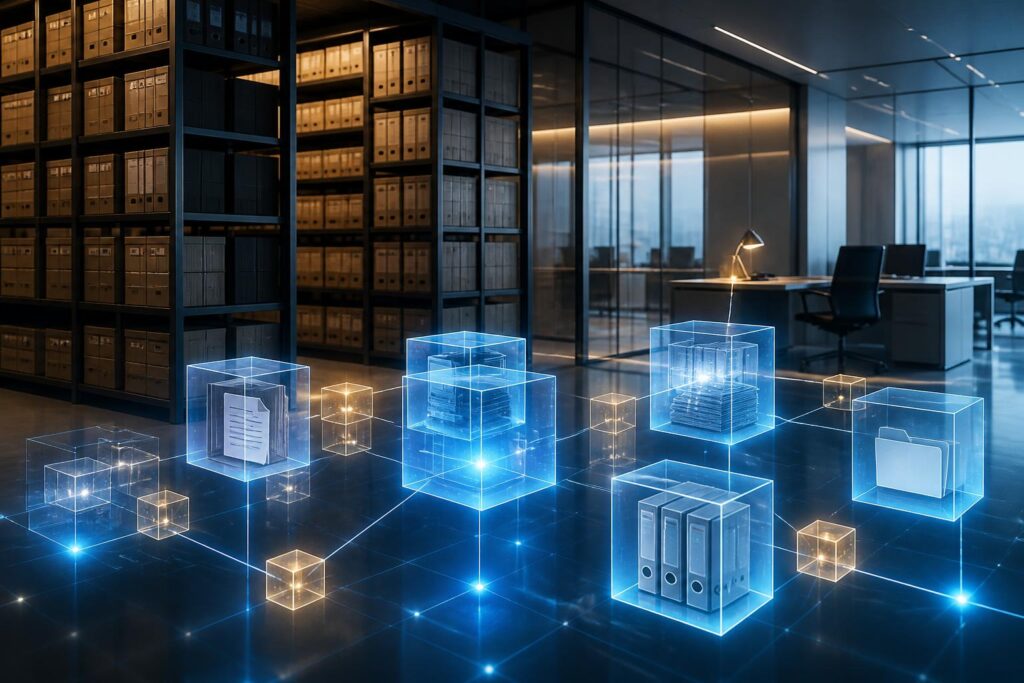
Blockchain is often discussed in connection with cryptocurrencies, but the scope of this technology extends beyond transferring value between wallet addresses. One area receiving growing attention is the tokenization of real-world assets, meaning the representation of rights or interests connected to an off-chain asset through tokens on a blockchain network. Such an asset may be real estate, bonds, commodities, works of art, receivables, or a clearly defined financial right.
The idea sounds simple: instead of storing information about an asset in separate systems, one creates a digital unit that can be issued, transferred, and tracked on a blockchain. However, a token does not automatically make an asset legal, valuable, or liquid. It merely provides a new way to record and operate rights and interests. For tokenization to be meaningful, the entire relationship between the token, the underlying asset, the issuer, and the legal system must be designed transparently.
What Exactly Is Asset Tokenization?
In a tokenization model, the off-chain asset is identified through specific criteria, after which the related ownership or beneficial rights are represented through tokens. A token may represent an entire asset, part of an asset, a debt, future cash flows, or the right to use a service. The design depends on the nature of the asset and the objectives of the model.
The important point is to distinguish the token from the underlying asset itself. A token recorded on a blockchain does not mean that its holder automatically owns the real-world asset. That relationship must be established through contracts, legal records, issuance rules, or an appropriate organizational structure. If a company issuing tokens claims that each token corresponds to a portion of an asset but has no mechanism for verifying and enforcing those rights, buyers may hold nothing more than a digital promise.
Therefore, tokenization is not merely a matter of creating a smart contract or putting data on a network. It is a process combining finance, law, data governance, and technology. Blockchain can help record transactions in a way that is difficult to alter arbitrarily, but it cannot independently confirm that an asset exists, assess the quality of an asset, or replace the competent authorities responsible for establishing ownership rights.
Why Are Organizations Interested in This Model?
The first benefit commonly mentioned is the ability to fractionalize rights and interests. An asset with a high value can be divided into smaller units in economic terms, opening up a more flexible approach for people who do not want or cannot afford to purchase the entire asset. However, technical fractionalization does not automatically make an asset suitable for every investor. Participation conditions, disclosure requirements, transfer restrictions, and tax obligations still need to be considered.
The second benefit is the ability to track the transaction lifecycle on a shared system. When data is designed correctly, parties can see the history of token issuance, transfers, locking, or redemption according to defined access rights. This may reduce some reliance on manual reconciliation across multiple databases. Even so, on-chain transparency has value only when the input data is accurate and users understand what data is being recorded.
Tokenization may also support the automation of certain transaction conditions. Smart contracts can be programmed to distribute cash flows, check transfer conditions, or carry out predefined steps. Automation helps reduce repetitive tasks, but it also means that errors in source code or policy design can spread more rapidly. An automated process is not necessarily a correct process.
Structural Layers That Are Needed
A reliable tokenization model generally requires multiple structural layers rather than just a smart contract. The first layer is the underlying asset. The asset must be described clearly enough for participants to know what the token is linked to, who holds it, how the asset is valued, and what rights and interests may arise.
The second layer is the issuer or manager. This entity must be responsible for issuing the tokens, maintaining the asset records, handling events that affect rights and interests, and providing necessary information. If the asset is held by a third party, that party’s role, responsibilities, and oversight mechanism should also be disclosed.
The third layer is the off-chain data system. Much important information does not exist on the blockchain by default, such as an asset’s legal status, appraised value, payment in the real world, or a change in ownership. This data often has to be brought onto the network through a verification process or by a data provider. This is an aspect that is easily overlooked, because blockchain protects the record only after the data has been uploaded; it does not guarantee that the original data is correct.
The final layer is the mechanism for enforcing rights. When a token holder wants to exchange tokens for an asset, receive cash flows, or file a complaint about a transaction, how will that right be exercised? The answer must exist in the contract and operating procedures; it cannot rely solely on the belief that the system will handle everything automatically.
Legal Barriers and Participant Rights
Classifying a token is one of the most complex issues. A token may have characteristics of a means of payment, an investment instrument, a claim against an asset, or a right to use a service. Its classification may affect licensing requirements, disclosure, anti-money-laundering measures, consumer protection, and transfer restrictions. Therefore, using the terms blockchain or token cannot replace an analysis of the product’s economic and legal nature.
Ownership rights also need to be interpreted carefully. Some token models directly represent rights to an asset; others represent only the right to receive a portion of revenue; still others are utility tokens within a platform. These three cases create very different expectations. If promotional materials use ambiguous language, participants may confuse ownership rights, beneficial rights, and usage rights.
Transferability is another issue. A token may be transferred technically within a few seconds, but that transfer may not necessarily be recognized by law if the recipient does not meet the requirements or the transaction does not go through the necessary process. System design therefore needs to account for participant identities, regional restrictions, transaction rules, and procedures for handling situations in which a wallet address is compromised or control is lost.
Liquidity Does Not Appear Automatically
One common expectation surrounding tokenization is that assets will become easier to buy and sell. However, the ability to issue many tokens does not create buyers, nor does it guarantee a secondary market. Liquidity depends on actual demand, information quality, pricing mechanisms, transaction costs, trust in the issuer, and regulatory clarity.
For assets that are difficult to value or rarely traded, fractionalizing them into tokens may make the buying and selling process more complicated if participants do not share the same understanding of value. A market with sparse trading may also cause token prices to fluctuate sharply or fail to fully reflect the value of the underlying asset. Therefore, materials introducing a tokenized product should clearly distinguish between the technical ability to transfer a token and actual market liquidity.
Even when a trading platform exists, holders may still face limitations such as lock-up periods, verification procedures, settlement times, custody fees, or requirements to trade only with a particular group of parties. These restrictions are not necessarily weaknesses, as they may be necessary to protect the asset and comply with regulations. What matters is that the restrictions are disclosed in advance rather than appearing after users have joined.
Technology and Operational Risks
Smart contracts are the foundation of many tokenization models, but their source code can still contain errors. An error in the rules for issuing, distributing, or redeeming tokens can have financial and legal consequences. Independent code audits, upgrade-permission management, key storage, and the development of incident-response plans therefore play important roles.
Control rights also need to be clarified. Who can pause transactions? Who can correct inaccurate information? Who can issue additional tokens? Who can restore access when a user loses a key? These powers may sometimes need to exist in order to handle incidents, but if they are concentrated in one individual or organization without oversight mechanisms, the model will run counter to expectations of transparency and reduced dependence on intermediaries.
In addition, users may face the risk of losing private keys, being deceived through fake interfaces, sending tokens to the wrong address, or misunderstanding custody arrangements. A secure system requires not only a stable blockchain but also appropriate user-experience design, clear guidance, and support procedures for when incidents occur.
What Determines the Potential for Sustainable Development?
The success of real-world asset tokenization will not be determined solely by transaction-processing speed or interface design. The fundamental factor is the balance between innovation and responsibility. Participants need to know what rights they are buying, from whom, based on what asset, and under what circumstances those rights can be enforced.
Businesses seeking to implement this model should start with a specific economic need rather than looking for a reason to use blockchain. If the existing database system already meets requirements effectively, adding blockchain may increase costs and complexity without creating commensurate benefits. Conversely, for processes that require multiple parties to reconcile records, need a transaction history that is difficult to alter, or require the automation of conditional rights and benefits, blockchain may become a useful component.
Transparency must also include what the model cannot do. Issuers should clearly state that tokens do not guarantee profits, do not replace ownership rights when there is no legal basis for doing so, do not eliminate the risk of loss in value, and do not make an asset liquid in every circumstance. Cautious communication may reduce short-term appeal, but it helps build more realistic expectations.
Conclusion
Real-world asset tokenization is opening up a new language for connecting traditional assets with digital infrastructure. This technology can support the fractionalization of rights and interests, transaction tracking, and the automation of certain processes, but it cannot create legal value, asset quality, or market trust by itself.
The most important question is not whether an asset can be put on a blockchain, but what problem doing so solves and how participants will be protected. A reliable model requires real assets, verifiable information, an accountable entity, clearly expressed rights and interests, and a controlled technology system. When these conditions are placed ahead of the glamour of the terminology, tokenization may have a real opportunity to become a substantive bridge between blockchain and the traditional economy.
