

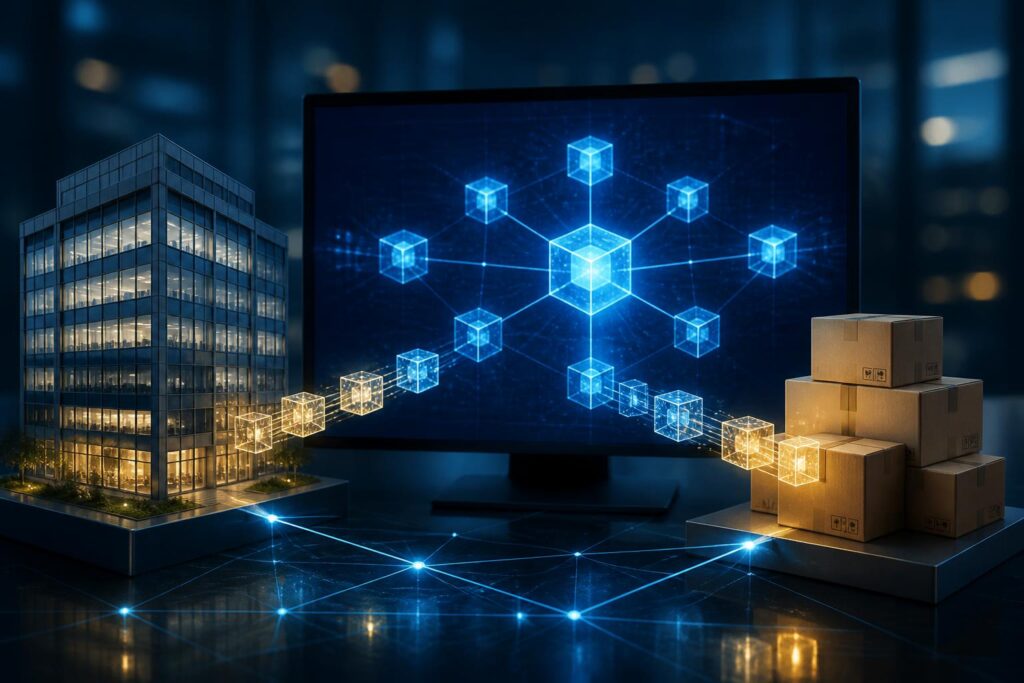
Blockchain is often mentioned as infrastructure for cryptocurrencies, but its ability to record and transfer structured data can also serve a broader purpose: bringing rights related to real-world assets into a digital environment. This process is commonly referred to as real-world asset tokenization. A token may represent a beneficial interest, ownership rights under a particular legal structure, the right to receive cash flows, or the right to use an asset. However, a token does not automatically become a valuable asset simply because it is issued on a blockchain.
The most important aspect of tokenization lies in the relationship between the record on-chain and the asset outside the chain. Blockchain can show which wallet holds a token, when it was transferred, and under what technical conditions. It cannot by itself confirm that a building exists, that a debt is recoverable, or that the issuer actually holds the promised asset. Therefore, evaluating a tokenization project requires looking simultaneously at the technology, legal framework, governance mechanism, and quality of the underlying asset.
What exactly is tokenization?
In simple terms, tokenization is the creation of a digital unit representing a right associated with a specific asset or obligation. That asset may be real estate, commodities, securities, receivables, artwork, or a clearly defined right of use. The token is issued on a blockchain and can be transferred between addresses according to the system’s rules.
What must be distinguished is that a token can represent many different types of rights. In one model, the token holder has the right to receive a portion of the revenue generated by the asset. In another, the token is merely a digital certificate for the right to use a service. In some cases, the token is linked to an interest in a legal entity that holds the asset. These structures are not equivalent, even though they are all commonly referred to as tokenization.
Therefore, the first question should not be “How much could this token increase in value?” but rather “What rights does this token give its owner?” The answer should be set out in the offering documents, contracts, governance rules, or related legal agreements. If the rights are described only in marketing language without a specific enforcement mechanism, it is very difficult for buyers to determine the token’s actual value.
Which part of the problem does blockchain solve?
Blockchain can support the issuance and management of tokens in a more transparent way than a system operating solely within a closed database. Transaction histories can be checked using on-chain data. Transfer rules, quantity limits, or distribution conditions can be programmed into smart contracts. Standardizing tokens also makes it easier for platforms to build tools for custody, trading, or ownership tracking.
However, the transparency of on-chain data does not mean that the input data is correct. If an entity provides false information about the underlying asset, blockchain may preserve that information for a very long time without turning it into truth. This issue is often described as the gap between the “digital record” and “legal reality.” That gap can be narrowed only through asset-verification procedures, a custodian, auditing mechanisms, and clearly defined responsibilities for the participating parties.
Smart contracts also have limitations. They can automatically distribute tokens or cash flows when a technical condition is met, but they cannot independently resolve disputes over ownership, asset quality, or fraudulent conduct in the real world. When a problem occurs, token holders still need to rely on legal contracts, governance mechanisms, and competent authorities to protect their rights.
The links that determine a token’s value
The quality of a tokenized product usually depends on multiple links in the chain. First is the identification of the underlying asset. The asset must be specific enough for participants to know what the token relates to, how it is valued, and who is responsible for managing it. A vague description such as “a portfolio of high-quality assets” does not allow buyers to fully assess the risks.
Next are the custody and verification mechanisms. Is the asset held by an independent entity, or does it remain entirely under the issuer’s control? Is there documentation proving ownership or the right to dispose of the asset? If the asset is sold, pledged, damaged, or loses value, how will token holders be notified and how will the matter be handled? These questions have more practical significance than which blockchain the project uses.
Another factor is the right to convert the token into a real-world benefit. If the token represents a portion of a commodity, through what process can the owner receive the goods? If the token is linked to cash flows, where do those cash flows come from and according to what schedule are they distributed? If the token relates to real estate, how are the token holder’s rights determined if the asset is sold or a dispute arises? A token may be easy to trade in a digital environment yet still be very difficult to convert into a real-world benefit if the process for redemption, receipt, or seeking compensation is unclear.
Liquidity is not guaranteed
Tokenization is often expected to help fractionalize assets and expand access. In theory, a high-value asset can be represented by many smaller tokens, allowing more people to participate with an appropriate amount of capital. Transferring tokens may also be faster than processing a traditional asset transaction.
But the ability to fractionalize does not automatically create a liquid market. For a token to be bought and sold easily, there must be buyers and sellers, clear trading rules, sufficient information, and compliance with applicable regulations. If the underlying asset is difficult to value or attracts only a small group of interested parties, the token may still be very difficult to sell. The price on a trading platform also does not necessarily reflect the value that can be recovered from the real asset.
Liquidity is also affected by lock-up periods, transfer restrictions, and identity-verification requirements. These requirements may be necessary to comply with the law or protect the system, but they make the token different from an asset that can be transferred freely between any wallets. Participants should carefully review these restrictions before treating a token as an instrument that can be cashed out at any time.
Risks users need to examine
The first risk is legal risk. The same label, “asset token,” can refer to very different rights and obligations depending on the issuance structure and jurisdiction of operation. A token may be subject to disclosure requirements, customer-identification rules, investor limits, or regulations related to financial assets. Buyers should not assume that trading on a blockchain places a product outside the scope of the law.
The second risk is counterparty risk. If the issuer, custodian, asset manager, or trading platform becomes unable to operate, the rights of token holders may be affected. It is necessary to determine whether the underlying assets are segregated from the operator’s assets and, if that entity encounters problems, what position token owners will occupy.
The third risk concerns technology. Smart contracts may contain bugs, governance rights may be concentrated, or access keys may be misused. In addition, the fact that a token is issued on a particular network does not mean that every wallet or exchange supports it. Users may also lose control if they send tokens to the wrong address or expose their security information.
Finally, there is valuation risk. The value of the underlying asset may fluctuate, while the token’s price may fluctuate even more sharply because of limited liquidity and market sentiment. A token promoted as “backed” still needs to be assessed in terms of the quality of its backing, valuation frequency, how a decline in the asset’s value is handled, and the inspection rights of token holders.
How to assess a tokenization project more carefully
Before participating, users should begin by reading documents describing the rights involved rather than looking only at the price or development roadmap. Look for answers to the basic questions: What is the underlying asset? Who owns it? What right does the token represent? Who is the custodian? How is the asset verified? And through what process can the owner claim the benefit?
It is also necessary to check the transfer conditions. Can the token be transferred to any wallet, or only between verified accounts? Is there a lock-up period, geographic restriction, or minimum requirement? Where do the fees arise? If the platform ceases operations, what options do users have to prove and enforce their rights?
If the answers rely only on promises of profit or the popularity of a brand, that is a sign to exercise caution. Technology can make processes faster, but it does not replace asset due diligence, contract review, or assessment of the responsible parties. For complex products or those involving significant legal considerations, seeking independent advice may be necessary before making a decision.
A bridge is sustainable only when both ends are connected
Real-world asset tokenization has the potential to create new approaches to ownership, cash-flow distribution, and asset management. Blockchain provides an infrastructure layer that helps record transactions, automate certain processes, and expand the ability to verify data. But the hardest part is not creating a token. The difficult part is ensuring that the token has a clear, verifiable, and enforceable connection to a real-world asset or right.
Therefore, users should view tokenization as a structure combining technology and law, not as a new term for an asset that is certain to generate profits. A reliable project needs to clearly explain the underlying asset, the rights of owners, the custody mechanism, transfer restrictions, and the plan for handling problems. When these matters are disclosed transparently, a token may become a useful bridge between the blockchain world and the real economy.
