


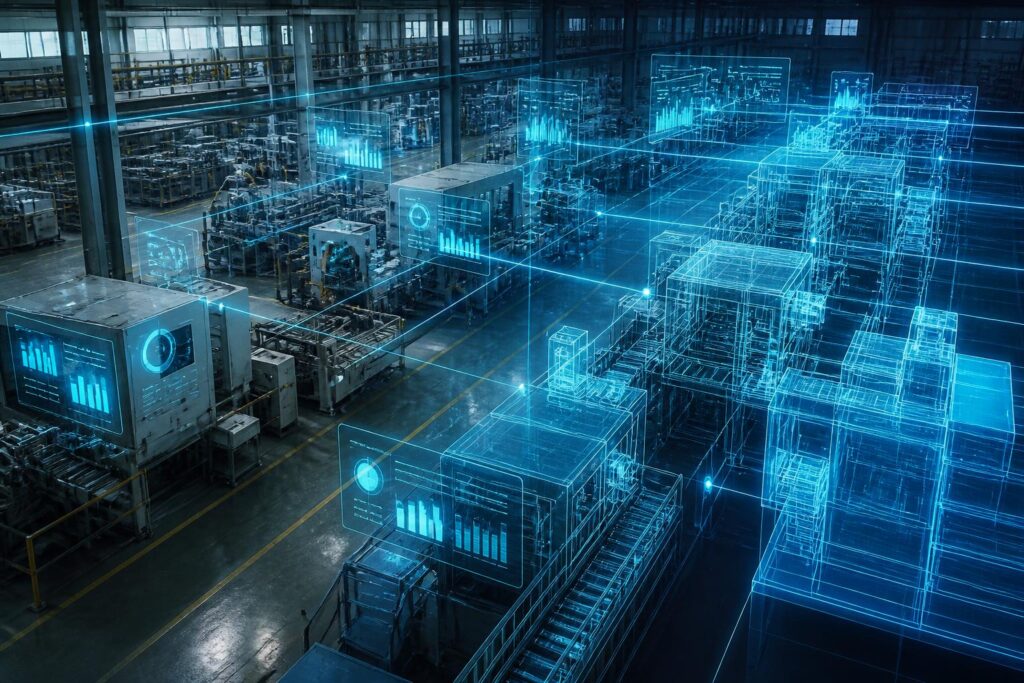
In many fields, important decisions often have to be made when data is incomplete, the cost of experimentation is high, or a small mistake could lead to major consequences. A factory may want to adjust its production line without disrupting operations, a building may need to optimize energy consumption, or a city may have to predict the impact of a new construction project. All face the same question: how can a complex system be observed and tested without continually intervening in the real system?
A digital twin offers one approach to this problem. It is a digital model built to represent an asset, process, environment, or system in the real world. When data from the real object is fed into the model, the digital twin can support condition monitoring, anomaly detection, scenario simulation, and operational improvements. This technology is not simply a three-dimensional image or a blueprint transferred to a computer. Its value lies in the continuous connection between reality and data.
How Is a Digital Twin Different from a Conventional Simulation Model?
Traditional simulation models are usually built for a specific purpose, such as testing the load-bearing capacity of a component, forecasting energy consumption, or evaluating a production plan. A model can be highly useful, but it generally reflects only the assumptions and data provided at the start of the analysis.
A digital twin has a broader scope because it is connected to an existing object and can receive data during operation. Sensors, management software, control systems, and other data sources help the model update the state of the real object. As a result, businesses can ask not only “what if this happens?” but also “what is happening,” “why is it happening,” and “how should we intervene?”
However, not every digital model with data is a complete digital twin. A useful digital twin needs a level of correspondence appropriate to its intended purpose, a reliable update mechanism, and the ability to turn data into information that supports decisions. If data is merely collected without understanding its context, the model may become a complicated dashboard that offers little help to operators.
The Components of a Digital Twin
The first component is the real-world object or process to be represented. This could be machinery, a production line, a building, a vehicle, an energy supply network, or a logistics process. Defining the scope correctly is very important. A digital twin that covers too much will be difficult to implement, while a model that is too narrow may overlook factors that directly affect the outcome.
The second component is the data layer. Data may come from sensors measuring temperature, pressure, vibration, electricity consumption, location, or operating status. In addition to real-time data, the system may use maintenance records, technical specifications, operating schedules, and environmental information. The quality of a digital twin depends significantly on the accuracy, consistency, and traceability of this data.
The third component is the analytical model. This model helps describe the relationships between factors in the system, identify trends, or predict how the system will respond to a change. In some cases, the model is based on physical laws and technical specifications. In others, machine-learning methods may be used to identify unusual patterns in operational data. Regardless of the approach, the results still need to be checked against the real-world context rather than treated as absolute conclusions.
The final component is the interface and decision-making process. Users need to see relevant information, understand the degree of impact, and know what actions can be taken. A digital twin creates real value only when analytical results are connected to day-to-day work, from planning maintenance to adjusting production schedules or allocating resources.
Applications in Manufacturing and Maintenance
In factories, a digital twin can help businesses monitor the condition of equipment and production lines without having to wait for a failure to occur. Data on vibration, temperature, or power consumption may show that a component is operating differently from its normal state. This gives technical staff a stronger basis for conducting early inspections, planning component replacements, and limiting unexpected downtime.
The technology also supports testing changes to processes. Before changing line speed, rearranging machinery, or reallocating work among stages, a business can simulate different scenarios using the digital model. Simulation does not completely eliminate the need for real-world testing, but it helps narrow the number of options that need to be tested and clarify the risks that may arise.
In product design, a digital twin makes it possible to connect data from the development stage with data collected after the product enters use. Information gathered in practice can help engineering teams identify areas for improvement, adjust maintenance instructions, or develop a subsequent version that is better suited to operating conditions.
From Buildings to Cities
In construction and infrastructure management, a digital twin can combine information about structures, equipment, repair history, and environmental conditions. For a building, the model can support monitoring of air-conditioning systems, lighting, elevators, or energy consumption. Managers can assess the impact of changing operating schedules, adjusting temperatures, or servicing a piece of equipment before applying the change on a wider scale.
At the urban scale, a digital twin can represent multiple layers of information, such as traffic, buildings, public spaces, and technical infrastructure. When considering a planning proposal, authorities can use the model to envision potential impacts on movement flows, infrastructure demand, or activity in neighboring areas. Even so, a city is not merely a collection of sensors and roads. Social factors, residents’ habits, and difficult-to-predict changes still need to be considered by people.
The Biggest Barriers Are Not Three-Dimensional Images
The first challenge is fragmented data. An organization often has multiple systems built at different times, using different formats and management rules. If data sources cannot exchange information with one another, the digital twin will reflect only part of the object and may easily produce inaccurate conclusions.
The next challenge is data quality. Sensors may be inaccurate, lose connectivity, or be installed in unsuitable locations. Historical data may lack context, while data from different departments may use inconsistent terminology. Therefore, building a digital twin cannot be separated from the work of standardizing, checking, and governing data.
Cost is also a factor that needs to be considered. Installing sensors, connecting systems, developing models, and training personnel may require significant resources. Not every asset needs a complex digital twin. Businesses should start with a problem that has clear value, such as reducing downtime or improving energy efficiency, and then evaluate the results before expanding.
Security and privacy are issues that cannot be taken lightly. A digital twin may contain information about production activities, infrastructure structures, or people’s usage behavior. If access rights are not properly separated, data may be exposed or used for improper purposes. The system needs mechanisms for authentication, authorization, activity logging, and data protection appropriate to the sensitivity of each type of information.
How Can It Be Implemented Without Simply Chasing Technology?
First, an organization needs to identify which decisions are the most difficult or costly to make. This question is more practical than starting with a vague goal such as “building a comprehensive digital twin.” Once the problem is clearly defined, the implementation team can select the necessary data, sensors, and level of detail.
Next, the organization needs to agree on how results will be measured. A project may aim to reduce the number of shutdowns, shorten inspection times, save energy, or improve forecasting capabilities. Specific criteria help the organization determine whether the model is creating value or merely adding another layer of tools that must be operated.
People must also be involved from the beginning. Technicians, operators, and managers are the ones who understand exceptions that data sometimes cannot show. If the system is designed without being grounded in actual processes, users may not trust it or may not know how to respond when the model issues an alert.
In the long term, a digital twin should be regarded as an operational capability rather than a one-time technology deployment. The real-world object changes, the data changes, and business objectives change as well. The model therefore needs to be regularly checked, updated, and evaluated to ensure that it continues to reflect what users need to know.
The True Value Lies in the Ability to Learn from the Real World
A digital twin does not turn every decision into an automated process, nor does it completely replace human expertise. It creates a layer of observation and experimentation that helps organizations understand systems more clearly before taking action. When built on reliable data, connected to appropriate processes, and placed within a transparent governance framework, this technology can reduce reliance on guesswork.
The most important aspect of a digital twin is not its visual representation or the complexity of its software. Its value lies in the loop between the real world, data, analysis, and action. Each operation generates more information; each piece of good information helps make decisions more accurately; and each decision that is validated in turn helps the model reflect reality more effectively. That is the foundation for businesses, authorities, and organizations to gradually operate more intelligently without sacrificing the necessary caution.
