


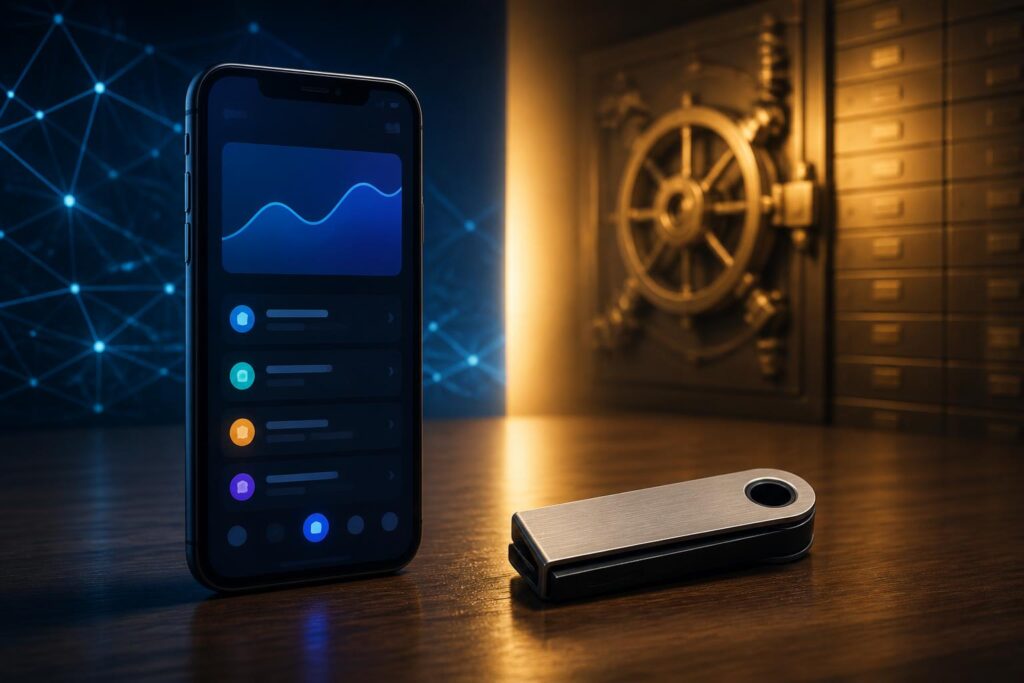
In cryptocurrency, the question “Where are you keeping your assets?” is no less important than the question “What type of assets are you keeping?” Digital funds may be held on an exchange, in a wallet app on a phone, in a browser extension, or on a dedicated device. These options are generally divided into two broad groups: hot wallets and cold wallets.
These two concepts do not describe the value or quality of a cryptocurrency. They primarily refer to how private keys are stored and how connected the wallet is to the internet. Hot wallets are convenient for frequent trading, while cold wallets prioritize separating assets from the online environment. There is no single option that suits everyone; a reasonable decision depends on the intended use, the size of the assets, trading frequency, and the ability to safeguard recovery information.
How Are Hot Wallets and Cold Wallets Different?
A hot wallet is a wallet that is regularly connected to the internet or can quickly connect to online services. Wallets on phones, computer wallets, and browser extensions generally belong to this group. Users can create receiving addresses, sign transactions, and connect to decentralized applications without many additional preparation steps.
The greatest strength of hot wallets is convenience. When users need to transfer assets, they can open the app, check their balance, and confirm the transaction in a short time. This type of wallet is suitable for funds intended for everyday transactions, experimenting with applications, or using services that require frequent interaction.
However, always or frequently being present in an online environment also increases the attack surface. A phone may have a malicious app installed, a computer may become infected with data-stealing malware, and a browser may be tricked into connecting to a fake website. In addition, users may unknowingly sign a dangerous transaction after failing to read the requested details carefully.
A cold wallet is a method of storing private keys in an environment separated from the internet when not in use. Dedicated hardware devices are a common form, but the concept of a cold wallet is broader than owning a specific device. The core objective is to limit the private key’s exposure to online environments and reduce the possibility of remote access.
Cold wallets are generally suitable for assets that do not need to be used continuously. In return, users must become familiar with the processes of setup, backup, address verification, and transaction confirmation on the device. If the device is lost and no recovery information remains, regaining control of the assets can become extremely difficult. Therefore, cold wallets do not automatically eliminate all risks; they shift the focus of risk from the online environment to physical management and the user’s procedures.
The Greatest Risks Usually Involve Private Keys
Cryptocurrency wallets are not the same as traditional bank accounts. Control over assets is generally tied to a private key or recovery information that allows transaction signatures to be created. Whoever controls that information may be able to move assets from the corresponding address, depending on the mechanism of each network. Therefore, protecting a recovery phrase is not merely a matter of protecting the password used to log in to an application.
A common mistake is taking a photo of the recovery phrase and storing it in a photo library, sending it through a messaging app, or syncing it to a cloud service. These copies may exist on multiple devices and accounts. If one account is exposed, malicious actors may find the recovery information. Typing the phrase into a website to “verify the wallet” is also a dangerous sign, because a legitimate service should not ask users to provide a private key simply to receive funds or unlock an account.
Risk also arises when users download the wrong software. The name, icon, and interface of a fake application may be designed to resemble the real product. Such an application may attempt to collect the recovery phrase or change the receiving address. Therefore, the download source, developer name, requested permissions, and installation process should all be checked before use.
Choose a Wallet Type According to Its Intended Use
Funds Used for Frequent Transactions
If you frequently buy, sell, make payments, or interact with applications on a blockchain, a hot wallet may be more convenient. Even so, a hot wallet should not be regarded as a place to keep all your assets. A cautious approach is to keep only the amount needed in the short term in the wallet, similar to not carrying all your savings when going out.
Before each connection to an application, users should check that the domain name is correct, read the transaction details, and see what permissions the application is requesting. Broad or unclear permission requests should be examined carefully. After completing an activity, users can check and revoke permissions that are no longer needed if the tool or network supports this function.
Funds Intended for Long-Term Holding
For assets that are traded infrequently, a cold wallet can help reduce exposure to online threats. However, users need to establish a clear process from the outset: purchase the device through a trustworthy channel, check that it is intact, set up the wallet in a private space, and do not let others see the recovery information.
Recovery information should be recorded in a durable, easily verifiable way that is not easy to copy. It should not be stored as a single copy in a place where it could be lost through damage, fire, flooding, or misplacement. Conversely, creating too many copies also increases the number of places where the information could be exposed. Users need to balance recoverability and security, while also considering what would happen if a family member had to take over the assets in an emergency.
When You Need Both Security and Convenience
Many people can use a combination model instead of choosing only one type of wallet. A hot wallet can serve spending and small transactions, while a cold wallet stores assets that are not needed immediately. Separating these purposes helps limit losses if one wallet is compromised or the user accidentally signs the wrong transaction.
The division should be clearly remembered to avoid sending funds to the wrong place. Before sending a significant amount, it is advisable to conduct a test transaction with a small amount, confirm the correct network, and carefully check the receiving address. Cryptocurrency addresses are often long and difficult to read visually, so checking a few characters at the beginning and end is only a supporting step and cannot replace a complete verification process.
Security Habits to Maintain
First, protect the devices used to access your wallet with strong passwords, up-to-date software, and a screen-lock method. Do not install applications from unknown sources or allow others to control the device remotely while you are logged in to the wallet. For accounts on exchanges or custodial services, enable multi-factor authentication and, if possible, use a separate email address for digital-asset activities.
Second, distinguish genuine transaction notifications from messages intended to pressure you into acting. Invitations to claim rewards, urgent connection requests, warnings that an account will be locked, or requests to send money to “unlock” an account should all be checked through official channels. Do not access links in suspicious messages and then enter login information or a recovery phrase.
Third, test the recovery process before transferring significant assets. Users can check whether they have recorded the information correctly, understand how to recover the wallet, and know how to verify an address. A small test amount can also help identify errors in the process without putting all the assets at risk.
Finally, do not confuse control of a private key with absolute security. Self-custody wallets give users direct control over their assets, but they also make users responsible for backups, transactions, and handling mistakes. Custodial services may simplify certain tasks, but users must assess the risks related to the account, withdrawal procedures, and dependence on the service provider.
Conclusion
Hot wallets and cold wallets are two tools serving two different needs. Hot wallets stand out for their speed and connectivity, while cold wallets aim to reduce exposure to the internet during storage. The right choice is not about following one wallet type advertised as the best, but about how assets are allocated, how the amount exposed to risk is limited, and how consistently security procedures are maintained.
Beginners should start with a small amount, learn how to verify transactions, and fully understand their recovery information before increasing the scale. As assets or usage frequency grow, separating wallets by purpose, conducting periodic checks, and preparing a recovery plan will matter more than finding an application with an attractive interface. In cryptocurrency, user caution remains an irreplaceable layer of protection.
