


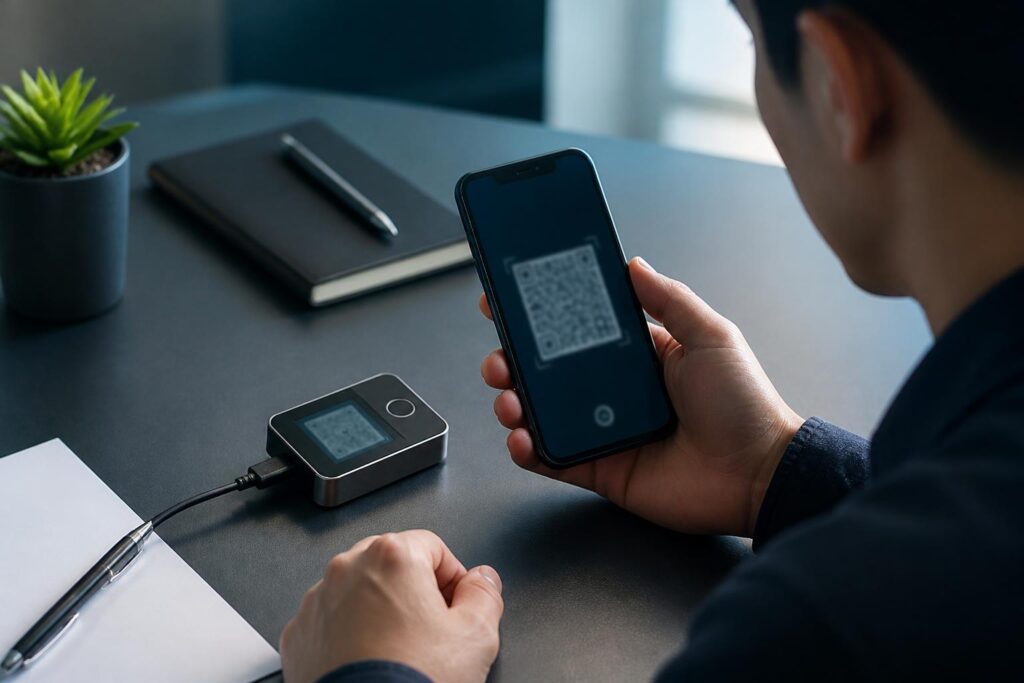
In the cryptocurrency ecosystem, the phrase “not your keys, not your coins” is often mentioned when discussing control over assets. The idea behind it is quite simple: if digital currency is held on an intermediary platform, users do not directly possess the private keys needed to approve transactions. By contrast, when using a self-custody wallet, users can interact with the blockchain network without handing over complete control to an exchange or custodial service.
However, self-custody does not mean absolute security, nor is it the right choice for everyone. It transfers part of the responsibility from an intermediary organization to the individual. Users gain more control, but at the same time must protect their recovery phrase, check addresses, select the correct network, and handle situations involving lost devices or scams on their own. Understanding this mechanism is a necessary step before deciding to place assets in a personal wallet.
What Does a Cryptocurrency Wallet Actually Store?
Saying that “the money is in the wallet” makes the concept easier for newcomers to understand, but it is not entirely accurate from a technical perspective. Assets on a blockchain are recorded by the network, while a wallet primarily manages cryptographic information that allows users to prove control and sign transactions. The most important component is the private key. Anyone with the appropriate private key can create a signature requesting that the network transfer assets to another address.
A wallet address can be shared to receive assets, much like destination information. A private key, by contrast, must be kept secret. Knowing an address generally does not allow someone else to move funds from the wallet without authorization, but publicly revealing too much information about balances and transaction history can still affect privacy. Therefore, protecting a wallet is not only about hiding a string of characters, but also about carefully managing data related to one’s financial activity.
Most modern wallets use a recovery phrase made up of multiple words according to a specific standard to create or restore private keys. This phrase is more convenient than memorizing a long key string, but its sensitivity remains unchanged. Anyone with the recovery phrase can restore the wallet on a compatible device or application. Therefore, a recovery phrase is not an ordinary password and should not be sent via messages, email, online forms, or entered into a website of unclear origin.
How Is a Self-Custody Wallet Different from an Exchange Account?
When assets are held on an exchange, the platform generally manages the private keys and displays the balance in the user’s account. Users log in with their credentials and then submit withdrawal or trading requests according to procedures established by the platform. This model can be convenient, especially for newcomers, but access to the assets still depends on the status of the account, withdrawal policies, verification procedures, and the service’s ability to operate.
With a self-custody wallet, users directly hold the information needed to sign transactions. There is no support department that can simply reset the recovery phrase if the user loses it. There is also no default mechanism for reversing a transaction that has already been confirmed on the network. This is the core difference: a self-custody wallet reduces dependence on an intermediary, but it does not eliminate risk. It merely changes where responsibility lies.
The two models can also be used together for different purposes. Someone may keep a small amount on a convenient platform for trading while placing long-term holdings in a personal wallet. Regardless of the approach, users need to understand clearly who holds the private keys, who can approve transactions, and what must be done if access is lost.
Important Layers of Protection When Using a Personal Wallet
Install Applications and Devices Carefully
Risk can arise even before a wallet is used. Fake applications, modified software, or fraudulent links may attempt to obtain the recovery phrase during the initial setup. Users should download wallets from official sources, check the application name, and be cautious with advertisements or messages urging them to install something urgently. Updating the operating system, browser, and security software can also reduce certain risks arising from compromised devices.
The computer or phone used for a wallet should be protected with a separate passcode, not shared casually, and not overloaded with unnecessary software. Nevertheless, no device is completely immune to malware. For large sums or assets intended to be held for a long time, some people consider using a hardware wallet to separate the transaction-signing process from an environment that is regularly online. Such a device should still be purchased from a trustworthy source and used according to the instructions; it does not automatically protect users from every type of scam.
Protect the Recovery Phrase
The recovery phrase should be carefully written down on a suitable medium and stored in a private place safe from loss or damage. Taking screenshots, saving it in a cloud service, sending it to a personal email account, or storing it in an online notes application can create additional points of exposure. Some people choose to make multiple physical copies and keep them in different secure locations, but the specific arrangement must balance recoverability with the risk of someone else gaining access.
The recovery phrase should not be entered into any form simply because someone claiming to be a support employee requests it. Legitimate services generally do not need users to send the complete secret phrase to “verify a wallet,” “unlock assets,” or “receive a reward.” Offers promising guaranteed returns, requests to transfer money in advance, or attempts to create a sense of urgency are signs that one should stop and conduct an independent check.
Check the Address and Network Before Transferring
A cryptocurrency transaction usually cannot be recovered merely because the sender entered the wrong address. Before confirming, users should check the recipient address, asset type, selected network, and any related conditions. Some networks have similar address formats, while assets with the same name may exist on multiple networks. Choosing the wrong network or sending funds to a location that does not support the asset can make recovery difficult or even impossible.
For a first transaction to a new address, sending a small test amount can help verify the process, but it is not an absolute guarantee. Users still need to confirm the address through a trustworthy source rather than relying only on a few characters at the beginning and end. Malware or copy-and-paste replacement techniques can cause a different address to appear in the clipboard. The final check before signing a transaction is therefore particularly important.
Common Mistakes Made by Newcomers
A common mistake is confusing the recovery phrase with a login password. An application password can be changed or reset through its own mechanism, while the recovery phrase is the foundation for recreating control of the wallet. Another mistake is storing many assets in a single wallet without a backup plan. If the phrase is exposed, all associated assets may be at risk; if the phrase is lost, regaining access may no longer be possible.
Users are also easily persuaded by fake websites that imitate the interfaces of familiar services. These websites may request that users connect a wallet, sign a message, or grant permission to interact with assets. Not every signature is a direct instruction to transfer funds, but users should not sign content they do not understand. When using decentralized applications, it is necessary to consider the permissions requested by a transaction, the application’s source, and whether granted permissions can be revoked if the platform supports that feature.
Another issue is the lack of a plan for the situation in which the wallet owner loses the ability to access the wallet. Users may prepare recovery instructions for heirs without publicly revealing the secret phrase, or use a storage arrangement suited to their family circumstances. The important thing is that the plan should be tested at a safe level and should not become an easily stolen copy. Digital assets may continue to exist on the blockchain for a long time, but access still depends on how the confidential information is preserved.
Is Self-Custody Suitable for Everyone?
The answer depends on each person’s ability to accept responsibility and on how they use the wallet. People who trade frequently, need to interact with many applications, or want direct control over their private keys may value self-custody wallets. Conversely, people who are unfamiliar with technical security, frequently lose devices, or are unable to create a backup plan may face significant risks if they move assets to this model too quickly.
Holding one’s own private keys should not be viewed as a competition in independence. The reasonable goal is to choose a model that users understand, can control, and can maintain over the long term. They can start with a small amount, become familiar with receiving and sending funds, carefully read each transaction-signing request, and only then consider larger holdings. Dividing assets according to purpose and level of risk can also help limit the consequences if a wallet or device encounters a problem.
Control Always Comes with Responsibility
A cryptocurrency wallet is not an automatic safe and is not insurance for digital assets. It is a tool that helps users manage cryptographic information in order to interact with the blockchain. The value of this tool lies in its ability to grant direct control, but that very feature requires care at every step: from installation and backups to device protection and transaction verification.
Self-custody should begin with knowledge and a simple process, not with promises of profit or fear of missing out. When users understand who holds the private keys, what role the recovery phrase plays, and which transactions cannot be reversed, they will have a better basis for choosing an appropriate storage method. In cryptocurrency, control may rest in the hands of the individual, but safety is strengthened only through consistent checking habits and a coherent protection plan.
