

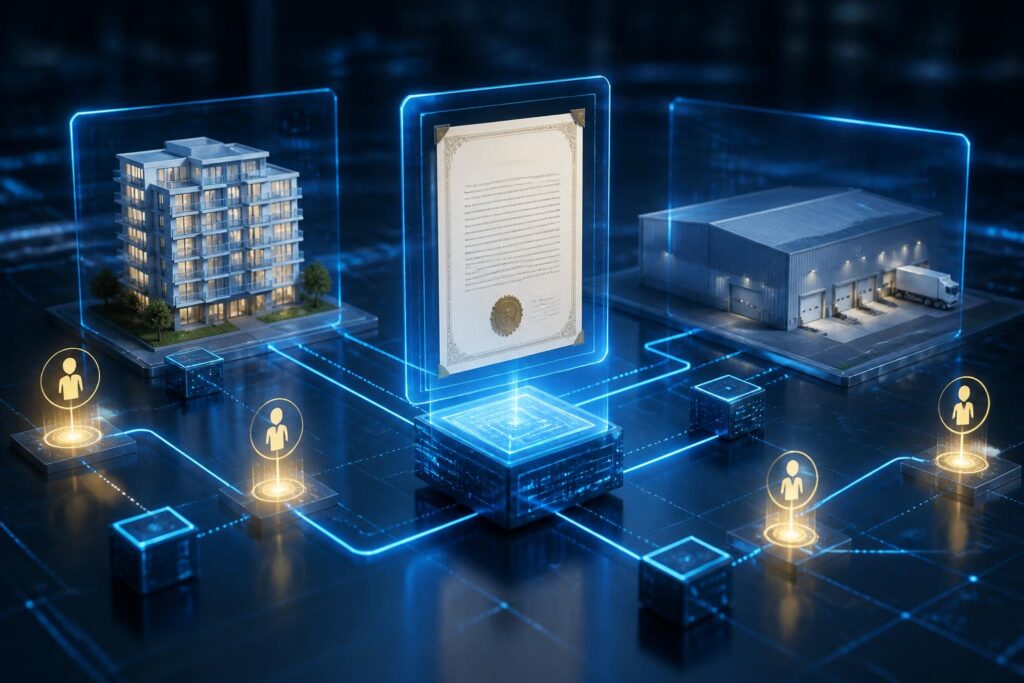
Blockchain is often mentioned in the context of cryptocurrencies, but its ability to record and transfer data on a distributed network also opens up another area of application: tokenizing real-world assets. From real estate, commodities, and works of art to rights to receive cash flows, many types of assets can be represented by digital units on a blockchain. This idea is appealing because it promises to make assets that are inherently difficult to divide or trade more flexible.
However, tokenization is not a simple transformation of a physical asset into a string of characters on a network. A token has practical value only when it is backed by clearly defined rights, the issuing entity has the necessary capacity, the underlying asset can be verified, and the legal mechanisms are sufficiently robust to protect holders. Without these conditions, blockchain may make transaction data more transparent, but it cannot by itself create ownership rights, liquidity, or security.
What Is Tokenization in Essence?
Tokenization of real-world assets is the process of representing an asset or a right related to an asset through a digital token. A token may represent an entire asset, a fractional ownership interest, the right to receive revenue, a right of use, or another commitment by the issuing organization. The specific content depends on the structure of each project, rather than being determined solely by the fact that the token was created on a blockchain.
For example, a project may issue tokens tied to the right to receive a portion of the revenue from a rental asset. In another case, a token may represent the right to receive a quantity of stored commodities. There are also models in which a token is used only as a digital certificate to track provenance or access rights, rather than granting the holder ownership of the asset. Therefore, the important question is not “Has the asset been put on the blockchain?” but “What rights does this token grant its holder, and where are those rights enforceable?”
Blockchain can record the time of issuance, the number of tokens, the history of transfers, and certain operating conditions through program code. Nevertheless, on-chain data reflects only what has been entered into the system. It does not independently confirm that a real-world asset exists, verify the asset’s quality, or guarantee that the issuing organization will fulfill its commitments.
Why Is Tokenization Receiving Attention?
The first benefit commonly mentioned is the ability to fractionalize. An asset with a high value or one that is difficult to allocate can be linked to many tokens, allowing investors to access a portion of the rights rather than having to purchase the entire asset. This approach may lower the participation threshold in some models while also allowing different types of rights to be designed.
Tokenization may also make the tracking of ownership or beneficial rights more systematic. Instead of relying entirely on fragmented records, the parties can use a shared ledger to verify the history of issuance and transfers. When the process is well designed, this data helps reduce the risk of duplicate records, supports reconciliation, and clarifies the movement of rights.
Another benefit is the ability to automate certain conditions. Smart contracts can be programmed to distribute payments, restrict transferees, or handle certain steps once conditions have been met. Automation does not eliminate the need for oversight, but it can reduce manual operations and limit reliance on certain intermediary processes.
Tokenization also creates opportunities to experiment with new ways of organizing rights. A group of people may jointly participate in an asset, a business may manage multiple layers of rights, or a platform may connect asset data with other financial services. These possibilities explain why tokenization is regarded as a development direction worth monitoring in the blockchain ecosystem.
What Can Blockchain Solve, and What Can It Not Solve?
Blockchain’s strength lies in maintaining a transaction record that is difficult to alter arbitrarily after it has been confirmed according to the network’s mechanism. This characteristic is useful for tracking the provenance of tokens, verifying the sequence of transfers, and reducing disputes over transaction data within the system itself.
However, the immutability of data does not mean that the data was correct to begin with. If an issuing entity puts false information on a blockchain, the system may preserve that information very reliably. If an asset that has been declared does not exist or has been pledged elsewhere as collateral, a token validly recorded on-chain still cannot correct the problem by itself. This is an important gap between the digital world and the legal and physical worlds.
This gap is often referred to as the challenge of connecting on-chain data with real-world events. Narrowing it requires asset-verification procedures, audits, custody, reporting, and dispute-resolution processes. These mechanisms may involve asset managers, independent inspection entities, or competent authorities, depending on the type of asset and the operating model. Blockchain supports record-keeping, but the quality of the overall system also depends on off-chain layers of control.
Risks Participants Need to Assess
The first risk is ambiguity about the rights involved. A token may be marketed as “representing real estate,” while the accompanying documents grant only the right to receive a payment from the issuing organization. These two descriptions create major differences in voting rights, disposal rights, the right to claim the asset, and the course of action if the issuer becomes insolvent. Participants need to read the legal documents rather than relying solely on the name or marketing imagery.
The next risk concerns the underlying collateral. If a token is linked to goods held in storage, it is necessary to know who is holding the goods, how they are inventoried, whether they have been used as collateral for other obligations, and whether token holders have a mechanism to claim delivery of the goods or merely the right to receive money. For income-generating assets, the source of the funds, expenses, distribution priority, and the way situations in which revenue is lower than expected will be handled must be clarified.
Liquidity is also a point that is easily misunderstood. The fact that a token can be transferred on a blockchain does not mean that there will always be a buyer. Actual liquidity depends on the number of participants, transfer regulations, the quality of information, and the market’s level of confidence. An asset divided into many tokens may still be difficult to sell if the rights are complex or there is no suitable trading venue.
Technology risks cannot be overlooked either. Errors in smart contracts, insecure private-key management, poor decentralization design, or incidents at a custody platform can all affect the ability to use tokens. In addition, if users lose access to their wallets or send tokens to the wrong address, recovery may not be straightforward, depending on the system’s design.
Finally, there are legal and compliance risks. A token may be subject to different requirements depending on the nature of the rights involved, the way it is issued, the participating groups, and the jurisdiction in which it operates. Issues such as customer identification, anti-money-laundering requirements, investor restrictions, disclosure obligations, and taxation need to be considered before a product is made widely available. One should not assume that using blockchain places a model outside the scope of legal regulation.
How Should a Tokenization Project Be Evaluated?
First, it is necessary to precisely identify the underlying asset and the relationship between that asset and the token. Readers should seek answers to the following questions: Who owns the asset? Where is it located? How is it valued? Is there documentation proving its existence? And who is responsible for verifying it? If the information consists only of general statements, that is a sign to exercise caution.
Next, it is necessary to read the issuance terms and the mechanisms for dealing with adverse situations. What rights do token holders have if the issuing organization breaches its commitments? Can they require the token to be exchanged for the asset or for money? If the asset is lost, damaged, declines in value, or becomes subject to a dispute, how are the losses allocated? The answers should be found in legally effective documents, not merely in promotional content.
It is also necessary to examine the parties involved in the operating chain. The issuer, asset custodian, technology platform, auditor, and trading venue have different roles. The use of a popular blockchain by a project cannot replace an assessment of the capabilities and responsibilities of each party. Transparency about the operating organization is often no less important than information about the code.
Finally, participants should consider how well the investment fits their own risk tolerance. Tokenization may make a product appear more accessible and easier to trade, but the nature of the asset, the holding period, and the possibility of losing capital still need to be assessed independently. Money needed for essential expenses should not be used merely because of expectations that the token may rise in value or can be quickly resold.
Prospects Depend on the Quality of the Design
Tokenization will be more meaningful when it solves a specific problem rather than merely placing a new technological layer over an asset. If the documentation of rights is already clear, the transfer process is transparent, and the responsible parties are identified, blockchain can help improve verifiability and automation. Conversely, if ownership is unclear, asset data is unverified, or complaint mechanisms are weak, tokenization only makes a risky structure easier to market.
Going forward, the development of this field will likely depend on three factors: the legal framework, standards for verifying assets, and the quality of platform governance. Users also need to develop the habit of distinguishing between tokens representing legal rights, tokens representing economic rights, and tokens that serve only a technical function within a system.
Tokenization of real-world assets should therefore not be viewed as a shortcut to turning every asset into instant liquidity. It is a model that combines technology, law, finance, and governance. Blockchain can provide an effective record-keeping layer, but the ultimate value of a token is still determined by the underlying asset, the enforceability of the commitments, and the transparency of the system as a whole.
