


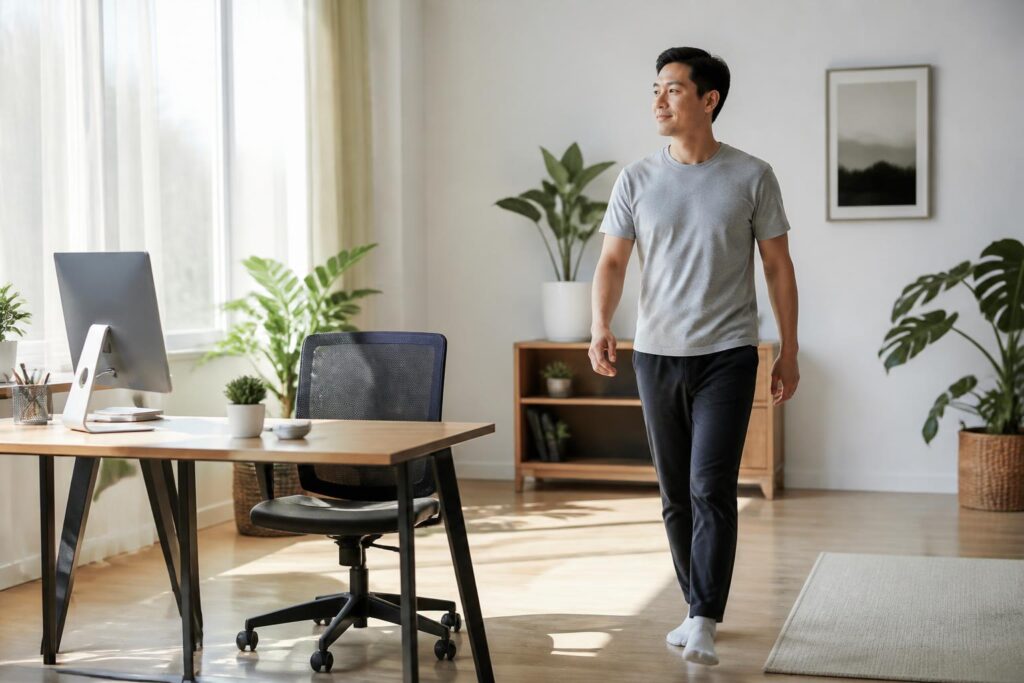
In the rhythm of modern life, many people realize that they spend most of their time sitting, yet find it difficult to set aside a dedicated period for physical activity. Work, studying, family care, and unexpected responsibilities often push exercise plans to the bottom of the list. When schedules become busy, fitness goals are easily imagined as a major program requiring a great deal of time, equipment, or a specialized space. This way of thinking can make getting started feel more burdensome than necessary.
Movement throughout the day does not necessarily have to be tied to a long workout. Taking a few extra steps, doing a few stretches, changing posture, or taking an active break can all become part of an active lifestyle. What matters is not turning every free minute into exercise time, but recognizing the moments when the body needs to change state and developing an appropriate response. When movement is incorporated into the flow of familiar daily activities, it has a chance to become a habit rather than a task that requires effort to complete.
Why do short breaks deserve to be valued?
A day of work or study often consists of many smaller stretches of time. After a period of concentration in front of a screen, the body may remain in the same position for a long time without anyone noticing. When absorbed in work, people may only recognize their fatigue after experiencing stiff shoulders, a heavy back, dry eyes, or difficulty concentrating. A short break creates an opportunity to leave the old position, look into the distance, walk around, and become more aware of one’s condition.
The value of a break lies not only in the number of minutes spent moving. It also helps divide a long sequence of tasks into more manageable sections. Instead of waiting until the end of the day to think about caring for the body, each person can intentionally create small stopping points. These stopping points make movement less dependent on momentary willpower. When an action is linked to a familiar cue, such as after completing a group of tasks or before starting a meeting, maintaining it is often more realistic than making a vague promise such as “I will exercise more.”
Start by observing your own daily rhythm
Before making a movement plan, it is helpful to spend time observing an ordinary day. You can note the periods when you have to sit for a long time, the times when you usually move from one room to another, the moments when you are most likely to lose focus, and the tasks that can be done while standing. The purpose of observation is not to evaluate yourself, but to find opportunities that already exist in your schedule.
Everyone has different circumstances. Someone working from home may stand up while waiting for the computer to process something or rearrange the desk to make it easier to change positions. Someone working in an office may get up to fetch water, use the stairs when appropriate, or spend a few minutes walking after lunch. A person caring for young children may combine a few gentle movements with the time spent waiting for the child to finish an activity. These choices do not need to be the same and should not be viewed as a mandatory template. What is essential is that they suit each person’s space, health, and actual responsibilities.
Design easy-to-follow “movement points”
After observing your routine, you can choose a few fixed moments to change position or state. A good movement point usually has three characteristics: it is easy to remember, requires little preparation, and does not significantly disrupt the main task. For example, after completing a task, you can stand up and walk around the room; before a phone call, you can adjust your posture and relax your shoulders; after eating, you can take a light walk if conditions permit.
Every break should not be turned into a long list of exercises. An overly detailed plan can create the feeling that everything must be completed, causing beginners to give up quickly when they have a busy day. It is better to build a minimum version, such as simply standing up, walking a few laps, or doing a few simple stretches. Once this routine becomes familiar, the person carrying it out can adjust the duration and intensity according to their ability.
It is also important to distinguish between light movement in daily life and a specialized exercise program. Active breaks can help interrupt prolonged sitting and make the day more flexible, but they cannot always replace training suited to specific goals. People who want to improve endurance or strength, or recover from a health problem, should consider a separate plan and seek professional advice when necessary.
Small adjustments to the space
The environment has a significant influence on daily choices. If everything is within reach, people may have little reason to stand up. Conversely, a few moderate adjustments can create more opportunities for movement without causing inconvenience. You can place drinking water somewhere that requires you to stand up to get it, arrange frequently used items so they are not too close to your seat, or set aside a small area for stretching.
Reminder devices can also be useful, but notifications should not become a source of pressure. A reminder that appears too frequently may be turned off or ignored. Users should try a moderate approach, observe their response, and then make adjustments. For some people, a watch or app can help them notice how long they have been sitting. For others, a cue linked to daily activities, such as drinking water, taking a break, or changing tasks, may be easier to maintain.
The living space should also be viewed as a place of support rather than a compulsory gym. A pair of easy-to-wear shoes, comfortable clothing, or a clear pathway can reduce obstacles when you want to go outside. Simple changes like these do not produce immediate results, but they make the choice to move more convenient on days when time is limited.
Maintain sustainable habits instead of chasing perfection
Habits are often interrupted by unexpected work, weather, health, or family responsibilities. Therefore, a good plan needs an option for less favorable days. If you cannot walk for long, you can reduce the duration. If you do not have a suitable space, you can focus on changing positions and walking within the area available. If you miss a day, you should not view it as a failure that makes the entire plan meaningless. Simply return to it at the next available opportunity.
Progress should be assessed through practical signs rather than by looking only at a single number. Regularly noticing that you have been sitting for a long time, intentionally standing up, choosing to walk a short distance, or feeling more flexible are all worth acknowledging. The goal is to create a positive relationship with movement, not to turn it into a source of guilt.
Family and colleagues can also become part of a supportive environment. A short walk after work, stepping away from the screen to speak in person, or a gentle reminder among family members can make movement feel more natural. However, support should respect differences in physical condition, schedules, and preferences. Comparison or pressure usually does not create a lasting routine.
Listen to your body and choose an appropriate level
Movement should be accompanied by awareness. A mild sensation of tension caused by changing position may be different from unusual pain, dizziness, or prolonged discomfort. When concerning signs appear, you should stop and find an appropriate course of action rather than trying to complete the plan. People with underlying health conditions, those recovering from an injury, or those with limited mobility should consult a healthcare professional to choose safe activities.
The goal of bringing movement into breaks is not to prove one’s endurance. It is a way of caring for the body under real-life conditions, where time and energy are always limited. A manageable movement routine that is repeated consistently and appropriately is more meaningful than an overly demanding plan that lasts only a few days.
From a single break to an active lifestyle
Once people begin paying attention to their breaks, they may notice many options that they previously overlooked. A short distance can be walked, a conversation can be held while standing, an evening can include a little time for stretching, or they can simply move away from the screen to allow the body to change position. These choices do not need to form a rigid schedule. They only need to occur often enough to become a familiar part of daily life.
A sustainable movement routine is built on suitability, not on overly ambitious promises. Start by observing, choose a few easy-to-remember stopping points, adjust the environment, and remain willing to change the plan when circumstances change. Over time, small actions can help each person become more proactive about their body and daily rhythm. A short break, when used mindfully, does not diminish the value of work; it gives the long day the necessary transitions to live in a more balanced and alert way.
