


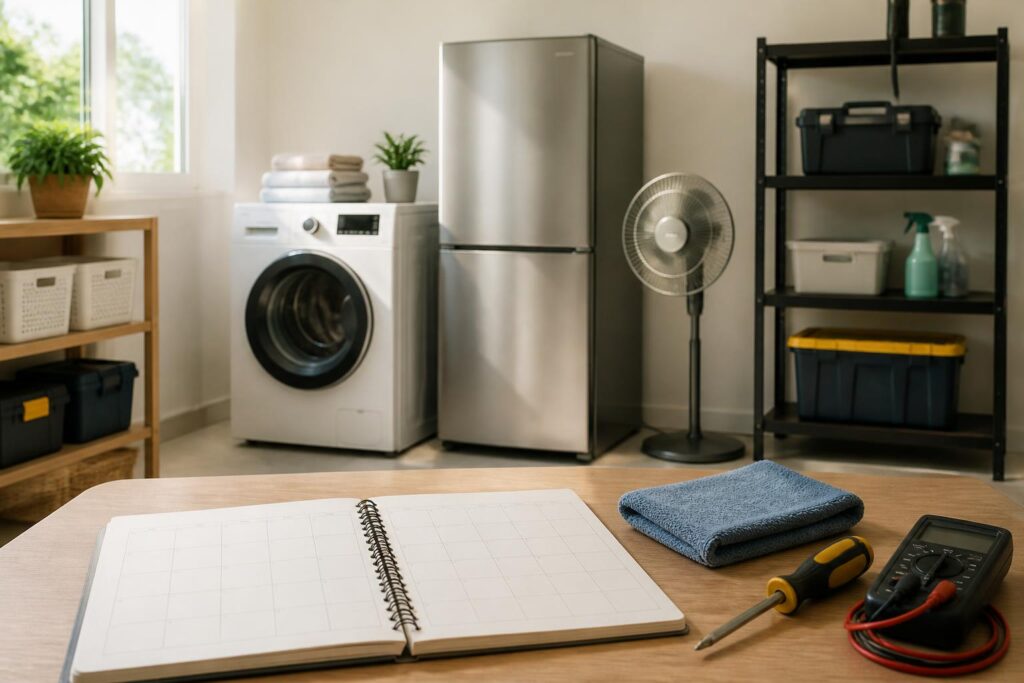
In many households, maintenance is remembered only when an appliance has begun operating abnormally or has stopped working altogether. A washing machine that starts vibrating violently, an air conditioner that cools poorly, a leaking faucet, a stove that gives off an unusual smell, or a bicycle producing an unpleasant noise are all signs that can easily be overlooked for a long time. By the time the problem becomes obvious, repairs often take more time, cost more money, and disrupt daily life.
Maintenance does not necessarily have to be complicated or require a household to own many professional tools. The most important part is developing a habit of conducting planned checks, knowing what can be done independently, and recognizing when it is time to call a technician. A suitable maintenance schedule means family members do not have to remember too many details, while also turning small tasks into a regular process instead of a series of emergency responses.
Why Maintenance Should Be Scheduled
Many household items do not break down suddenly in the sense of showing absolutely no warning signs. Performance may gradually decline, noises may change, dirt may appear on surfaces, or a component may begin to loosen. If noticed early, a family may be able to clean, tighten, replace, or adjust something at a basic level. Conversely, continuing to use an item without checking it can allow a small problem to cause damage to several other components.
A maintenance schedule also helps homeowners manage their budgets more proactively. When they know what needs to be done each month or quarter, families can prepare the necessary expenses and arrange their time instead of having to spend money immediately in an unexpected situation. Keeping a record of repair history is also useful when trying to identify causes, handing household care responsibilities over to someone else, or considering replacing an aging appliance.
However, maintenance does not mean frequently dismantling every appliance. A good schedule should be sufficient without being excessive, focusing on safe tasks such as cleaning, observation, checking external wiring, removing obstructions, and reviewing the user manual. Tasks involving electricity, gas, pressurized pipes, or internal structures should be assigned to qualified professionals if the household does not have the appropriate experience.
Classifying Household Items Before Creating a Schedule
The first step is to make a list of the items that need attention. There is no need to list every small object in the house from the outset. You can begin with groups that directly affect safety, operating costs, and daily convenience. The first group is electrical appliances such as refrigerators, washing machines, dryers, air conditioners, fans, pumps, and kitchen appliances. The second group is household systems and fixtures such as faucets, sinks, drains, doors, locks, hinges, and lights. The third group is frequently used equipment such as vacuum cleaners, bicycles, folding ladders, or home-work equipment.
After making the list, add three pieces of information for each item: the date of its most recent inspection, any existing unusual signs, and the maintenance task that can be performed. For example, with a washing machine, things to monitor may include a musty smell, vibration levels, the condition of the door seal, and the detergent compartment. With a refrigerator, you can observe whether the door closes tightly, the noise it makes, any buildup of dirt, and how food is arranged. This approach is more practical than creating one general schedule for all household items.
Not every appliance requires maintenance at the same frequency. Items used every day or frequently exposed to dust, water, or grease need to be observed more often. Less frequently used items can be checked seasonally or before being put back into operation. The manufacturer’s instructions remain an important reference for replacement intervals, deep-cleaning procedures, and the specific safety requirements of each product.
Suggested Schedule by Time Interval
Weekly Tasks
At the weekly level, focus on tasks that are quick and easy to observe. The family can check the kitchen area, wipe grease from suitable surfaces, and inspect faucets and the area under the sink for signs of leaks. The floors and walkways around the washing machine, refrigerator, or pump should also be kept dry and unobstructed. If an appliance produces an unusual noise or smell, record it immediately instead of waiting until the problem becomes serious.
This is also a good time to check chargers, outlets, and exposed electrical cords. Do not continue using a cord that shows signs of cracking, exposed wires, unusual heat, or bending near the plug. The purpose of this check is not to encourage users to repair electrical systems themselves, but to help them identify conditions that require discontinuing use and asking a qualified person for an assessment.
Monthly Tasks
Once a month, the family can set aside a fixed amount of time to clean components that easily collect dust or residue. Removable filters should be handled according to the appliance’s instructions; do not use water on your own initiative for components containing electronic parts or those that must be kept dry. Rubber seals, water trays, detergent compartments, and ventilation openings should also be wiped using an appropriate method.
During the month, try operating items that are rarely used to check their condition. A backup fan, vacuum cleaner, rechargeable lamp, or hand tool left unused for a long time may not work as expected when urgently needed. For doors and cabinets, checking hinges, handles, sliding rails, and locks helps detect looseness or sticking at an early stage. If lubricant is needed, choose a type suitable for the particular material and follow the instructions, taking care not to get it on surfaces that do not require it.
Quarterly or Seasonal Tasks
Quarterly tasks should be scheduled at a convenient time, such as before the hot season, the rainy season, or a period when the family is usually away from home. Air conditioners, fans, pumps, awnings, windows, and drainage systems can be checked according to usage needs and the conditions of the house. The goal is to ensure that equipment is ready before it has to operate at a high frequency, rather than waiting until the first day of severe weather to find a solution.
For outdoor areas, look for signs of prolonged dampness, rust, insects, leaves, or obstructions. Obstructions in drainage paths should be removed safely, but do not climb or intervene in dangerous locations on your own initiative. If the roof, walls, pipes, or electrical system show signs of deterioration, calling a technician for an early inspection is generally more reasonable than trying to make a temporary fix.
How to Turn a Maintenance Schedule into a Habit
An overly detailed plan is easy to abandon. Instead of creating dozens of separate reminders, the family can choose one fixed day each month and divide the tasks among its members. The person in charge does not necessarily have to do everything themselves; they only need to check the list, record unusual signs, and decide what needs to be handled next. Repetitive tasks should be recorded in a simple table containing the item’s name, inspection date, results, and next action.
It is a good idea to photograph or save warranty information, receipts, product codes, and user manuals in an easily accessible place. When a component needs to be replaced or a technical service center contacted, this information makes communication clearer. However, do not publicly share personal information, addresses, or images that could reveal too much about the home.
It is important to distinguish between signs that need monitoring and signs that require immediate discontinuation of use. A burning smell, sparks, a gas leak, water flowing into an electrical area, an appliance body that is abnormally hot, or a sudden loud noise are all situations that should not be taken lightly. When these signs occur, disconnect the power or close the valve if this can be done safely, keep people in the house away from the dangerous area, and contact the appropriate service. Do not dismantle an appliance while it is still connected to a power source or repeatedly try it again to check whether it works.
Proper Maintenance Is Also a Way to Use Resources Economically
Items that are cleaned and operated correctly are generally more likely to function steadily, but maintenance cannot replace proper use. Do not overload a washing machine, block ventilation openings, place hot objects against easily damaged materials, or use an appliance for a purpose other than the one for which it was designed. Reading the instructions before using a new item can prevent many problems caused by improper operation.
When an appliance has been repaired many times or frequently causes disruptions, the family should assess the situation as a whole instead of addressing only one small fault at a time. Factors to consider may include its age, level of safety, repair costs, the availability of replacement parts, and its energy consumption during operation. Buying new is not always the best choice, but neither should a household continue maintaining an appliance with obvious risks simply because it is familiar.
Conclusion
Creating a household maintenance schedule is a small task that delivers practical benefits. By starting with important appliances, dividing tasks by week, month, and season, and recording the results after each inspection, a family can reduce its dependence on emergency repairs. The schedule does not need to be elaborate; it only needs to be clear, safe, and suited to the household’s actual routine.
The ultimate goal is not to keep every item working forever, but to use things responsibly, identify problems at the right time, and make appropriate decisions. When every family member participates, maintenance becomes a natural part of caring for the home, helping the living space remain more stable and making expenses more manageable.
