


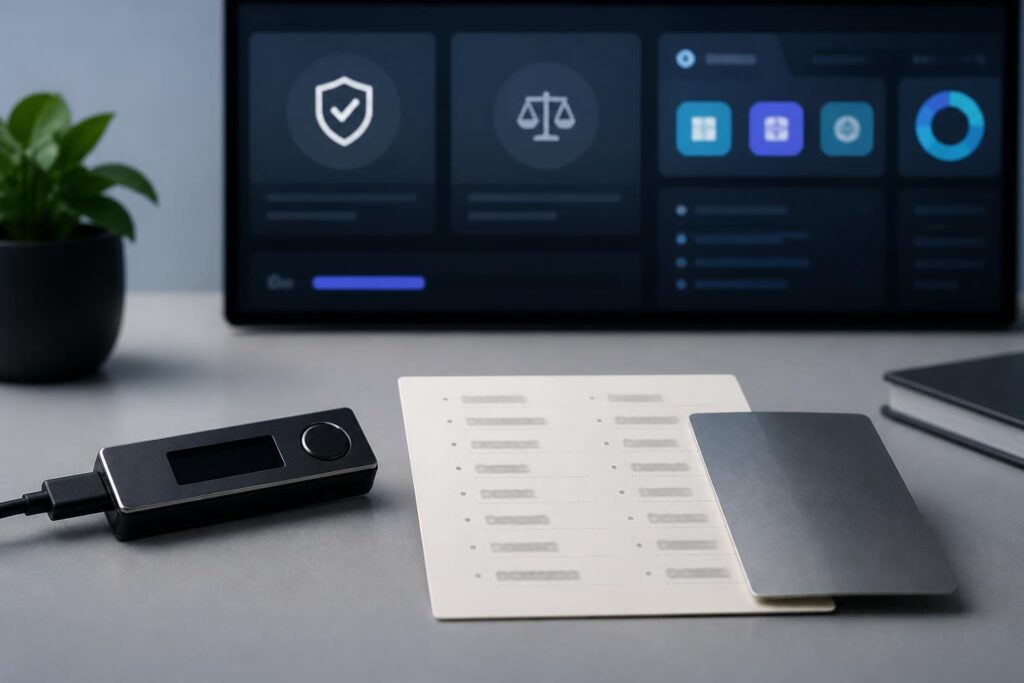
In the cryptocurrency ecosystem, the phrase “not your keys, not your coins” is often used to describe the difference between custodial and self-custodial wallets. This expression emphasizes an important principle: the ability to use digital assets depends on controlling the cryptographic information that enables transactions to be signed. However, self-custody does not mean that simply downloading a wallet application makes everything safe. Users must understand how wallets work, what recovery phrases mean, and what responsibilities come with holding access themselves.
This is a topic that is easily oversimplified. Some people view a self-custodial wallet as a place to “store money,” similar to a bank account, whereas in reality a wallet usually does not hold money in that way. Assets are recorded on a blockchain network; the wallet manages the cryptographic information that users rely on to prove control and request that the network carry out transactions. Therefore, protecting recovery information is just as important as, and in many cases even more important than, protecting the device on which the wallet application is installed.
How Is a Self-Custodial Wallet Different from an Exchange Account?
With an account on an exchange or custodial service, users log in with a password, authentication code, or another security method. The service manages the keys on the user’s behalf and handles many operations related to the assets. This model can be convenient, especially for newcomers, but access also depends on the provider’s operations, verification procedures, account-recovery capabilities, and the restrictions imposed by the service.
A self-custodial wallet transfers this responsibility to the user. No intermediary holds the recovery phrase for the wallet owner. If a device is damaged, the application is deleted, or the user reinstalls the wallet, the recovery phrase can be used to recreate access on a compatible device. Conversely, if the phrase is exposed, someone else may use it to control the assets; if the phrase is lost and no valid backup option remains, recovery may not be possible.
The core difference lies in control and responsibility, not merely in the application interface. A wallet may look as simple as a payment app, but the operations behind it involve private keys, blockchain addresses, and digital signatures. Users do not necessarily need to become cryptography experts, but they should understand the basic principles before placing valuable assets in a wallet.
What Is a Recovery Phrase Actually Used For?
A recovery phrase, usually consisting of a randomly generated sequence of words, is easier for people to record than having to remember a long string of cryptographic data. From this phrase, wallet software can generate a structure of keys and corresponding addresses according to the standards supported by the wallet. Therefore, a recovery phrase is not an ordinary password, nor is it a public payment-receiving code.
A wallet address may be shared when necessary to receive assets, whereas a recovery phrase must be treated as the most highly sensitive confidential information. Someone with the address can generally only send assets to it or view public data on the blockchain. Someone with the recovery information, depending on the type of wallet and the supported network, may be able to create signatures to transfer assets out. These two types of information serve completely different functions, but newcomers sometimes confuse them because both appear in the same application.
It is important to note that a recovery phrase is associated with a wallet, not necessarily with a particular phone. When changing devices, users can enter the phrase into a compatible application to restore the associated accounts or addresses. This capability makes the phrase a useful backup tool while also turning it into an attractive target for scammers. Anyone who asks users to send their phrase to “verify,” “unlock,” “receive a reward,” or “fix an error” is asking for control at an exceptionally sensitive level.
Common Mistakes When Managing a Wallet Yourself
The first mistake is storing the recovery phrase in a screenshot, online note, or personal message. Such data may be synchronized across multiple devices, stored in a cloud backup, or appear in an application’s history. If just one account, device, or login session is compromised, the recovery information may be copied without the wallet owner realizing it immediately.
The second mistake is storing the phrase on a computer that frequently accesses links from unclear sources. Malware may search for sensitive data, monitor activity, or trick users into entering information into a fake interface. Installing a wallet application from an unofficial source also creates additional risk, because users may hand over their information to software that is not the product they intended to use.
The third mistake is trusting urgent support offers on social media or in chat groups. Scammers often create a sense of urgency by saying that an account is about to be locked, a transaction is failing, or the user needs to confirm something immediately. In such situations, users may visit a fake website, sign a transaction they do not fully understand, or provide their recovery phrase. A legitimate support service does not need users to send confidential information to regain control in an arbitrary manner.
In addition, many people only test recovery after they have already deposited assets. At that point, they discover that they wrote down one word incorrectly, recorded the words in the wrong order, confused one wallet with another, or cannot remember which type of account they used. The wallet-creation process should be viewed as a series of operations that require careful checking, not as a setup step that can be skipped in the interest of using the wallet quickly.
How to Build a Practical Protection Process
First, users should clearly identify their purpose. A wallet intended for frequent transactions has different requirements from one used for long-term storage. A wallet used daily may be installed on a convenient device, but the amount of assets held should be limited to what the user would be willing to lose if the device were misplaced or the account compromised. For larger amounts, many people consider a dedicated device or a separate storage arrangement, provided that they understand how to operate and recover it.
When creating a wallet, download the software from the official source published by the developer and carefully check the application name, publisher, and signs of imitation. The recovery phrase should be written down in a private space, not read aloud in front of others, and never entered into an online form. The record should be stored in a place with restricted access, while also being protected against loss caused by water, heat, damage, or misplacement.
Before transferring a significant amount of money, users should make a test transaction with a small value, checking that the network, address, and asset are all correct. Remember that similar names do not guarantee that two assets are on the same network. Sending an asset over a network that is not supported by the wallet or destination service can make it difficult to recover, even if the displayed address appears valid.
Transaction checking should also include the content that the wallet asks the user to sign. Not every signing request is a direct money-transfer order; some may grant an application or contract permission to interact with assets in the future. Users need to read the displayed information and identify the recipient and the permissions being granted before confirming. If the interface does not explain what operation is taking place, the safer choice is to stop and look for official documentation rather than sign simply out of fear of missing an opportunity.
Self-Sovereignty Does Not Mean Doing Everything Alone
Self-custodial wallets provide greater control, but that control needs to be accompanied by a risk-management process. Users can create a list of assets, record the type of wallet being used, note backup devices, and document the recovery steps without writing the secret phrase in the same document. For families or groups sharing assets, they should agree in advance on who is authorized to access them, where each type of information will be stored, and what should happen if the wallet owner can no longer continue managing the wallet.
In some cases, dividing control or using multiple layers of confirmation may be more appropriate than allowing one individual to hold all the information. However, complex arrangements also create their own operational risks. If users do not fully understand the mechanism, they may lock themselves out of their assets or be unable to coordinate when recovery is needed. The appropriate principle is to choose a model that the people involved can verify, practice, and maintain over the long term.
A self-custodial wallet should also not be viewed as a solution that eliminates every risk. It reduces dependence on a provider to hold the keys, but it does not eliminate scams, user error, malware, mistaken transactions, or price volatility. Self-management is meaningful only when users understand what they are controlling and what limitations still exist.
Conclusion
Self-custodial wallets are a tool that clearly embodies the spirit of self-sovereignty in cryptocurrency, but self-sovereignty does not begin with installing an application; it begins with understanding the responsibility of protecting access. Recovery phrases must be kept confidential, stored deliberately, and tested for usability in situations where they may be needed. Every transaction should also be treated as a decision that requires understanding, not as a mechanical confirmation step.
For newcomers, a cautious approach is often more effective than pursuing convenience. Starting with a small amount of money, using software from a trusted source, checking the network and address, and building a clear backup plan will help reduce mistakes that are difficult to correct. Once users understand how wallets work and what their limitations are, they can consider the level of self-management that suits their abilities, needs, and risk tolerance.
