


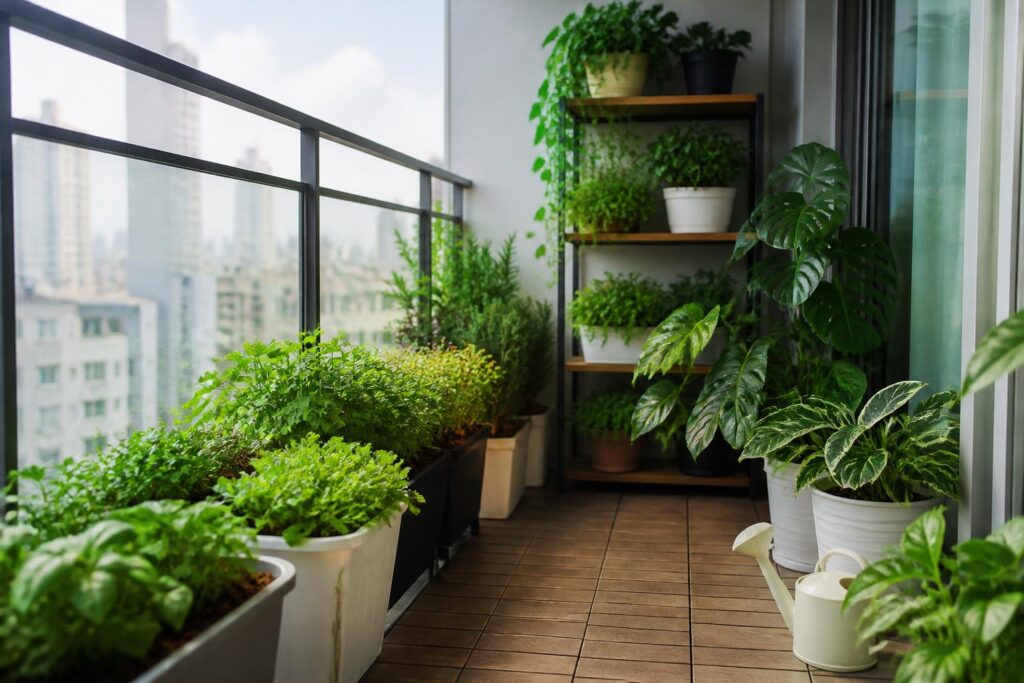
A Small Garden Begins with Observation
In apartments with limited space, balconies are often seen as places to store things, dry clothes, or put a few plant pots simply to add some greenery. However, even with a modest amount of space, residents can create a small garden that is useful in daily life. Such a garden does not necessarily have to provide enough vegetables for the whole family, nor does it need to be arranged elaborately like a display model. Its value lies in the experience of caring for plants, in bringing nature closer, and in turning a corner of the home into a purposeful living space.
Many people begin by buying a large number of plant pots on impulse and only afterward try to find places for them on the balcony. This approach can easily result in plants not getting enough light, pots being too heavy, walkways becoming blocked, or the grower quickly losing interest because too many types have to be cared for at once. A sustainable garden should begin by observing the space that is already available: which direction the balcony faces, when sunlight appears, whether the wind is strong or light, how water can drain, and what the family actually wants to grow plants for.
Assess the Balcony Before Buying Plants
Light is the first factor to note. Not every balcony receives the same amount of sunlight. Some get strong sunlight for many hours, some receive only diffused light, while others are blocked by buildings or awnings for much of the day. Beginners do not need complicated measurements. They only need to observe for a few days and record when there is direct sunlight, how hot the floor becomes, the direction of the wind, and which areas are often exposed to wind-driven rain.
This information helps with choosing more suitable plants. Herbs and leafy vegetables usually need a certain level of light to grow well, while many ornamental foliage plants may adapt better to bright places that are not exposed to intense, continuous sunlight. If you are not sure, it is better to start with a few types whose changes are easy to observe rather than buying plants that require special care conditions. When a plant shows signs of becoming leggy, having pale leaves, or growing slowly, this may indicate that the position of the pot, the amount of water, or the growing medium should be reconsidered.
The balcony’s load-bearing capacity is also an issue that should not be overlooked. Soil and water are both heavier than they initially seem, especially when many large pots are placed close together. Therefore, it is advisable to prioritize moderately sized pots, use sturdy supports, and avoid hanging heavy objects in unstable positions. If you want to place many pots or create a large growing system, check the building’s regulations and consider seeking professional advice when necessary. A beautiful garden should not come at the expense of risks to residents or neighboring apartments.
Choose a Manageable Goal
Before choosing plants, growers should answer a simple question: What purpose will this garden serve? Some people want fresh herbs for meals, some enjoy caring for plants as a relaxing activity, while others simply want to reduce the sense of emptiness on the balcony. Each goal leads to a different arrangement. If kitchen use is the priority, a few pots of herbs placed near the entrance will be more practical than dozens of difficult-to-care-for plants. If the priority is creating a refreshing green space, upright plants, trailing plants, and small pots can be combined instead of planting only one type.
Beginners should limit the initial number of plants. Around three to five pots is an easy-to-manage amount, enough to learn how to water, monitor the soil, and recognize the plants’ responses. After some time, once you understand your balcony and have established a care routine, you can gradually expand. Starting small does not mean lacking ambition. It is a way to reduce the cost of trial and error and keep growing plants enjoyable rather than turning it into a burdensome list of tasks.
Prioritize Plants That Suit Your Habits
A plant considered easy to grow is not necessarily suitable for everyone. If you frequently travel for work, consider types that do not need frequent watering or make arrangements for someone else to care for them. If there are young children or pets in the home, learn about the plant’s characteristics before placing it where they can reach it. If you have little time in the morning, arrange the plants near a water source and avoid creating a system with too many levels that is difficult to check.
The growing medium also needs attention. Pots must have drainage holes, while the medium should be loose enough to prevent water from remaining stagnant for too long. Watering more does not always mean providing better care. Some plant problems stem from roots being kept in water for too long, while other plants become weak because the soil remains dry for an extended period. Instead of watering according to a fixed number, check the soil’s moisture and observe the condition of the leaves and stems. The care schedule may change depending on the weather, the position of the pot, and the plant’s size.
Arrange Everything for Convenient Care
A good balcony garden should not only look attractive from a distance but also be convenient to use every day. Plant pots should be positioned so that a walkway remains clear, they can be reached for watering, and they can be moved easily when necessary. Plants that need more sun can be placed toward the outside, while those that prefer gentler light can be placed near a wall or under an awning. This arrangement also helps growers notice early when a plant has pests, is waterlogged, or is obstructing another plant.
If you use shelving, choose a sturdy type that is not easily tilted and is suitable for outdoor conditions. Pots on higher levels should be lighter than pots placed on the floor. When watering, water should not flow onto the balcony below or make the wall excessively damp. Water-collection trays can be used, but they also need to be cleaned to prevent water from standing for too long. These small details help make plant growing more harmonious with the shared life of the building.
Green spaces also need to be kept tidy. Dry leaves, damaged branches, and spilled soil should be dealt with regularly. Tools such as watering cans, pruning shears, or bags of soil can be kept in a separate box instead of being scattered around. When everything has a clearly designated place, caring for plants takes only a short amount of time and is less likely to feel difficult to begin.
Learn to Observe Rather Than Care Based on Impulse
Plants often respond through fairly clear changes, but beginners need time to learn how to read these signs. Yellow leaves may be related to water, light, the age of the leaves, or the condition of the roots. Wilted leaves are not necessarily caused only by a lack of water; sometimes the plant is too hot, has damaged roots, or has recently been moved. Therefore, do not rush to add fertilizer, repot the plant, or water it repeatedly just because of a single symptom.
A small notebook or notes on a phone can help track planting dates, locations, watering times, and noteworthy changes. This record-keeping is not intended to turn plant care into a rigid procedure. It helps growers see the connection between their actions and the plants’ responses. After a few weeks, growers may recognize when the balcony usually dries out quickly, which plants need more light, or which areas are prone to strong winds.
When pests or diseases are discovered, the affected plant should be separated from the remaining pots if conditions permit. Treatment should also begin with simple measures appropriate to the type of plant and the safety instructions for the product being used. Do not spray or mix multiple chemicals based on hearsay, especially when the plants are grown for use in meals. If the cause cannot be identified, taking a photo and asking someone with expertise is better than continually changing the care routine.
Value That Extends Beyond the Plant Pots
A balcony garden does not solve every problem of urban life, but it creates a different daily rhythm. Each day, the grower has a reason to step outside, observe the light, touch the soil, and notice the small changes in a new shoot. These activities can create a sense of connection with the living space, especially for people who often work indoors or spend a great deal of time in front of screens.
The garden can also become a practical lesson for children. With appropriate guidance from adults, children can take part in watering plants, collecting dry leaves, or recording their growth. Through this, they learn that plants need time, water, light, and consistent care. The important thing is not to turn the activity into a task that must produce perfect results. A plant that grows slowly or does not survive is also an opportunity for the whole family to learn and adjust.
From a consumer perspective, growing plants at home also encourages more considered purchasing. Growers can make use of some suitable household items, reuse pots after cleaning them, or exchange plants with friends instead of continually buying new ones. However, reuse must be accompanied by safety and hygiene. Containers must be suitable for the plants, must not leak foreign substances, and must provide the necessary drainage.
Start Small for Long-Term Sustainability
What makes a balcony garden successful is not the number of pots or its perfect appearance, but the caregiver’s ability to maintain it. An overly ambitious plan often quickly becomes a burden. By contrast, a few plants placed in the right locations, watered according to their needs, and observed regularly can provide more value than a large garden that is neglected.
Start by clearing a small area, observing the light for a few days, choosing plants suited to your goals, and setting aside a specific time to check them. After each stage, you can keep the methods that work, remove what is inconvenient, and expand step by step. When the garden is built around the home’s actual conditions and the real habits of the people living there, it will no longer be a short-term decorating project. It becomes a natural, sufficient, and useful part of everyday life.
