


During shopping, many people focus only on the price, brand, and warranty period while overlooking an important piece of information that may appear after a product has been sold: a recall notice. This does not necessarily indicate that every product from the same brand is dangerous or that all buyers need to panic. Recalls usually concern a product model, a batch, a production period, or a specific defect. However, if consumers do not read the notice carefully and cannot determine whether their product is among those affected, the risk may persist.
A product recall is the process of bringing a product that has already entered circulation back under the control of the manufacturer, importer, distributor, or competent authority, depending on the circumstances. The purpose may be to repair, replace, refund, conduct a safety inspection, or prevent the product from continuing to be used after a problem is discovered. A proper recall notice should help buyers answer basic questions: which products are affected, where the problem lies, what users need to do, whom to contact, and what the processing deadline is.
Do Not Look Only at the Brand Name
The most common mistake is seeing a brand name appear in a recall report and concluding that the product at home is certainly among the dangerous products. In reality, the information that needs to be checked is usually the model name, product code, serial number, batch code, production date, sale period, or another identifying characteristic. Two products that look almost identical but were manufactured at different times may not both fall within the scope of the recall.
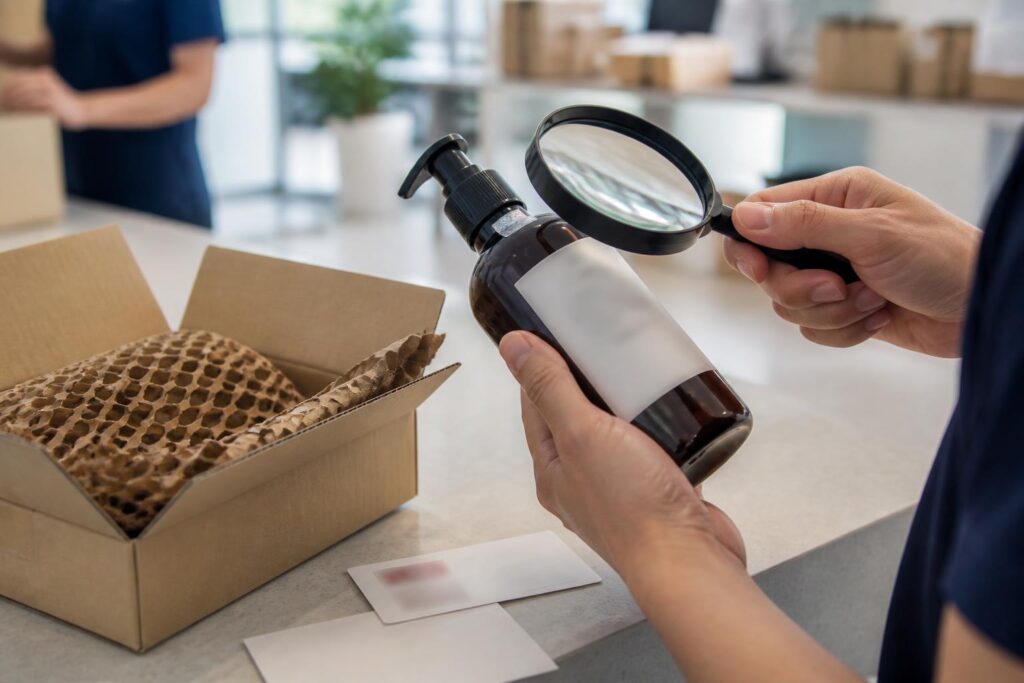
Buyers should compare the notice with the labels on the product, packaging, warranty card, receipt, or purchase account. For some product categories, the identifying code may be printed on the back, bottom, inside the lid, on an adhesive label, or in a location visible only after an accessory is removed. Do not scrape, peel off, or damage the label just to check it, especially before photographing the original information.
If you cannot identify the product code, treat it temporarily as a case requiring further inquiry rather than making your own guess. A clear photo of the brand label, model, batch code, and purchase date can help customer service check more quickly. When communicating, buyers should request a specific response in writing or through a channel that can be preserved, rather than relying only on a call without a reference number.
How to Read a Recall Notice
Recall notices often contain a great deal of technical information, but consumers can read them in a simple sequence. First, look at the product description and the scope of the recall. Determine whether the notice refers to the entire product line or only certain codes, batches, or periods. If illustrative images are provided, compare small details as well, such as the color, capacity, plug type, included accessories, or packaging.
Next comes the reason for the recall and the level of risk. Some notices require immediate cessation of use; some cases only require taking the product to an inspection point; and in other cases, the supplier proactively updates a component or software. Do not downplay the warning by assuming that your product is still functioning normally. A safety-related defect may not appear every time the product is used.
The handling instructions should be read in full. Buyers may be asked to unplug the product, stop charging it, refrain from continuing to eat or use it, package it separately, bring it to a collection point, schedule an inspection, or provide proof of purchase. If the notice does not clearly state whether the solution is a refund, exchange, or repair, consumers should ask directly before sending the product away. Sending an item without a receipt or without knowing who will bear the shipping costs may lead to disputes during the resolution process.
What to Do Immediately After Suspecting That a Product Is Subject to a Recall
The first step is to stop using the product in accordance with the level of warning in the notice. For electrical equipment, this may mean disconnecting the power or no longer plugging it in to charge. For food, cosmetics, or products that come into direct contact with the body, do not continue using them merely while waiting for confirmation. Items that could pose a physical danger should be placed in a safe location away from children and pets, but should not be disassembled or repaired on your own if the supplier has not provided instructions.
After that, buyers should photograph the product in its current condition, including the front, back, identifying-code label, packaging, and any unusual signs, if present. Save the electronic receipt, order history, messages with the seller, and the recall notice. These documents not only help prove the transaction but also help identify the exact product, especially when the item name on the receipt is recorded too briefly.
The next step is to contact the correct channel. Give priority to the official information channels of the manufacturer, importer, seller, or competent authority. Buyers should be cautious with links reshared on social media, especially if they request passwords, authentication codes, banking information, or the installation of applications from unknown sources. A recall may be exploited to create fake messages intended to collect personal data.
Buyers’ Rights Involve More Than an Exchange or Refund
When a product is recalled, consumers are often concerned with exchanging the item or getting their money back. However, their rights should be considered more broadly. Buyers have the right to receive clear information about the cause, scope of the impact, and handling arrangements. If using the product has caused harm, documents relating to medical examination and treatment costs, property repairs, transportation, or other losses may become important during discussions with the responsible party.
Not every situation has the same form of compensation. The outcome may depend on the type of product, the cause of the defect, the terms of the transaction, evidence of the damage, and the published handling policy. Therefore, buyers should not assert a specific compensation amount without a basis. A more appropriate approach is to ask the seller or manufacturer to explain in writing whether the product is subject to the recall, what the handling arrangement is, how long it is expected to take, and which party will bear the related costs.
For purchases made through an e-commerce platform, open a support request directly in the system instead of only messaging the seller privately. This creates a transaction history and case number, while also giving the platform a basis for handling the matter if the seller does not respond. If the purchase was made at a store, consumers should retain the receipt or handover record when submitting the product for inspection.
When to Move to a Complaints Channel
If the business does not respond, refuses to confirm whether the product is affected even though the buyer has provided sufficient information, or offers a handling arrangement that is inconsistent with the recall notice, the consumer may move on to filing a complaint. Before doing so, prepare a brief summary including the purchase date, place of purchase, product code, content of prior communications, specific request, and desired response deadline. A structured presentation makes the case easier to review than a long and emotional chain of messages.
Keep copies of all documents submitted. If the product is sent through a shipping company, retain the tracking number, packaging photographs, and proof of handover. Do not send the only original copy of a receipt or important document unless necessary. In cases showing signs of serious harm to health, safety, or property, buyers should consider seeking professional advice and contacting an appropriate consumer protection authority rather than merely arguing publicly online.
Handling Methods That Can Easily Cause You to Lose Your Rights
Some people throw the product away as soon as they hear about a recall. This may reduce the risk of continued use, but it can also make it difficult for the buyer to prove that they owned an affected product. If the notice requires destruction or the product poses a danger and cannot be safely stored, take photographs, record the identifying code, and ask about the verification procedure in advance.
Conversely, some people continue using the product until it completely breaks down or a clearly visible problem occurs. This is not a safe approach. The fact that no problem has occurred so far does not mean that the product has been confirmed safe. Users should also not repair the product themselves, replace components with unverified parts, or update software from unofficial sources to avoid the recall process, because such changes may complicate the determination of the cause.
Another mistake is posting the entire receipt, phone number, address, or order information online in search of assistance. Sharing experiences can help alert the community, but unnecessary data should be concealed. If you need to post a photo of the product, cover the tracking number, delivery address, and payment information.
Proactively Keep Purchase Records
Handling a recall will be easier if buyers develop the habit of keeping records from the time of purchase. For valuable products or products related to health, keep the receipt, warranty card, user manual, and photos of the product label in a separate folder. When registering a warranty, provide only the necessary data and verify the receiving party. A simple record including the product name, place of purchase, purchase date, and identifying code can also be useful when a household owns several similar devices.
Consumers should follow the official information channels of brands they regularly use, but do not need to react to every rumor. Distinguish between a confirmed notice and a speculative post. When encountering an alert whose source is unclear, cross-check it by looking for the notice on the official website, contacting the seller, or asking a competent authority. This verification habit helps avoid both extremes: overlooking a genuine risk and panicking over incomplete information.
A recall notice should not be viewed as an unfamiliar procedure intended only for businesses. It is the starting point of a process to protect users, in which buyers play a role by identifying the product, stopping use at the right time, preserving evidence, and requesting a transparent handling arrangement. Reading carefully and calmly, not making assumptions, and retaining transaction records are three simple principles that can determine the extent to which consumers’ rights are protected.
