

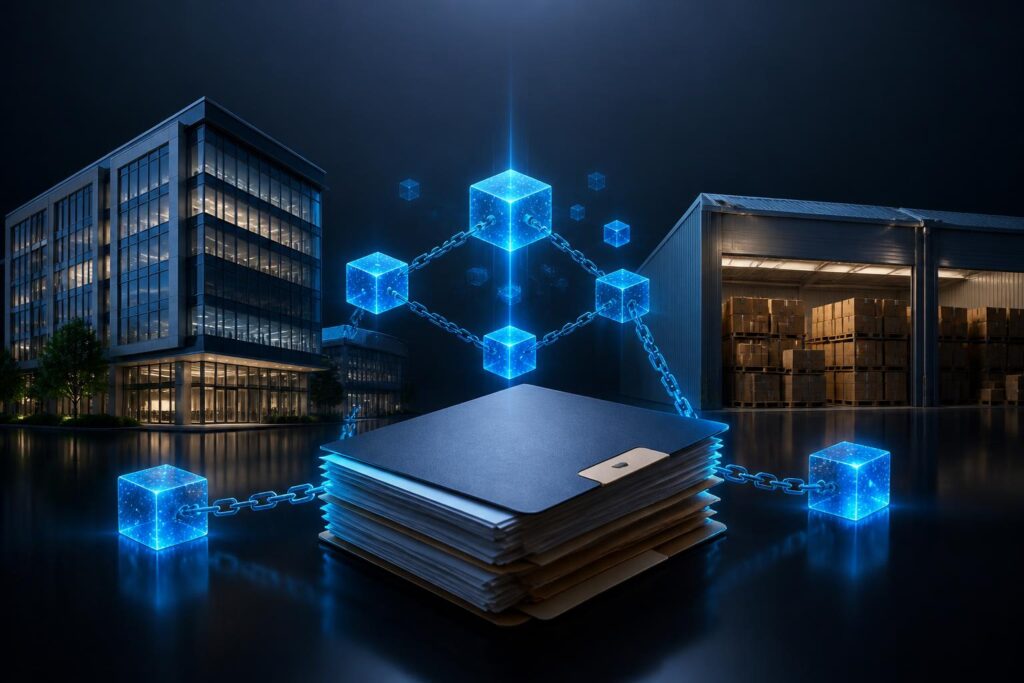
For many years, blockchain has commonly been mentioned alongside cryptocurrencies, decentralized exchanges, and assets with highly volatile prices. Another area of development receiving growing attention is the tokenization of real-world assets, meaning the conversion of economic benefits or ownership rights related to an off-chain asset into digital units recorded on a blockchain. Such an asset may be real estate, bonds, commodities, receivables, works of art, or the right to receive cash flows from a project.
The idea sounds simple: instead of storing transaction records in an institution’s closed system, the parties use blockchain to issue and transfer tokens. However, a token does not automatically turn a physical asset into an asset with full legal value. Blockchain can record data very consistently, but it cannot independently verify whether a building actually exists or whether the issuer has the right to sell it. The gap between the digital record and the real-world asset is therefore the core issue of tokenization.
What Is Real-World Asset Tokenization?
Real-world asset tokenization can be understood as representing a right or interest in an asset through tokens on a blockchain network. A token may represent direct ownership, the right to receive a portion of revenue, the right to receive interest, a payment claim, or the right to participate in an investment structure. These forms of rights are not the same, and the differences between them matter more than which blockchain the token is issued on.
For example, a business may issue tokens linked to the right to receive cash flows from a portfolio of receivables. A fund may use tokens to record an investor’s beneficial interest in an asset or portfolio of assets. In another case, a token may merely be an electronic certificate used to track the allocation rights to commodities, without granting the holder ownership of the commodities in the full sense.
Therefore, the first question when evaluating a tokenization project should not be which network the token is built on or where it can be traded. The more important question is what rights the token holder actually has, in which contract those rights are recorded, who is obligated to perform them, and what mechanisms apply if the issuer becomes insolvent.
Why Is This Model Attractive?
A frequently cited benefit of tokenization is the ability to fractionalize assets. An asset of high value can be divided into multiple smaller-denomination interests, thereby expanding access for investors. In theory, participants do not necessarily have to purchase an entire asset but can hold an interest that matches their capital and risk appetite.
Blockchain can also support the recording and reconciliation of transactions. When the parties use a shared ledger, the transfer history, the number of tokens in circulation, and certain conditions for exercising rights can be checked more easily than when data must be aggregated from multiple separate systems. Simple smart contracts can also automate the distribution of interest, revenue sharing, or the restriction of transactions according to predetermined conditions.
The ability for secondary markets to operate continuously is another notable expectation. Traditional assets often involve complicated buying and selling procedures, require multiple intermediaries, and take a long time to process. If legal, technological, and liquidity requirements are met, tokens may make the transfer of certain rights faster and more transparent.
However, “being tradable on a blockchain” does not mean “there will always be a buyer.” Liquidity is the result of the number of participants, the quality of the asset, the reliability of the issuer, the pricing mechanism, and the ability to transfer the asset legally. A token that is easy to issue but lacks a substantive market may still be difficult to sell or may require acceptance of a significant discount.
The Weakness Lies in the Link Between the Blockchain and the Real World
Blockchain can ensure that a transaction, once recorded, is difficult to alter without authorization within the same system. But blockchain cannot independently know whether the underlying asset exists, whether it has been pledged as collateral, or whether it has already been sold to someone else. That information must be introduced into the system through legal records, custodians, auditors, registration authorities, or external data sources.
This is the issue commonly referred to as an “oracle,” meaning a mechanism for bringing data from the real world onto the blockchain. If the input data is wrong, the smart contract can still execute correctly based on that incorrect data. An automated system cannot completely replace due diligence, inventory checks, and monitoring. It only makes the processing of the data provided more consistent.
Risks also arise when the asset is managed by an intermediary organization. Token holders may believe they hold a portion of the asset, but in reality their rights depend on whether that organization keeps the asset as promised. If the asset is commingled with the company’s assets, pledged as collateral, or frozen, the token may continue to exist on the blockchain while the underlying economic value declines.
Therefore, a reliable project needs to clearly explain where the asset is held in custody, who controls the ownership records, how often inspections are conducted, and what investors can do if they discover a discrepancy between the number of tokens in circulation and the underlying assets. These questions cannot be answered merely with an attractive interface or smart-contract code.
Legal Matters Determine How Much Value a Token Has
Tokenization is often described as a technological initiative, but the most difficult part lies in the legal aspects. A token may have different characteristics depending on the rights it grants to its holder. If a token represents debt, the right to receive profits, ownership rights, or the right to participate in an investment product, its issuance and trading may be subject to different regulations.
Recording an asset in a smart contract does not automatically replace a civil contract, an asset registration record, or the procedures for transferring rights under applicable law. In a dispute, the decisive question may be the extent to which a court or competent authority recognizes the token as evidence of the relevant rights. The answer depends on the legal structure of each model, the place of issuance, the type of asset, and the status of the participating parties.
For the Vietnamese market, investors need to be especially cautious about promotional claims that tokenization can eliminate all legal procedures or permit the circumvention of regulations on capital raising. A project may use international technology while still targeting domestic users, receiving money from domestic users, or being linked to assets in Vietnam. In that case, issues involving contracts, taxes, foreign exchange, consumer protection, and the regulation of investment activities all need to be considered appropriately.
Investors should also not equate the listing of a token on a trading platform with the product having been approved by a competent authority. Market visibility is not evidence of legality, solvency, or the quality of the underlying asset.
Models with the Potential to Create Real Value
Tokenization has greater prospects when it solves a specific problem rather than merely issuing another speculative asset. For example, a business may need to improve the management of ownership rights or the distribution of cash flows among multiple parties. A financial institution may want to shorten the reconciliation process between the issuer, custodian, and investors. A supply system may need to track ownership rights to goods across multiple stages.
In such cases, blockchain can serve as a layer for coordinating data and transaction rules. The value of the model does not come from the token having a novel symbol, but from its ability to reduce operating costs, limit discrepancies in records, and help the parties verify their rights more quickly. If using blockchain does not create a clear improvement over a centralized database, tokenization may only make the process more complicated.
Assets with transparent records, easily identifiable cash flows, and clear custody procedures are generally more suitable for the early stages. Conversely, assets that are difficult to value or inventory, or that depend heavily on the commitments of an individual, create greater risks. The same technology can produce entirely different results depending on the quality of the asset and the structure of the rights involved.
What Should Investors Check?
Before purchasing a token linked to a real-world asset, investors should read the issuance documents and precisely determine their rights. They need to distinguish between ownership of the asset, the right to receive cash flows, and the right to use a service. If the documents only use phrases such as “backed by” or “linked to an asset” without specifying the enforcement mechanism, that is a sign to exercise caution.
The next step is to check the issuer, the asset manager, and the entity responsible for verifying the data. A transparent project should disclose how the asset is valued, the inspection schedule, the method for dealing with a decline in the asset’s value, and the situations that could cause the token to be suspended from trading. Investors also need to understand who has the authority to change the smart contract, increase the total supply, or freeze the tokens.
The ability to redeem the rights from the platform is another point that cannot be overlooked. If the token represents a physical asset, can the holder request delivery of the asset, or can they only receive money? If the token represents cash flows, do the payments come from actual revenue or from raising new capital? These questions help distinguish a model that creates value from economic activity from one that depends on the cash flows of subsequent participants.
Finally, investors must assess liquidity risk. A token may be purchased quickly but difficult to sell, especially when the secondary market is still small. The price displayed on a platform does not necessarily reflect the price that a large transaction could actually achieve. Fractionalizing an asset lowers the threshold for participation, but it does not eliminate the risk of losing capital.
Long-Term Prospects Do Not Lie in the Issuance Frenzy
Real-world asset tokenization could become a new infrastructure layer for financial markets and supply chains, but this process is unlikely to occur through software changes alone. It requires data standards, custody mechanisms, clear rules on rights, interoperability between systems, and clearly defined responsibilities for each party in the chain.
The success of tokenization may also not be reflected in dramatic price increases. A good system may operate quietly, helping reduce reconciliation time, automate the distribution of cash flows, and clarify the history of ownership rights. This type of value is less likely to generate immediate excitement but has greater long-term significance for businesses and investors.
While the market is still in an experimental phase, the appropriate attitude is to remain open to the technology but skeptical of promises of profit. Blockchain can make the recording and transfer of rights more efficient, but it cannot turn a low-quality asset into a good one. Before focusing on which network the token is issued on, the most important thing remains understanding what the underlying asset is, who is responsible, and what mechanisms can protect the holder’s rights.
