


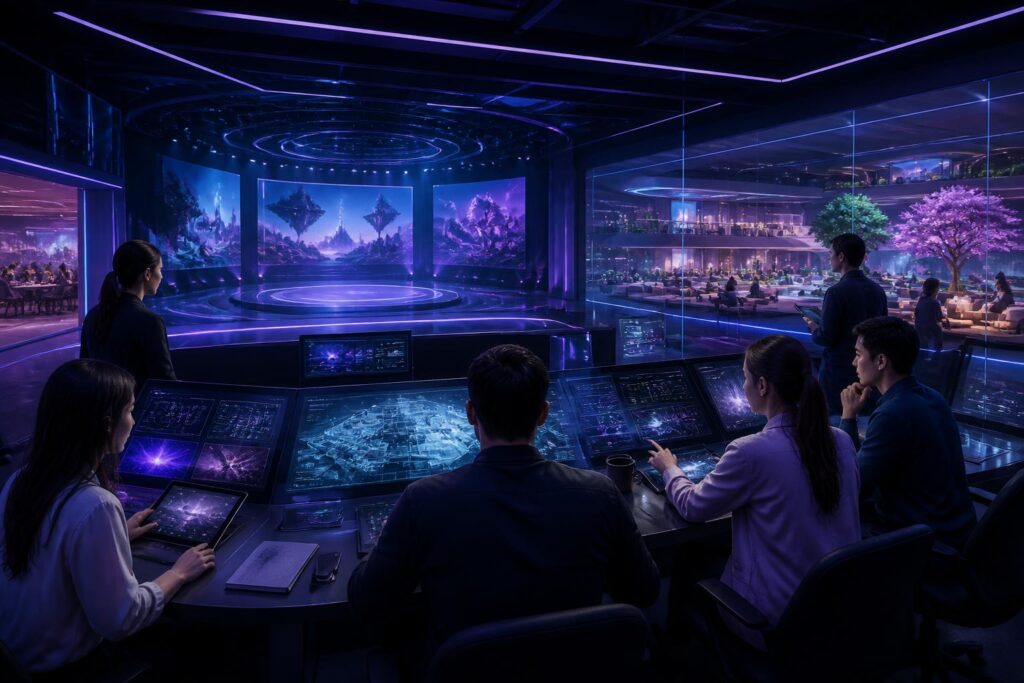
Virtual worlds are often described as spaces for entertainment, communication, or experimenting with experiences that are difficult to have in physical life. However, as platforms increasingly allow users to organize events, build stores, provide services, create content, and manage communities, the boundary between play and work is becoming harder to define. Someone who spends many hours guiding visitors through a virtual space, coordinating an online performance, or designing digital items may be engaging in a professional activity, even though the work takes place through an avatar and without a traditional office.
This shift is changing more than just how people earn income. It is also forcing society to reconsider the concept of labor, ownership of creative output, working conditions, and the responsibilities of platforms that operate virtual worlds. If we regard every activity in them as merely a game, we may overlook very real risks. Conversely, if we rigidly apply management models from the physical environment, we may undermine the flexibility and creativity that are the strengths of virtual spaces.
From Playing to a Service Ecosystem
In a developed virtual world, value lies not only in the software or images created by developers. Value also comes from people who build spaces, organize activities, care for communities, create items, perform, advise, and support newcomers. They create reasons for others to return, stay longer, and willingly pay for meaningful experiences.
These activities can begin very naturally. A player designs a room according to their personal preferences, then agrees to build spaces for others. A member with good communication skills regularly guides newcomers and gradually becomes a community coordinator. A creative group organizes a performance, class, or social session in a virtual environment. At first, they may see it as a side activity or hobby. But when there is a work schedule, quality requirements, clients, and revenue, the nature of the activity has moved closer to service labor.
An important difference is that these jobs often do not take familiar forms. Participants may not receive fixed salaries, sign clear contracts, or work regular office hours. Income may come from admission fees, item sales, revenue sharing, or community support. Some people work independently, while others depend on the platform’s display algorithms, payment policies, and ability to reach users.
Therefore, the professionalism of a job should not be assessed solely on the basis of where it takes place. An activity in a virtual world can still require skills, time, discipline, and responsibility comparable to those required by many jobs in the physical world. Its digital form does not make the effort invisible, much less mean that the person performing it must accept every condition imposed by the platform.
The Value of Invisible Work
One of the greatest challenges of the virtual-world economy is that many important types of labor are difficult to measure. A community manager may spend hours resolving disputes, preventing harassment, and maintaining a safe atmosphere. An event organizer must prepare scripts, check the space, handle technical errors, and interact with attendees. A content creator must not only produce the final product but also research trends, respond to comments, and maintain a regular presence.
These tasks are often obscured by the seamless experience that users see. When an event runs smoothly, the audience sees only the performance. When a community operates steadily, members may not realize how much time was spent establishing rules and handling situations. When a digital item appears attractive, the research, testing, and troubleshooting behind it are also not easy to recognize.
The lack of recognition mechanisms makes people working in virtual worlds vulnerable to being underpaid or having to work for free in exchange for exposure. The opportunity to reach an audience is sometimes treated as compensation, even though it does not always generate stable income. Promises of becoming famous in the future can also lead creators to accept unfavorable terms in the present.
To address this, platforms and communities need to be more transparent about how value is created and distributed. Service providers need to know under what model they are paid, what portion the platform retains, what the conditions for receiving payment are, and to what extent their products may be used. Transparency does not guarantee that every agreement will be fair, but it at least gives the parties a basis for negotiation and informed choices.
Ownership and Dependence on Platforms
In the physical environment, an artisan can usually retain their tools, designs, or products relatively independently of the place where they sell them. In virtual worlds, dependence on platforms is often greater. An item created using a platform’s tools may exist only within that system. A space built in one application may not be transferable to another. A community formed through a platform’s recommendation mechanisms may quickly lose the ability to reach its members if the algorithm or policies change.
This raises questions about ownership and usage rights. Creators may own the ideas, designs, or original content, but the right to exploit them within the system depends on the terms of service. A platform may need the right to store, display, or distribute content in order to operate its product. The issue is whether users clearly understand the scope of those rights, and whether they have a practical alternative if the platform stops providing its service.
The risks concern more than lost revenue. A virtual space may contain a history of activity, relationships with customers, and months or years of community-building. If an account is mistakenly locked, content is removed, or the platform changes its policies without a transition period, creators may lose both their assets and their communication channel with users.
Therefore, a mature ecosystem needs accessible appeal mechanisms, clear policy notices, and predictable procedures. Accounts that serve business or service-provision roles should not be treated exactly like ordinary experimental accounts. The impact of a governance decision needs to be considered alongside the platform’s ability to provide accountability.
Moderators and the Emotional Burden
The more crowded a virtual space becomes, the greater the need for moderation. Moderators may be platform employees, community administrators, or volunteer members. They must handle harmful content, harassment, scams, privacy violations, and disputes between users. This work rarely appears in promotional images of a cheerful virtual world, but it directly determines the community’s sense of safety.
If platforms rely too heavily on volunteers, they risk shifting part of their operational responsibility onto people who have not been adequately trained or protected. These individuals may have to make difficult decisions quickly, face negative reactions, and repeatedly encounter harmful content. Community enthusiasm is a valuable resource, but it cannot be a reason to overlook the mental health and rights of those doing the work.
Moderation must also avoid two extremes. One is leaving the space open to every behavior in the name of freedom. The other is applying vague rules that leave users unaware of which behaviors are prohibited and give them no opportunity to explain themselves. Good rules need to be specific enough for users to understand, flexible enough to address different circumstances, and accompanied by a reasonable appeals mechanism.
Virtual Worlds Need a New Work Culture
Not every value-generating activity in a virtual world needs to be turned into a formal employment relationship. Many people still want to contribute for enjoyment, recognition, or a sense of community. What matters is that voluntariness be based on complete information, and that the boundary between voluntary contribution and paid work be clearly stated.
Operating groups can begin with simple principles: agree on the scope of tasks, the expected time, how contributions will be recognized, and the conditions for ending the collaboration. For revenue-generating activities, disclosing how revenue is divided and the responsibilities of each party will help reduce disputes. For communities that use volunteers, there should be limits on the workload, support channels, and a replacement mechanism for when the person in charge needs a break.
Users also have a role in shaping this culture. Asking for a high-quality event, ongoing feedback, or personal support while being unwilling to pay can cause other people’s efforts to be treated as automatically free. Respecting labor in virtual worlds is not only about paying according to the agreement. It also means respecting the service provider’s time, privacy, ability to rest, and right to say no.
For their part, platforms need to view creators and community operators as partners who create value, rather than merely as sources of content for retaining users. A sustainable system should provide management tools, necessary data, safety guidance, and support channels commensurate with the extent of users’ dependence on it. If revenue is generated from community activity, the community should also benefit from better operating conditions.
Virtual Spaces Will Reflect How We Value Effort
Virtual worlds do not automatically create a fairer economy. They merely open up new ways of organizing labor, in which the product may be an experience, a community relationship, or an interactive environment rather than a tangible object. Broader access to markets comes with greater dependence on platforms, while flexibility comes with the risk of instability.
The important question is not whether activity in a virtual world is “real work.” The question is who is creating value, who controls the infrastructure, who bears the risks, and whether the parties are treated transparently. When these questions are raised early, virtual spaces can become places that encourage creativity and expand career opportunities. If they are ignored, virtual worlds may reproduce old inequalities in a new form, where effort is hidden behind avatars, interfaces, and the feeling of playing.
Virtual worlds therefore need more than powerful technology or attractive visuals. They need rules that recognize labor, protect participants, and allocate responsibility clearly. As digital experiences become increasingly connected to income and livelihoods, the maturity of a platform will be measured not only by the number of people who access it, but also by how it treats the people who make that space come alive.
