


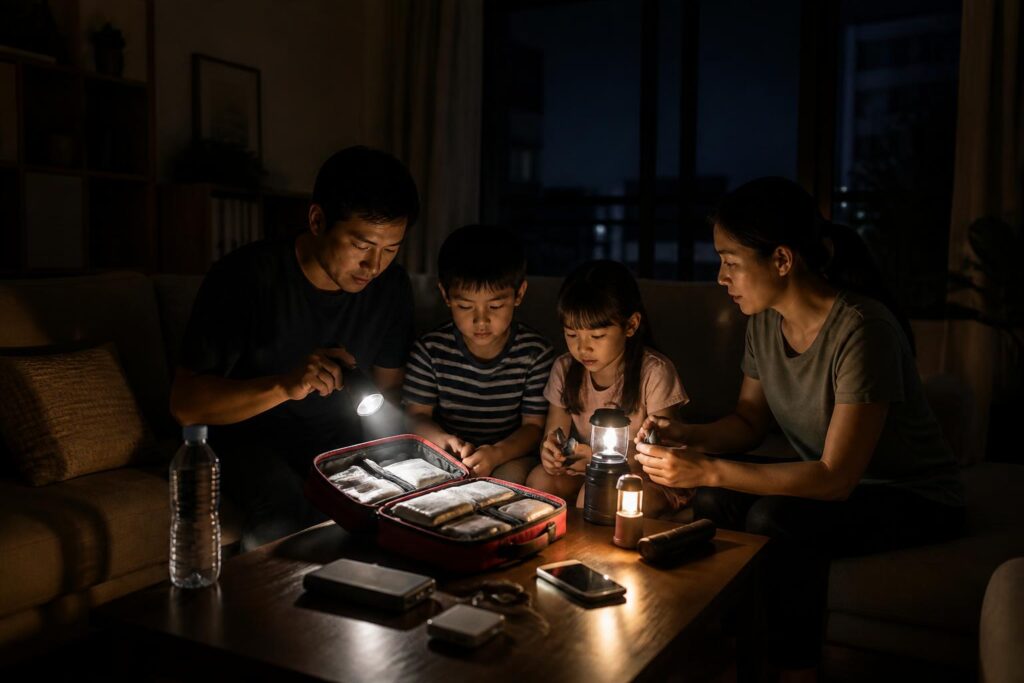
Power outages, water disruptions, or interruptions to Internet connectivity are often viewed as temporary inconveniences. However, when many services depend on phones, electronic payments, cooling equipment, and communication systems, an incident lasting just a few hours can significantly disrupt family life. The issue is not only that the house becomes darker, but also the risk of food spoiling, medical devices not working, communications being cut off, or household members handling the situation unsafely.
Preparing for a day of service disruptions does not mean stockpiling excessively or turning the home into a warehouse. More important is knowing what your family needs during the first few hours, who requires special assistance, which devices must remain powered, and what methods of communication may still be available. A manageable plan that is checked regularly is often much more useful than buying a large number of supplies without knowing where they are or whether they still work.
First, identify the needs that cannot be interrupted
Each family has a different level of dependence on electricity and the Internet. A home with young children may need night-lights, drinking water, and a way to preserve milk or food. Older adults may need phones, assistive devices, or medication stored according to instructions. People who work from home may need to keep a computer or network router running, or at least be able to notify their employer or clients when they cannot continue working.
Have all household members make a short list of the things that must be done during the day if the power or Internet is interrupted. The list may include drinking water, storing medication properly, contacting relatives, caring for children, moving safely around the home, and handling food. This categorization helps prevent panic when an incident occurs. Not every device needs to be powered immediately; only items related to safety, health, and communication should be prioritized.
If someone in the home uses a medical device that requires electricity, the family should learn in advance about the device’s operating requirements and suitable backup options from the supplier or a medical professional. Do not change how it is used on your own, use an incompatible power source, or try untested solutions. For special needs, an individualized plan is always more important than general guidance.
Basic supplies should be kept somewhere easy to find
A kit for power-outage situations should be stored in a location everyone in the home knows about and can access even without lighting. Supplies may include a flashlight, suitable spare batteries, a fully charged power bank, drinking water, some food that does not require complicated cooking, currently used medication, a basic first-aid kit, and a list of essential phone numbers. If the family has children or older adults, add the items they regularly use and that are difficult to replace quickly.
Flashlights are generally safer and more convenient than candles. If candles must still be used in unavoidable circumstances, place them on a stable surface away from curtains, paper, clothing, and flammable materials; never leave a burning candle unattended. Rechargeable lights should also be checked to ensure that their batteries are not completely worn out. An item is useful only when the family knows where it is and is sure that it still works.
The contact list should include the numbers of relatives, the building management office if living in an apartment, electricity and water providers, and any necessary local support contacts. Do not store these numbers only on a phone. A written copy kept with the backup supplies will be valuable if the phone runs out of battery, breaks, or cannot connect to the network.
Use backup power according to clear principles
Power banks, uninterruptible power supplies, or portable power sources should be selected based on the actual devices the family wants to keep running. Before buying or using one, check its capacity, connectors, operating instructions, and the manufacturer’s safety warnings. Do not plug many devices into a small power source and hope that it will run for a long time. This both drains the energy quickly and may create a risk of overheating, short circuits, or equipment damage.
Phones should be prioritized for necessary communication rather than entertainment. You can switch to power-saving mode, reduce screen brightness, turn off unnecessary connections, and limit apps running in the background. However, before turning off a connection, users should consider whether they may need to receive an important call or message. A laptop with remaining battery power can be used briefly to send notifications, but it should not be used as a charging source for another device if doing so causes it to run out of power quickly.
Do not connect electrical wires yourself, use a generator in an enclosed room, or place a heat-generating power source near windows, curtains, or flammable materials. If using a generator, installation and operation must follow the manufacturer’s instructions, in a well-ventilated location and away from living areas. Exhaust gases that cannot be seen with the naked eye can still be dangerous. When you are unsure about a power-supply method, the safest choice is not to experiment during an emergency.
Keep food and drinking water safe
During a power outage, limiting how often the refrigerator and freezer are opened helps them retain their temperature longer. In advance, the family can arrange food by category so it is easy to retrieve, place items that need to be used soon in a convenient location, and prepare some foods that can be consumed without complicated cooking. Do not judge food safety solely by its smell or appearance. If an item has been stored under unsuitable conditions for an unknown length of time, exercise caution and consult food-safety guidance instead of trying to use it to avoid waste.
Drinking water should be kept in clean, covered containers and placed in a cool location. If water must be used for other purposes, such as cleaning or cooking, clearly distinguish it from drinking water. The family should also prepare wet wipes, hand sanitizer, or suitable cleaning supplies to maintain hygiene when household water service is interrupted. Young children, older adults, and people with underlying health conditions are often more sensitive to heat, dehydration, or poor sanitary conditions, so they should be monitored first.
When the Internet is down, do not rely on just one information channel
Internet disruptions may occur together with, or separately from, power outages. In that situation, prioritize official announcements from authorities, service providers, or the management of your place of residence whenever they are accessible. Avoid forwarding messages from unclear sources about restoration times, the cause of the incident, or calls to take action. Unverified information can easily cause people to travel unnecessarily, shop in a panic, or carry out actions that may be dangerous.
The family should agree on a meeting place in case phones cannot be used for communication. This location should be easy to recognize and appropriate for the situation, such as a safe place near home, but it should not be in an area at risk of flooding, falling trees, downed power lines, or complicated traffic. If members are in different places, agree in advance on who will contact whom, how long to try reconnecting, and when to ask relatives for help.
Within a neighborhood, coordinating with neighbors can also help reduce risks. One family may be able to assist an older adult, while another may have a flashlight or means of communication. However, assistance should respect each person’s privacy, health, and capabilities. Do not enter someone else’s home without permission, use their equipment, or share personal information without consent.
Prepare in advance through small, consistent actions
After each power or Internet outage, record what was missing, which devices ran out of battery, and which steps left the family confused. Then adjust the supplies according to actual needs instead of buying based on a general list found online. Each month, you can check the condition of flashlights, the expiration dates of medication and food, the battery level of power banks, the condition of cables, and whether essential items can be opened.
Household members should also know the location of the circuit breaker, how to turn off unnecessary devices, and the rule never to touch wires suspected of being damaged. Children should be taught not to turn on the stove, use candles, climb onto balconies, or approach areas with water and electrical equipment without permission. Adults should set an example by handling the situation calmly, explaining things briefly, and giving children safe tasks, such as sitting with a family member or bringing a bottle of water.
A day of service disruptions will be easier to handle when the family has a clear order of priorities: protect people, maintain necessary communication, preserve water and medication, and only then deal with the remaining inconveniences. Good preparation is not about accurately predicting when an incident will occur, but about creating enough of a buffer so that no one has to make hasty decisions in the dark, when the phone is about to run out of battery, or when information is incomplete.
