


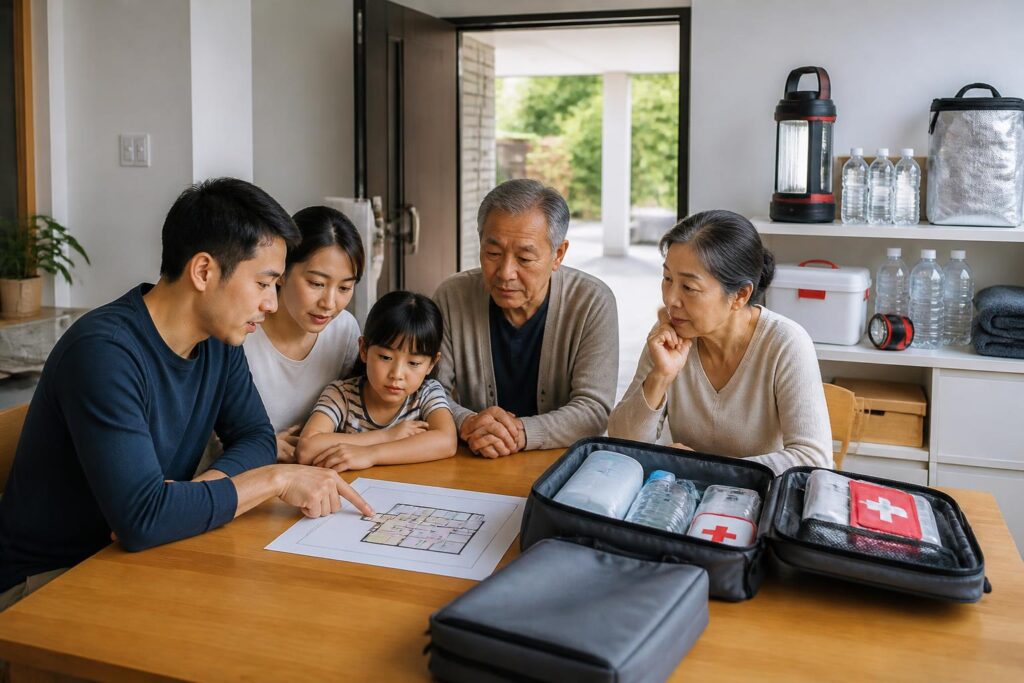
Many families only start thinking about how to respond after an incident has already occurred. By then, the power may be out, roads may be blocked, phones may have run out of battery, young children may be frightened, or family members may not know whom to contact. In such situations, a plan prepared in advance cannot eliminate every risk, but it can help everyone respond calmly, reduce hasty decisions, and quickly protect those who are most vulnerable.
A family emergency response plan does not have to be long or complicated. What matters is that it suits the place where you live, the number of family members, daily routines, and the risks you may encounter. A good plan should answer basic questions: What emergencies might the family face? Who will do what? Where will everyone meet? What supplies are needed? And how will information be updated when communication is disrupted?
Start with situations relevant to where you live
You should not build a plan from a general template and apply it mechanically to every family. People living in high-rise apartments have different concerns from those living in detached homes; areas that frequently flood require different preparations from places at risk of landslides, strong winds, or prolonged power outages. Therefore, the first step is for all family members to list the incidents that could affect their daily lives.
This list may include fires, gas or water leaks, power outages, heavy rain, flooding, strong winds, injuries, a missing child, loss of communication, and situations that require the family to leave home for a short period. There is no need to predict every unlikely possibility. Just focus on incidents that could have significant consequences or that have occurred in the surrounding area before.
After making the list, the family should consider each situation through three questions. What are the initial warning signs? What is the first thing to do to reduce the danger? Who needs help first? Asking these questions helps everyone move from a general feeling of anxiety to specific actions. For example, when water is found entering the home, the necessary steps may be to ensure the safety of everyone inside, avoid contact with electrical equipment in damp areas, and find an appropriate way to shut off the power if this can be done safely.
Assign roles without relying on one person
Under normal circumstances, one family member often knows the location of the circuit breaker, keys, documents, or medications being used. However, that person may not be present when an incident occurs. Therefore, families should share information and assign roles in a way that includes backup people.
Some duties that can be agreed on in advance include checking on young children, older adults, or people who need assistance; carrying the essential-supplies bag; calling for help; checking escape routes; and locking or shutting off hazardous sources when conditions permit. Children should not be given tasks beyond their abilities. They need to know how to find an adult, follow the agreed-upon route, and not go back to retrieve belongings once they have left the danger area.
Assignments should also take different times of day into account. Who is usually at home in the morning? Who picks up the children? If one person is at work or far away, who will take over that responsibility? These seemingly minor questions make the plan more practical. The family can record the primary person responsible and the backup person for each task, then place the plan somewhere visible instead of storing it in a difficult-to-find cabinet.
Agree on escape routes and meeting places
Every family member should know at least one safe way out of the home and understand which areas should not be passed through when there is smoke, water, falling objects, or a risk of electrical short circuits. Escape routes should not be blocked by boxes, bicycles, furniture, or rarely used items. Families should check these routes at different times, because moving around at night, during a power outage, or when someone is injured may be more difficult than expected.
If the family has to leave home, they should agree on an outdoor meeting place. This location should be easy to recognize, not directly within a danger zone, and suitable for the circumstances of each family member. For homes in residential areas, a location can be chosen that is away from the affected structure but still within easy reach of everyone. If it is impossible to get there, the family should have an additional backup plan.
Agreeing on a meeting place is especially important when phones cannot be used or family members become separated. Do not assume that everyone will automatically go to a familiar place. The plan should be clearly explained, reviewed regularly, and adjusted when the family moves, children grow older, or nearby routes change.
Prepare a bag of essential supplies
An emergency bag is not a place to store every item in the home. Its purpose is to help the family have basic supplies during the initial period, when it may not be possible to shop or return home. Depending on the circumstances, the bag may contain drinking water, suitable food, a flashlight, spare batteries, a first-aid kit, medications currently being used, masks, hygiene items, lightweight clothing, and copies of necessary information.
If there are young children, older adults, people with disabilities, or people with conditions requiring regular care in the home, the bag should be adjusted to meet their needs. Some people may need glasses, mobility aids, milk, special food, or medication-use instructions. Families should not gather medications indiscriminately or use one person’s medication for someone else. For prescription medications, they should ensure that the medications remain appropriate and are stored correctly.
The contents of the bag should be checked regularly. Food, batteries, medications, and documents may expire or no longer be suitable. The bag should also be placed somewhere easy to reach, without blocking passageways, and children should not be allowed to play unsupervised with items that could be dangerous. If family members regularly stay in different places, the family may consider preparing smaller kits for the necessary locations instead of having only one bag.
Protect communication information and important documents
When an incident occurs, making calls or accessing the internet may not be convenient. Families should write down basic contact information on paper, including relatives’ phone numbers, the home address, school or workplace information, and people who can provide assistance when needed. This information should be written clearly, checked, and placed somewhere all family members know about.
Alongside the paper copy, families can store electronic copies of important documents in an appropriate location and take measures to protect privacy. Do not publicly post identifying information, addresses, images of documents, or financial data on untrustworthy channels simply because you want to store them quickly. When information needs to be shared, consider the recipient, the purpose, and the extent to which it is necessary.
Families should also agree on how to communicate when direct calls are not possible. They might agree that each person will send a short message once they are safe, or ask a relative in another area to serve as a point of contact for receiving information. What matters is that everyone clearly understands the arrangement and does not repeatedly call while the network is overloaded, if a single confirmation message is enough to report their status.
Practice so the plan does not remain only on paper
A plan is valuable only when family members remember its key steps. Families do not need to conduct complicated drills. They can start by walking through the escape route, locating the circuit breaker under safe conditions, practicing retrieving the supplies bag, or checking whether children know how to call an adult. After each practice session, ask each person what was difficult to remember, which routes were obstructed, and which items were no longer in their proper places.
Practice should avoid creating additional fear, especially for children. Adults can explain that this is a way to learn what to do when something unexpected happens. A practice session should not become a game involving fire, electricity, gas, or dangerous equipment. Any situation involving an actual source of danger should be handled safely, with professional assistance sought when necessary.
After moving to a new home, purchasing new equipment, adding a family member, or identifying a new hazard, the family should review the plan. Items such as fire extinguishers, electrical equipment, door locks, and escape routes should also be checked according to the instructions of the manufacturer or a qualified professional. Do not attempt to repair electrical, gas, or structural systems without the appropriate knowledge and conditions.
Stay calm, prioritize people, and seek help at the right time
In every emergency response plan, people’s safety must come before protecting property. Not going back to retrieve belongings once an area has become dangerous, not handling incidents beyond your abilities, and not following unverified instructions are important principles. When there are clear signs of danger, the family should leave the area if possible and contact the appropriate emergency services according to local guidance.
Information during an emergency can change quickly. Families should prioritize notices from authorities, building management, local government, or the responsible organization in the area rather than immediately sharing every word-of-mouth message. If you are not sure that information is accurate, verify it before forwarding it. Spreading false warnings can cause others to panic or move into unsafe areas.
Preparing for emergencies does not mean living in fear. On the contrary, a concise plan that the whole family understands and reviews regularly can make everyday life more proactive. Families can start with a conversation, an escape-route diagram, a supplies bag, and a clear contact list. These small steps create a foundation for everyone to support one another more effectively when the unexpected happens.
