


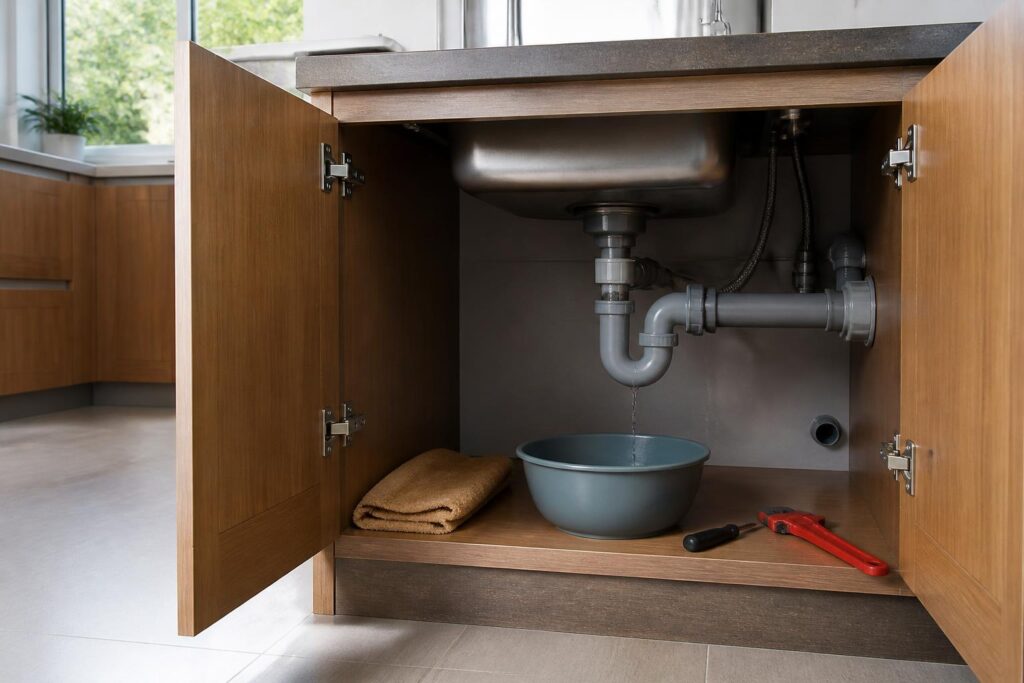
Water leaks in the home do not always appear as an obvious stream of water. Many cases begin with a small damp mark on a wall, a musty smell in a kitchen cabinet, the sound of running water when all taps are closed, or an unusually high water bill. If not checked early, water can seep into floors, ceilings, wooden furnishings, and hard-to-see areas, making repairs more complicated later.
The important thing is to deal with a leak step by step: identify the signs, stop the water source if possible, protect people and property, and then find the cause or call a professional. A few timely, correct actions can significantly limit the extent of the damage, but do-it-yourself repairs also have their limits. When water is involved with electrical outlets, pipes inside walls, or the ceiling, safety must come before saving money.
Common Signs of a Water Leak
The most noticeable sign is water dripping or flowing from connection points on faucets, valves, water supply hoses, drainpipes, and water-using appliances. However, many leaks are located behind cabinets, beneath floors, or inside walls. In such cases, a household may notice blistering paint, peeling filler, discolored baseboards, warped wooden floors, or tiles with persistent damp gaps.
A persistent musty smell is also a sign to pay attention to, especially in areas with little ventilation, such as beneath sinks, behind washing machines, beside toilets, and in storage rooms. If the smell keeps returning even after cleaning, water may be accumulating in a concealed location. Another sign is a faint sound resembling running water or a hissing noise in the pipes when all faucets and water-using appliances have been turned off.
Households should also take notice when water use appears to increase even though their daily habits have not changed. It cannot immediately be concluded that a leak is definitely the cause, since consumption depends on many other factors as well. Nevertheless, this is a reasonable reason to check the valves, tanks, toilet, and pipes in the home.
How to Check and Narrow Down the Cause
First, check areas with many connections that are frequently exposed to water. The area beneath a sink should be inspected for both the supply and drainpipes, the inside of the cabinet, and the floor underneath. For a washing machine, check the water supply hose, drain hose, and the connectors behind the machine. In the bathroom, examine the showerhead, sink faucet, base of the toilet, floor drain, and the sealant around areas that come into contact with water.
You can dry the entire suspected area with a clean towel and then check it again after some time. This helps distinguish leftover water from water that is continuing to leak. If monitoring is needed, place a dry piece of paper or a paper towel beneath the connection, but do not put slippery material in a place where people walk. During the inspection, do not touch electrical wires, outlets, or equipment that is wet.
For a preliminary check of the home’s system, close all faucets and temporarily stop appliances that are drawing water. Then observe the water meter if the household can access it safely. If the reading continues to change, there may be water flowing through a location that requires further inspection. This method only helps detect an abnormal sign; it does not identify the exact leak location. When a pipe inside a wall or beneath the floor is suspected, do not start breaking into multiple areas, as this can increase the damage and make repairs more difficult.
What to Do Immediately When You Discover a Leak
If the leak originates from a faucet, hose, or appliance with its own valve, close that valve first. When the location cannot be identified or water is flowing heavily, you can shut off the home’s main water supply valve if you know where it is and can do so safely. After shutting off the water, slightly open a faucet in a suitable area to reduce the amount of water remaining in the pipes, but do not do this if it would cause water to flow into a dangerous area.
Next, move easily damaged belongings away from the wet area. Electrical items, documents, fabrics, wooden furniture, and valuables should be moved to a dry location. Use towels, a basin, or a suitable container to catch water temporarily, while also wiping up water that has spread across the floor to reduce the risk of slipping. If water is coming down from the ceiling, do not stand directly underneath it or lean a ladder against a bulging section of the ceiling, as wet materials can become heavy and unstable.
Electricity requires particular caution. If water is approaching an outlet, electrical wire, electrical panel, or electrical appliance, do not touch the wet area to unplug it. If you can disconnect the power from a dry location and doing so will not create a hazard, follow the safety instructions for the home’s electrical system. If you are uncertain, leave the area and contact an electrician or an appropriate repair service. Do not use a hair dryer, electric fan, or plugged-in device to dry the area while the floor and your hands are still wet.
When Can You Handle a Temporary Repair Yourself?
Some minor situations, such as a loose connector, a deteriorated rubber gasket, or a water supply hose showing signs of leakage in an easily accessible section, can be handled temporarily after the water has been shut off. The person carrying out the repair should read the appliance instructions, use the correct replacement parts, and avoid overtightening. Excessive tightening can damage the threads, deform the gasket, or crack a plastic component.
Tape or temporary sealing materials should be regarded only as a short-term solution, not a permanent repair for a pipe that is cracked, deteriorated, or under pressure. After making a temporary fix, turn the water on slowly and observe the connection. If it still leaks, shut the water off again and call a professional. Do not cover a damp section of wall with paint or paneling before finding the cause, as this can trap moisture inside and make the condition more difficult to assess.
With toilets, water heaters, washing machines, storage tanks, or systems with multiple pipes, taking the equipment apart and reinstalling it yourself can create new leaks. If the equipment is still under warranty, contact the provider in accordance with its policy rather than attempting a repair yourself. Recording images of the leak location, the time it was discovered, and the condition after the water was shut off will help the repair person assess the situation more quickly.
When You Should Call a Professional
Seek professional assistance when water is flowing heavily, the source of the leak cannot be identified, the leak recurs after a gasket has been replaced or a connection tightened, or there are signs that water is traveling through a wall or beneath the floor. Widespread damp spots, a bulging ceiling, a sinking floor, a persistent musty smell, and the sound of water in the pipes even after the appliances have been shut off are also situations that should not be dealt with by simply covering them temporarily.
Call an electrician when water is involved with an electrical panel, outlet, wire, or in-wall electrical equipment. If there is a risk of the ceiling collapsing, dirty water is overflowing from a drain, or flooding makes movement unsafe, the household should limit access and prioritize protecting people before dealing with property. Children and pets should be moved away from wet or slippery areas and from electrical equipment.
Preventing Leaks in Everyday Life
Regular inspections are a simple way to detect problems before they become major incidents. You can check beneath sinks, behind washing machines, around toilets, at water supply valves, and in areas where tanks or storage containers are placed. These areas should be kept well ventilated so damp marks are easy to see. Do not pile up too many items so that they cover connections or place pressure on flexible water supply hoses.
Do not hang heavy objects from hoses, bend pipes sharply, or use equipment contrary to its instructions. When cleaning, avoid allowing water to remain for long around the bases of wooden cabinets, appliances, and walls. Seams around sinks or areas that frequently come into contact with water should be monitored; if the sealant is peeling, cracked, or separating from the surface, it should be dealt with appropriately rather than waiting for water to seep underneath.
Households should also know the location of the main water supply valve and teach all members how to shut it off in an emergency. A flashlight, absorbent towels, a basin, and a few basic tools can be useful when initial action is needed. However, having tools does not mean that every problem should be repaired independently. Knowing your limits, disconnecting power correctly, and calling a professional when necessary are the most important parts of prevention.
Conclusion
Water leaks can generally be controlled more effectively when they are detected early and handled in the proper order. Observing unusual signs, shutting off the water supply, moving belongings, avoiding contact with electricity, and documenting the damaged area are practical steps for every household. Minor repairs should only be carried out in easily accessible places and when the person doing them fully understands the procedure. For pipes inside walls, complex equipment, or situations involving safety risks, calling a professional is essential to prevent the damage from spreading further.
