


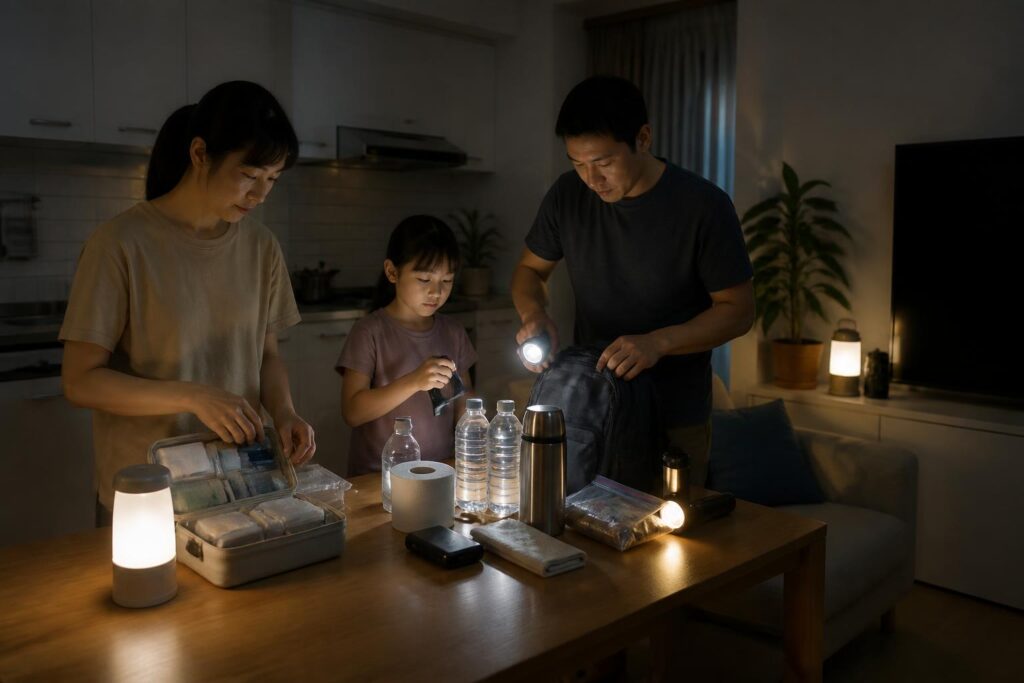
Power outages often appear as a familiar inconvenience in both urban and rural life. When the power supply is interrupted, many people only start looking for flashlights, portable chargers, or checking the refrigerator after the house has already been plunged into darkness. This way of reacting may be sufficient during a brief disruption, but it can become confusing if the outage lasts a long time, occurs at night, takes place during severe weather, or affects a household with elderly people, young children, or someone who needs medical equipment.
Preparing for a power outage does not mean turning the home into a storage warehouse or living in a constant state of fear. It means identifying basic needs, arranging supplies where they are easy to reach, and agreeing on how family members will communicate and divide responsibilities. A simple plan prepared in advance is often far more valuable than many items bought hastily while everyone is dealing with the same emergency.
Why Do Power Outages Quickly Disrupt Daily Life?
Electricity is not used only for lighting. It is involved in pumping water, preserving food, cooking, cooling, maintaining communication, making payments, and operating many essential devices. When the power is cut off, activities that normally happen automatically immediately require people to replace them with manual or temporary alternatives.
During the day, natural light can make a disruption seem less serious. However, by evening, moving around the house can become more dangerous, especially when there are stairs, wet floors, pets, or young children. If a phone runs out of battery, it also becomes difficult to receive updates about restoration efforts. Meanwhile, opening the refrigerator repeatedly to check the food lets cold air escape and makes it harder for users to accurately assess what is still safe to consume.
Power outages also reveal how dependent each household is on certain devices. Someone working from home may be unable to continue working if both the computer and network router stop operating. A family that uses an electric stove may have to change how it prepares meals. People taking medication that must be stored under specific conditions will need to proactively seek advice from a healthcare facility or the manufacturer if the outage continues.
Start by Mapping the Family’s Needs
Before buying additional supplies, the family should list the things that need to be maintained during the first few hours and in the event of a longer outage. This list does not need to be complicated. It can begin with questions such as: Who needs lighting or special assistance? Does the water supply depend on a pump? How can meals be prepared? Which devices must be turned off immediately when the power is flickering? How will family members communicate if the mobile network is weak?
Creating a list based on actual needs helps avoid impulse purchases. A home with young children may prioritize safe lighting, drinking water, and a few familiar items that help children feel less anxious. A home with elderly people needs to pay attention to walkways, medications currently being used, and the ability to call for assistance. People living in apartments should know the locations of the stairs, exits, and building rules rather than relying entirely on elevators.
Essential supplies should be gathered into an easily accessible kit and placed in a dry location known to everyone. This kit can usually include a flashlight or rechargeable lamp, suitable spare batteries, charging cables, some drinking water, a can opener if needed, a basic first-aid kit, and a list of important phone numbers. Everything should not be stored in a locked cabinet or in a place known only to one person in the household.
Lighting, Communication, and Electrical Safety
A handheld flashlight is generally more useful than using a phone as the main light source, because the phone’s battery is also needed for communication. Each family should periodically check the condition of its batteries, charging cables, and lights. If using a rechargeable lamp, people should know how the device is charged and its expected operating time. They should not wait until a power outage to discover that the charger is broken or the battery is empty.
During a power outage, the use of candles should be limited, especially in places with young children, pets, curtains, or flammable materials. If an open flame must still be used, it should be placed on a stable surface, kept away from flammable objects, and absolutely not left overnight without someone watching it. Battery-powered or rechargeable lights generally help reduce the risk of fire in situations requiring continuous illumination.
When the power is flickering or there are signs of unstable voltage, sensitive devices such as computers, televisions, network routers, and certain household appliances should be turned off and unplugged. This not only protects the equipment but also reduces the likelihood of many devices starting up at the same time when the power returns. However, people should not touch broken wires, outlets showing signs of scorching, or wet areas. These hazards should be handled by qualified professionals or the electric utility.
Preserving Food and Using Water Wisely
The refrigerator does not need to be opened continuously during a power outage. The more often it is opened, the faster the cold air escapes. The family should decide in advance which foods need to be used first, but food safety should not be judged solely by smell or appearance. When there is doubt about food that has been stored at an improper temperature, the cautious choice is to throw it away rather than trying to use it and facing the risk of harm to one’s health.
In households that regularly stock food, keeping the refrigerator organized is also helpful. Frequently used items can be placed where they are easy to reach, while food that needs to be stored longer can be clearly sorted. This reduces the time the door is open and prevents everyone in the household from opening it repeatedly to check. Some foods that do not require complicated cooking can also be prepared as temporary options, but their expiration dates and storage conditions still need to be considered.
The water supply needs to be considered separately, especially in places that use pumps or storage tanks dependent on the electrical system. Families can keep an amount of water appropriate for their everyday needs in clean, covered, and easily accessible containers. Drinking water, cooking water, and water for hygiene do not necessarily have to come from the same source. If the water quality shows unusual signs, a safe alternative source should be used, and appropriate guidance should be sought from the water supplier or local authorities.
Do Not Overlook a Communication Plan
During an emergency, information is often no less important than supplies. Family members should agree on one primary contact person, how to notify one another when someone is away from home, and a meeting place if phone calls are impossible. Phone numbers for relatives, the building management, the electric utility, or emergency services should be saved on phones and also written down somewhere else in case the devices run out of battery.
Phones should be charged whenever there is an opportunity, but there is no need to constantly check the screen or follow too many unverified sources of information. When the network is unstable, short text messages may be easier to send than calls. If someone has to leave the house, one family member should clearly state where they are going and when they expect to return. Older children can be taught how to call relatives, read out the home address, and recognize people who can provide assistance.
Information about when power will be restored may change according to actual conditions. Therefore, families should prioritize notices from the electric utility, local authorities, or other appropriate official sources instead of sharing every message of unclear origin. This helps prevent panic and avoids disrupting the work of those handling the emergency.
Turn the Plan into an Easy Habit
A plan has value only when everyone remembers it and knows how to carry it out. The family can check its supplies every few months, replace weak batteries, recharge devices, and discard items that have expired. If the family moves, buys new equipment, or gains another member, the list of needs should also be updated.
A short daytime drill can be held by pretending that the power has been cut off for a period of time. The goal is not to create inconvenience, but to identify unreasonable aspects: a light stored too high up, an incompatible charging cable, people not remembering where the circuit breaker is, or not knowing how to open the garage door when the automatic system is not working. After the exercise, the family only needs to adjust a few practical details.
More importantly, preparation should not become a reason to buy too many supplies or stockpile more than can be properly stored. A safe home is one where essential items are clearly organized, do not block walkways, and do not create additional fire or explosion hazards. Being proactive also includes knowing when to leave the house, call for help, or find a safer place instead of trying to handle every situation alone.
Be Proactive to Stay Calmer
Power outages may not be entirely preventable, but families can greatly reduce the confusion they cause. A fully charged lamp, a few phone numbers written down in advance, properly arranged food, and a brief conversation among family members are all preparations that cost little but provide clear benefits.
The key is not to predict exactly when an emergency will occur. It is to build an adaptable routine: knowing what to prioritize, whom to protect first, how to use available resources, and where to seek help. When a plan is prepared calmly in advance, a day without power will be less chaotic, and each family member can work together to handle the problem instead of simply waiting for the emergency to pass.
