



Digital Identity in Virtual Worlds: From Avatars to Personal Control
In increasingly diverse virtual spaces, people do not appear solely through a username and password....
Oct
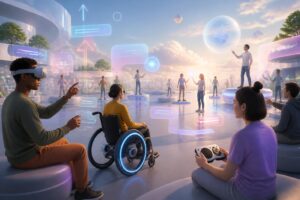
Designing Virtual Worlds for Everyone: When Accessibility Becomes the Foundation
Virtual worlds are often imagined as spaces rich in visuals, sound, and interaction. Users can...
Oct

Nonlinear Storytelling in Virtual Worlds: When Users Create Their Own Paths Through a Story
In a traditional story, readers or viewers usually follow a path arranged from beginning to...
Oct

Sound in the Virtual World: The Spatial Layer That Creates a Sense of Presence
When people talk about the virtual world, most of the attention is usually devoted to...
Oct

Digital Identity in Virtual Worlds: From the Mask to Self-Determination
Identity Goes Beyond a Name When entering a virtual world, users often begin by choosing...
Oct

Designing Virtual Worlds for Everyone: Why Accessibility Must Be Considered from the Start
Virtual worlds are often introduced through highly performative imagery: users put on virtual reality headsets,...
Oct

Crossing Multiple Virtual Worlds: The Interoperability Problem Remains Unresolved
Imagine a user spending months building an avatar, getting to know a community, collecting items,...
Oct

Who Keeps Order in the Virtual World? The Challenge of Building Safe Communities
The virtual world is often imagined as an open space where users can meet, chat,...
Oct

When Presence Becomes Data: Privacy in the Virtual World
In highly interactive virtual spaces, users do not merely send text or still images. They...
Oct
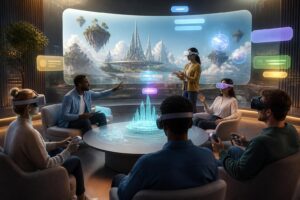
Designing Virtual Worlds for Everyone: From Immersive Experiences to Accessibility
Virtual worlds are often introduced through highly immersive imagery: users enter three-dimensional spaces, communicate through...
Oct